Profilowanie kodu pod kątem pamięci
Wydajny kod w Pythonie

Logan Thomas
Scientific Software Technical Trainer, Enthought
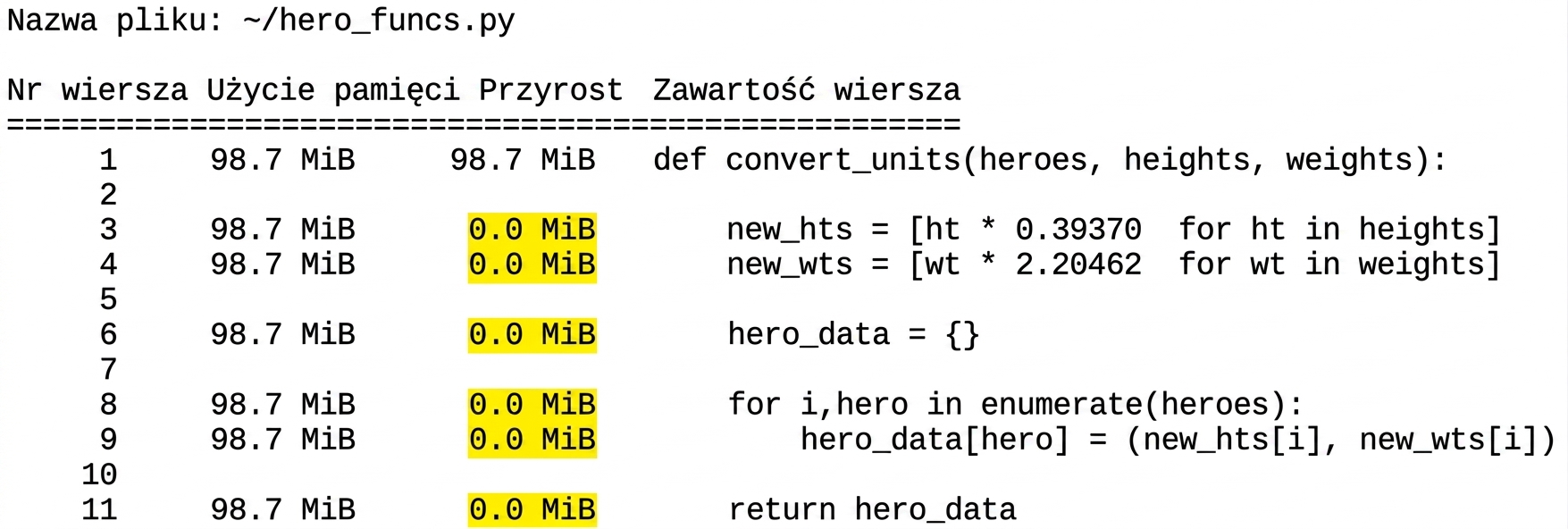
Wynik %mprun
%mprun -f convert_units convert_units(heroes, hts, wts)
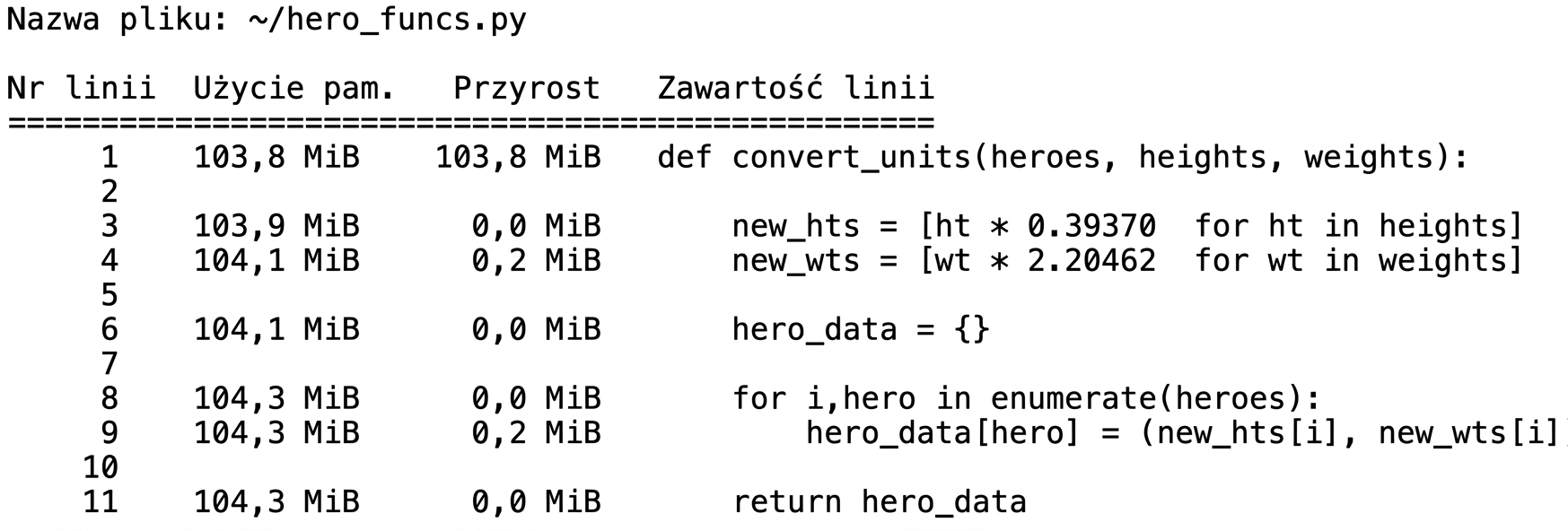
Wynik %mprun
%mprun -f convert_units convert_units(heroes, hts, wts)
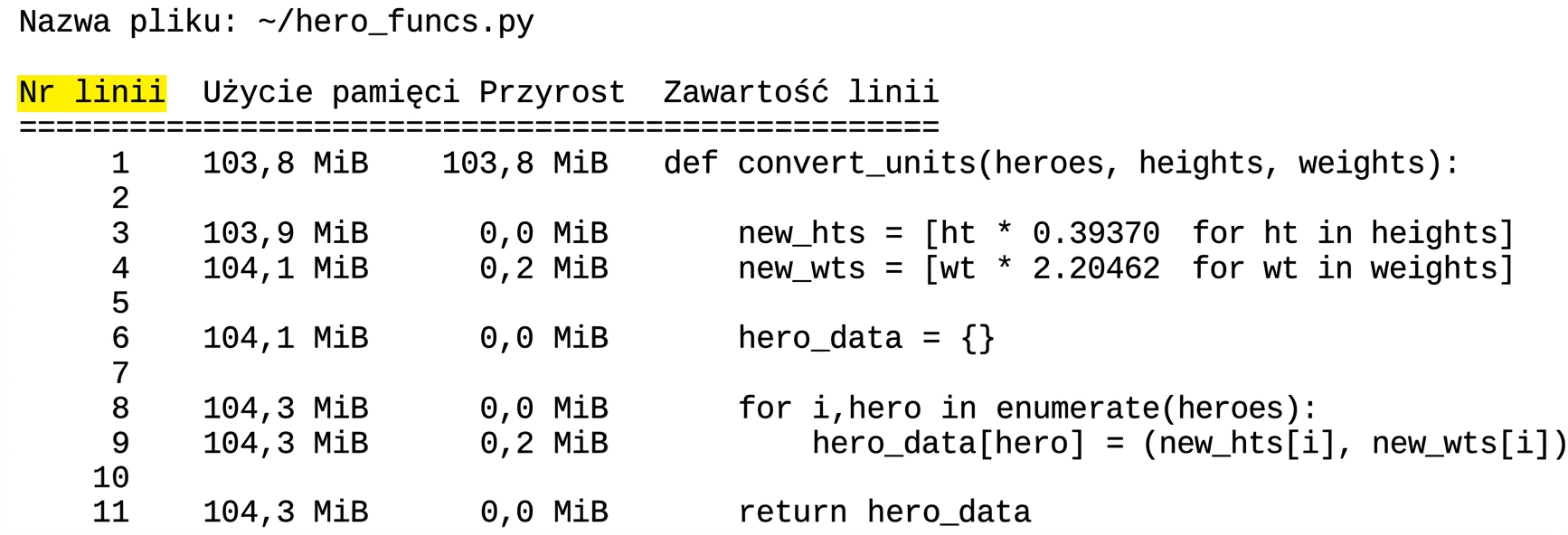
Wynik %mprun
%mprun -f convert_units convert_units(heroes, hts, wts)
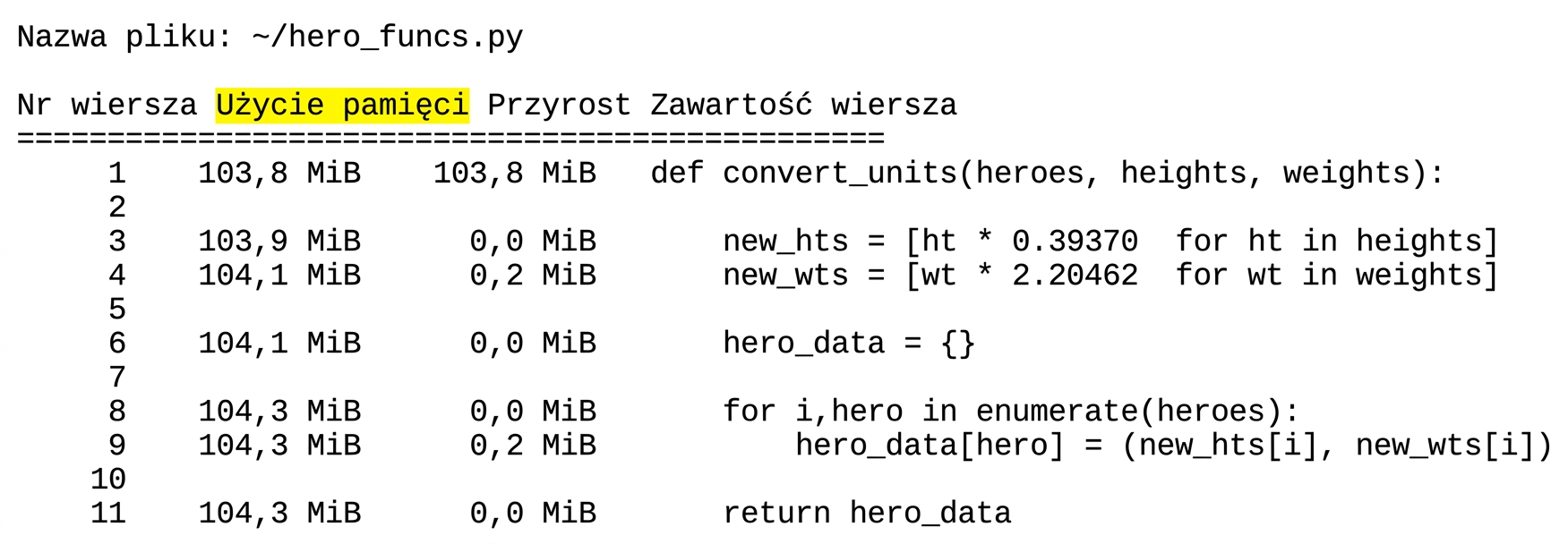
Wynik %mprun
%mprun -f convert_units convert_units(heroes, hts, wts)
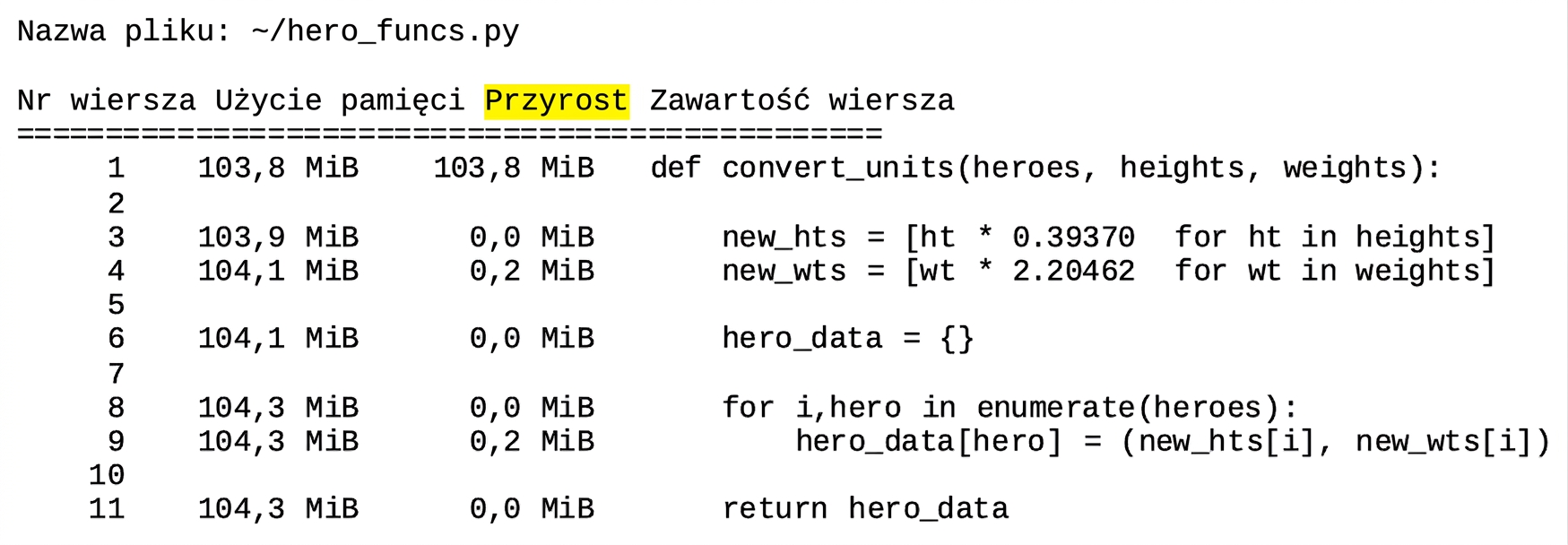
Wynik %mprun
%mprun -f convert_units convert_units(heroes, hts, wts)
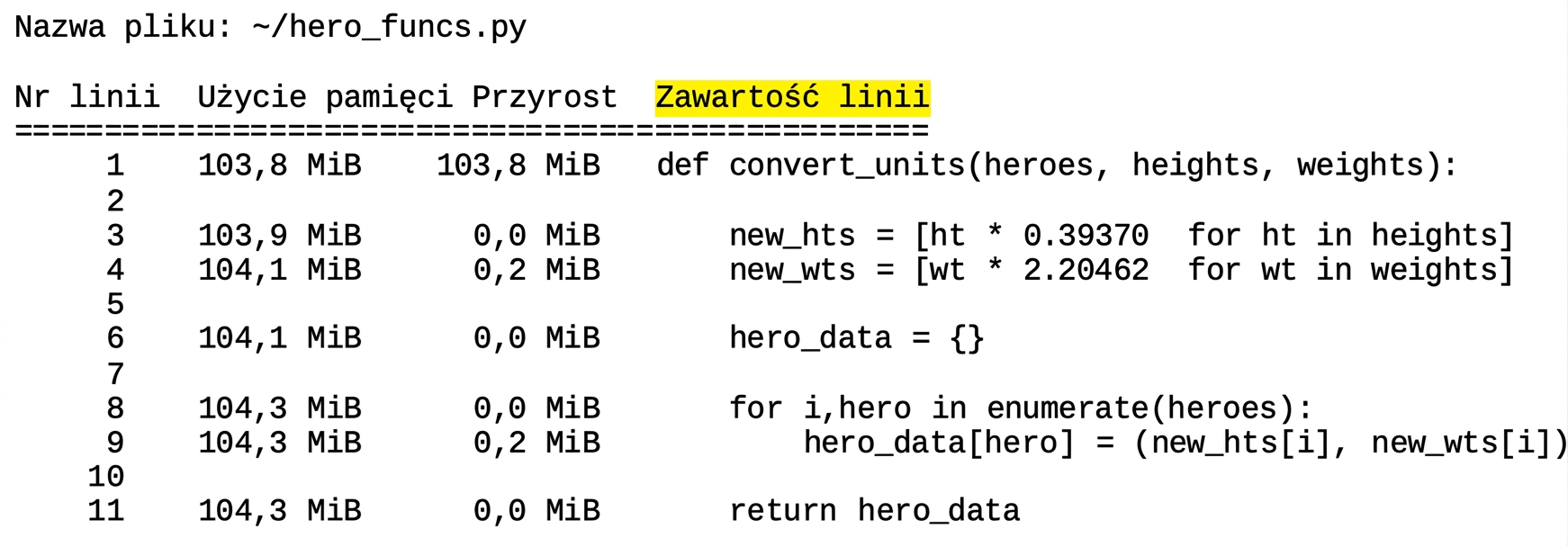
Wynik %mprun
%mprun -f convert_units convert_units(heroes, hts, wts)
Zastrzeżenia dotyczące wyniku %mprun
%mprun -f convert_units convert_units(heroes, hts, wts)
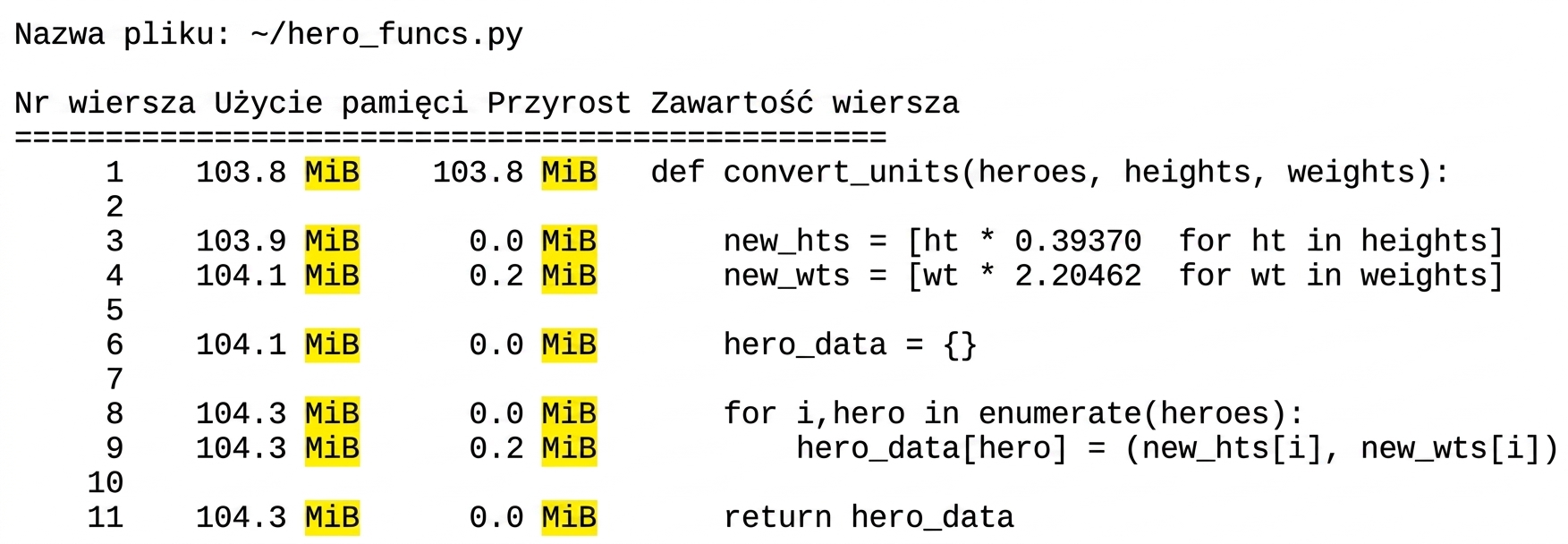
Zastrzeżenia dotyczące wyniku %mprun
Dane użyte w tym przykładzie to losowa próbka 35 000 bohaterów.
(nie oryginalny zbiór 480 superbohaterów)
%mprun -f convert_units convert_units(heroes, hts, wts)
Zastrzeżenia dotyczące wyniku %mprun
Małe alokacje pamięci mogą dawać wynik 0.0 MiB.
(oryginalny zbiór 480 superbohaterów)
%mprun -f convert_units convert_units(heroes, hts, wts)