Liniowe klasyfikatory w Pythonie
Michael (Mike) Gelbart
Instructor, The University of British Columbia
x = np.arange(3)
x
array([0, 1, 2])
y = np.arange(3,6)
y
array([3, 4, 5])
x*y
array([0, 4, 10])
np.sum(x*y)
14
x@y
14
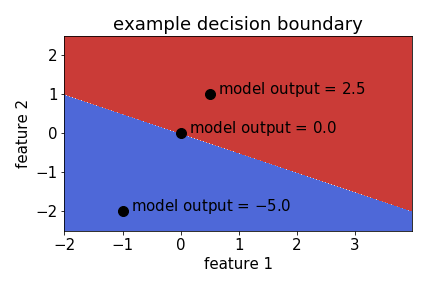
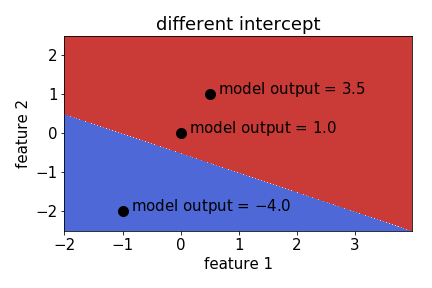
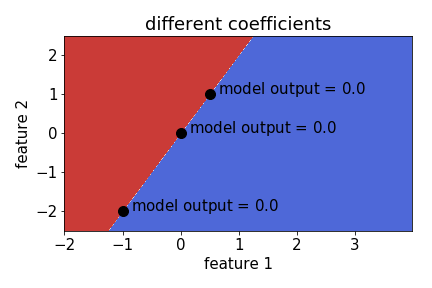
x@y to iloczyn skalarny x i y, zapisywany jako $x \cdot y$.fit jest różne, ale predict jest takie samo$\textrm{surowe wyjście modelu} = \textrm{współczynniki} \cdot \textrm{cechy} + \textrm{wyraz wolny}$
lr = LogisticRegression()
lr.fit(X,y)
lr.predict(X)[10]
0
lr.predict(X)[20]
1
lr.coef_ @ X[10] + lr.intercept_ # raw model output
array([-33.78572166])
lr.coef_ @ X[20] + lr.intercept_ # raw model output
array([ 0.08050621])


Liniowe klasyfikatory w Pythonie