Typy danych i wyjątki w Javie
Jim White
Java Developer
Exception i rozwiązania problemuthrows w metodzie, aby przekazać wyjątek do metody wywołującejthrows użyj listy typów wyjątków oddzielonych przecinkamipublic static void someMethod() throws IndexOutOfBoundsException,
NegativeArraySizeException, NullPointerException {
// method code
}
Zwykłe try-catch do obsługi Exception
public static void main(String[] args) {
someMethod();
}
public static void someMethod(){
try {
ArrayList<String> games
= new ArrayList<String>();
games.add("Monopoly");
games.add("Chess");
games.get(3);
} catch (IndexOutOfBoundsException e) {
System.out.println(
"Oops - trying to get non-existent item");
}
}
Throws do obsługi Exception
public static void main(String[] args) {
try {
someMethod();
} catch (IndexOutOfBoundsException e) {
System.out.println(
"someMethod tried to get non-existent item");
}
}
public static void someMethod()
throws IndexOutOfBoundsException {
ArrayList<String> games
= new ArrayList<String>();
games.add("Monopoly");
games.add("Chess");
games.get(3);
}

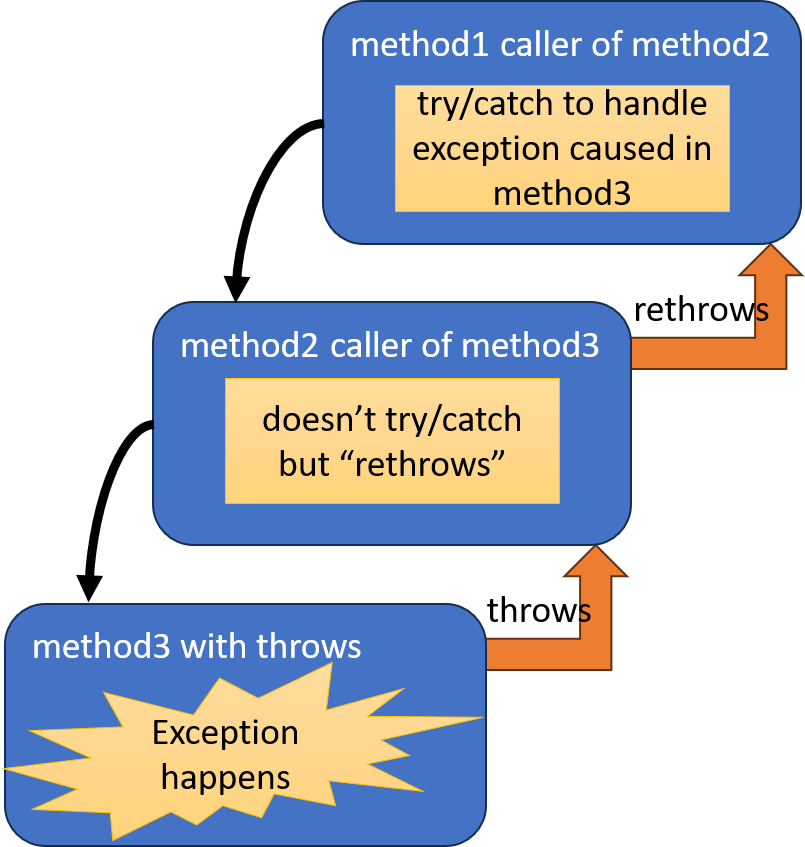
Exception może zostać "przekazana dalej"throws zamiast try/catchmain spowoduje zatrzymanie aplikacji
public class RethrowExample {
public static void main(String[] args) {
try {
method1(0);
} catch (ArithmeticException e) {
System.out.println("Oops - tried a bad quotient");
}
}
public static void method1(int divisor) throws ArithmeticException {
method2(divisor);
}
public static void method2 (int divisor) throws ArithmeticException {
int z = 5/divisor;
System.out.println(z);
}
}
Typy danych i wyjątki w Javie