Prosty model średniej ruchomej
Analiza szeregów czasowych w R

David S. Matteson
Associate Professor at Cornell University
Prosty model średniej ruchomej
Prosty model średniej ruchomej (MA):
$ Today = Mean + Noise + Slope * (Yesterday's Noise)$
Formalnie: 
gdzie $ \epsilon_t$ to biały szum (WN) o średniej zero.
Trzy parametry:
- Średnia $\mu$
- Nachylenie $\theta$
- Wariancja WN $\sigma^2$
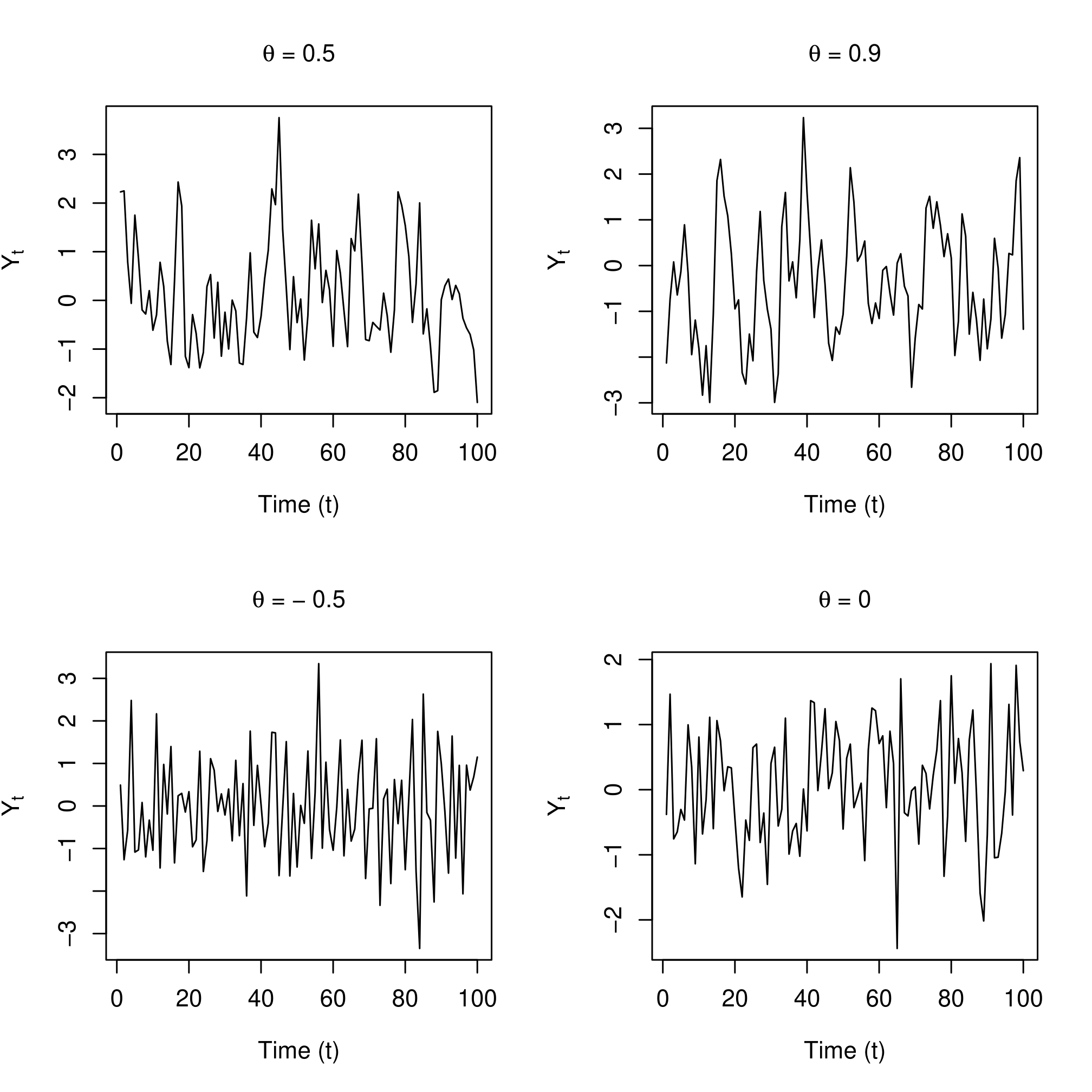
Przykłady MA
Autokorelacje
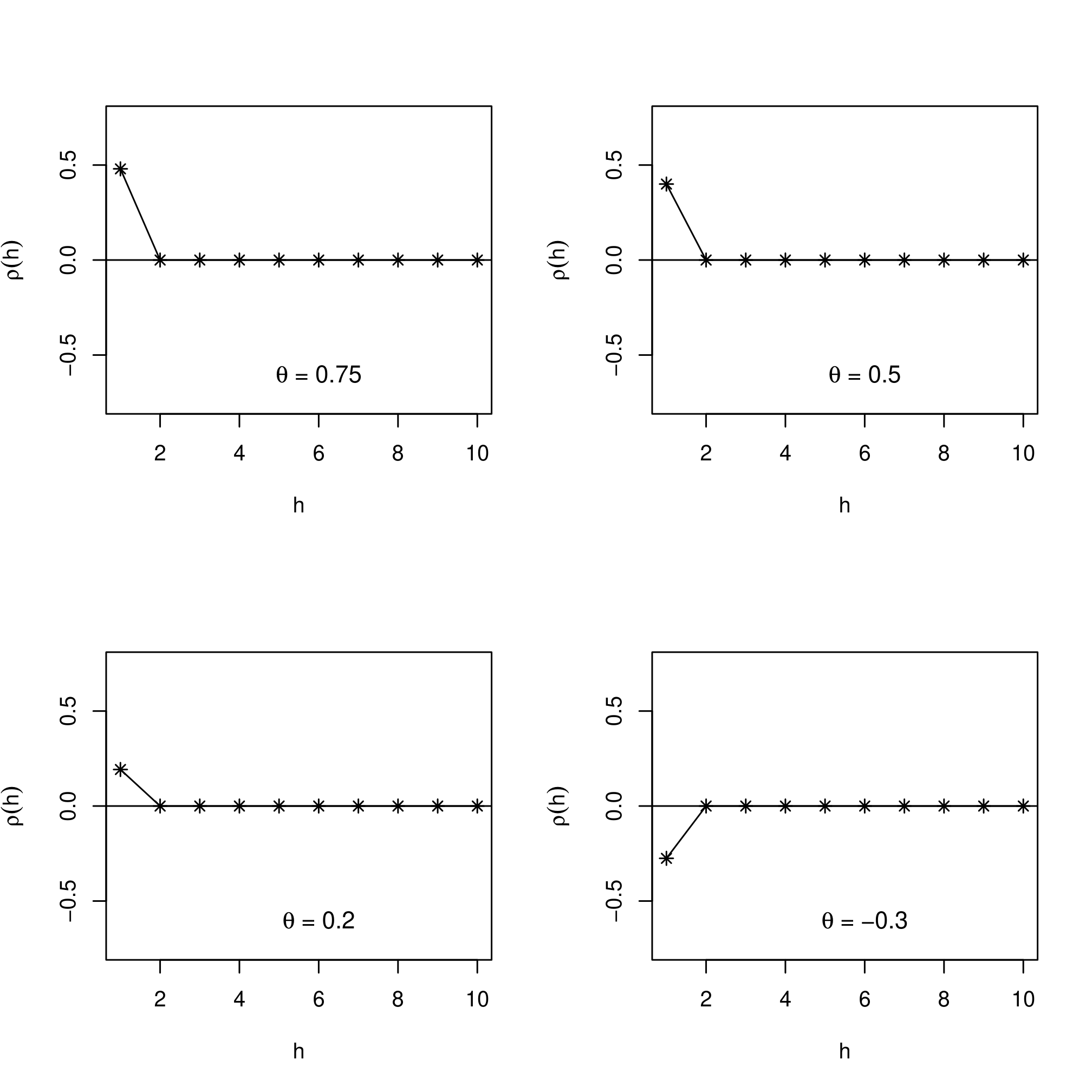
W modelu MA niezerowa jest tylko autokorelacja dla opóźnienia 1.

