Zmiana okresu i struktura terminowa
Wycena produktów ubezpieczeń na życie w R

Roel Verbelen, Ph.D.
Statistician, Finity Consulting
Od rocznej do $m$-tej stopy procentowej
Roczna stopa procentowa $i$.
Jak wyznaczyć $i^{\star}_m$ – stopę dla okresu $1/m$ roku?
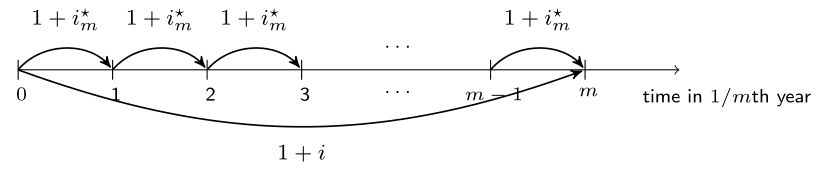
$\qquad$ Wtedy:
$$ 1+i = (1+i^{\star}_m)^m \quad \Leftrightarrow \quad i^{\star}_m = (1+i)^{1/m}-1. $$
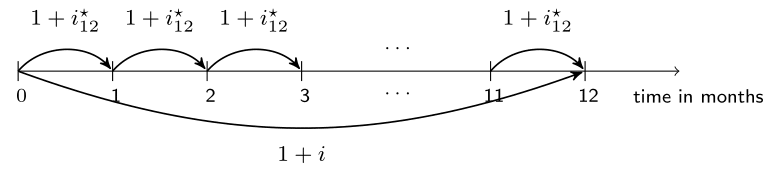
Od rocznej do $m$-tej stopy procentowej w R
Niestałe stopy procentowe
Niestałe stopy procentowe
Niestałe stopy procentowe
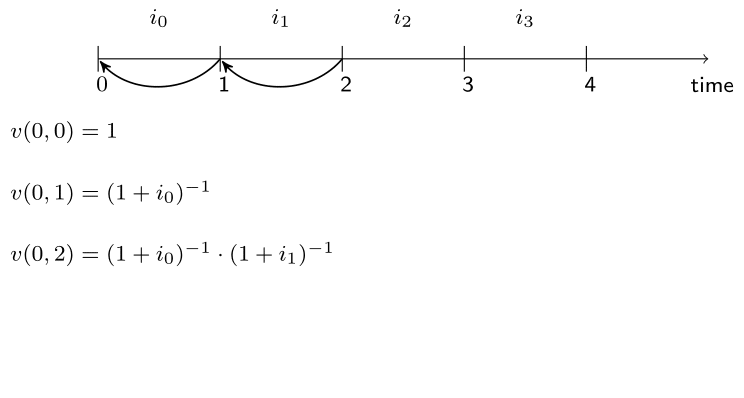
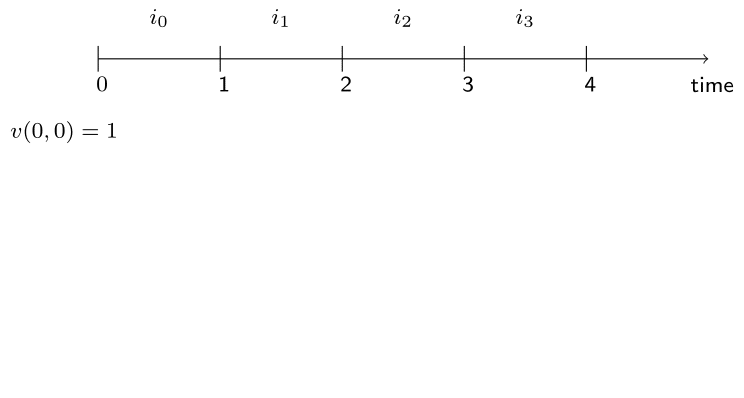
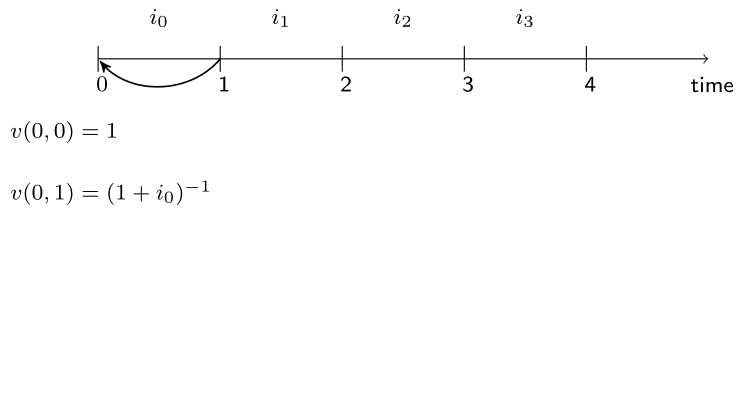
Niestałe stopy procentowe
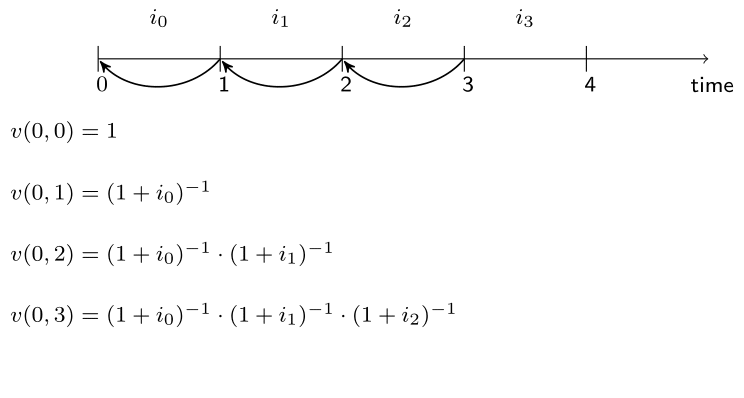
Niestałe stopy procentowe
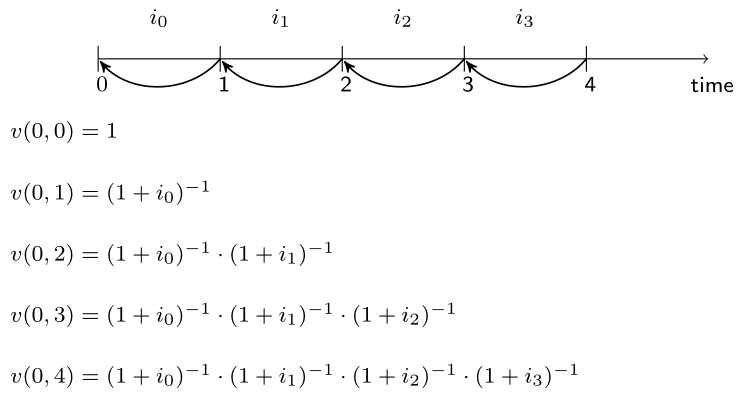

# Define the vector containing the interest rates
interest <- c(0.04, 0.03, 0.02, 0.01)
# Define the vector containing the inverse of 1 plus the interest rate
yearly_discount_factors <- (1 + interest) ^ - 1
# Define the discount factors to time 0 using cumprod()
discount_factors <- c(1 , cumprod(yearly_discount_factors))
discount_factors
1.0000000 0.9615385 0.9335325 0.9152279 0.9061663

