Python 工具箱
Hugo Bowne-Anderson
Data Scientist at DataCamp
[2 * num for num in range(10)]
[0, 2, 4, 6, 8, 10, 12, 14, 16, 18]
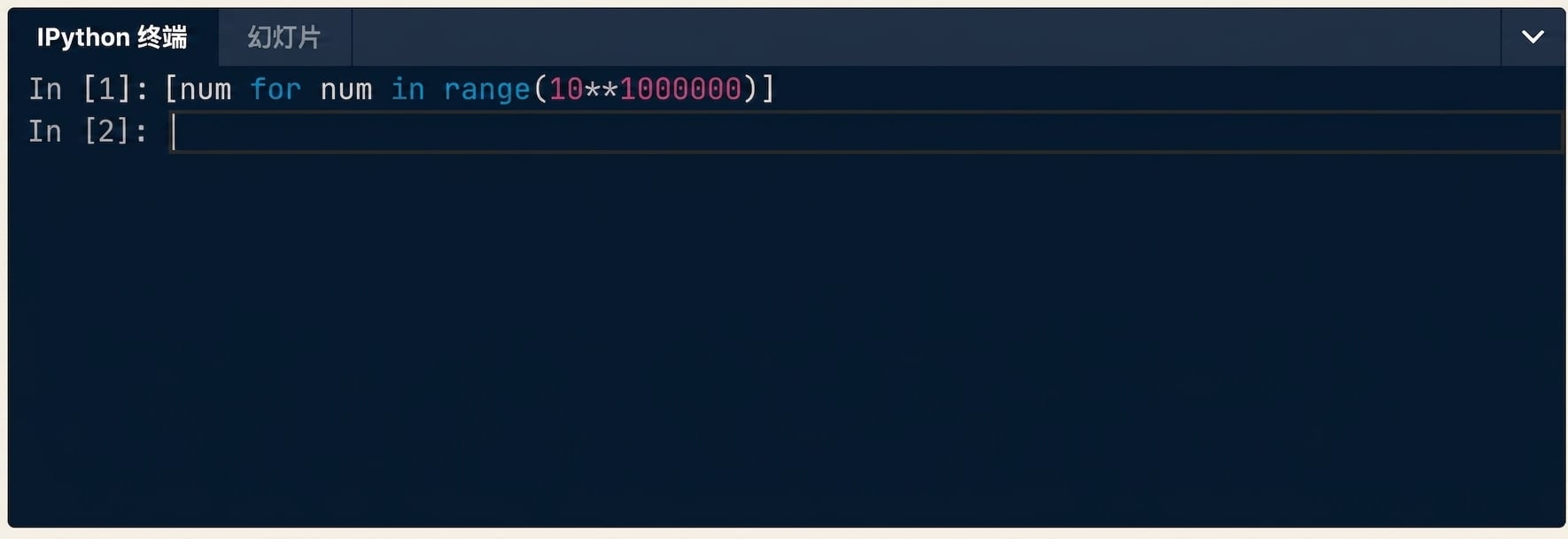
[ ]
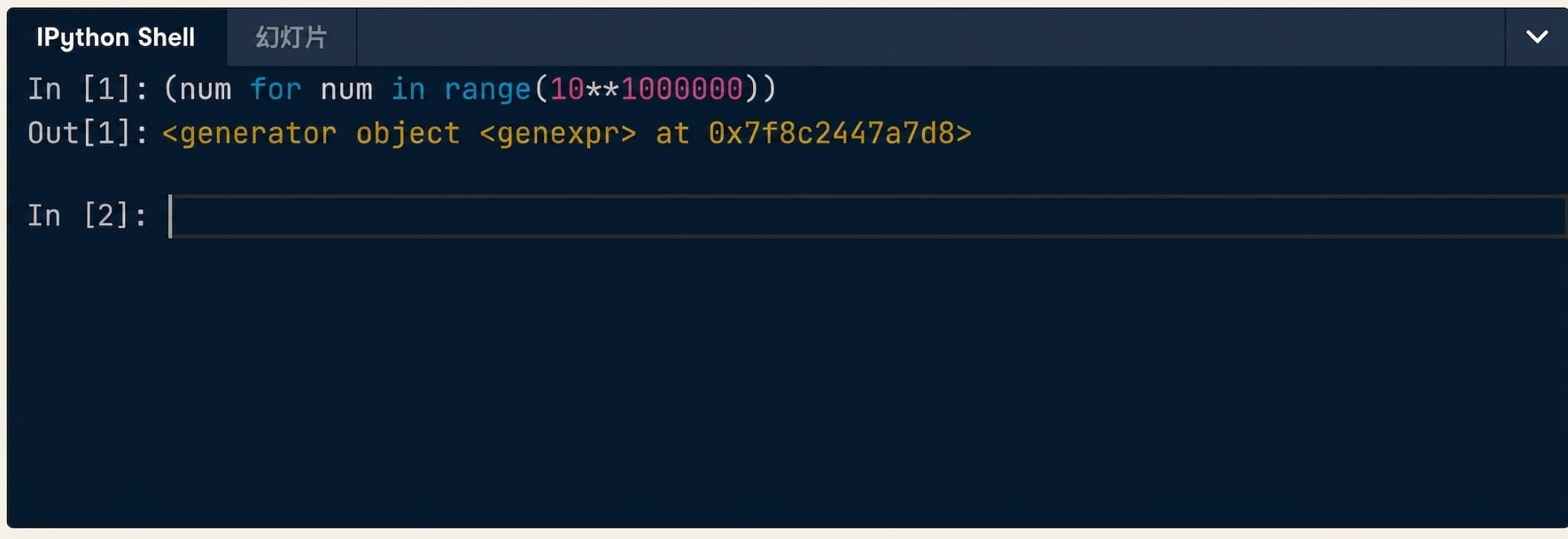
( )
(2 * num for num in range(10))
<generator object <genexpr> at 0x1046bf888>
result = (num for num in range(6))

for num in result:
    print(num)
result = (num for num in range(6))
for num in result: print(num)
0
1
2
3
4
5
result = (num for num in range(6))

print(list(result))
print(list(result))
[0, 1, 2, 3, 4, 5]
print(next(result))
0
1
2
3
4
even_nums = (num for num in range(10) if num % 2 == 0)

print(list(even_nums))
even_nums = (num for num in range(10) if num % 2 == 0)
print(list(even_nums))
[0, 2, 4, 6, 8]
def
yield
def num_sequence(n):
    """Generate values from 0 to n."""
    i = 0
    while i < n:
        yield i
        i += 1
result = num_sequence(5)

print(type(result))
result = num_sequence(5)
print(type(result))
<class 'generator'>
for item in result:
    print(item)
0
1
2
3
4