集成学习
Python 树模型机器学习

Elie Kawerk
Data Scientist
CART 的优点
易于理解。
易于解释。
易于使用。
灵活性:可表征非线性依赖。
预处理:无需标准化或归一化特征等。
CART 的局限性
分类:只能产生正交决策边界。
对训练集的微小变化敏感。
高方差:不加约束的 CART 可能过拟合。
解决方案:集成学习。
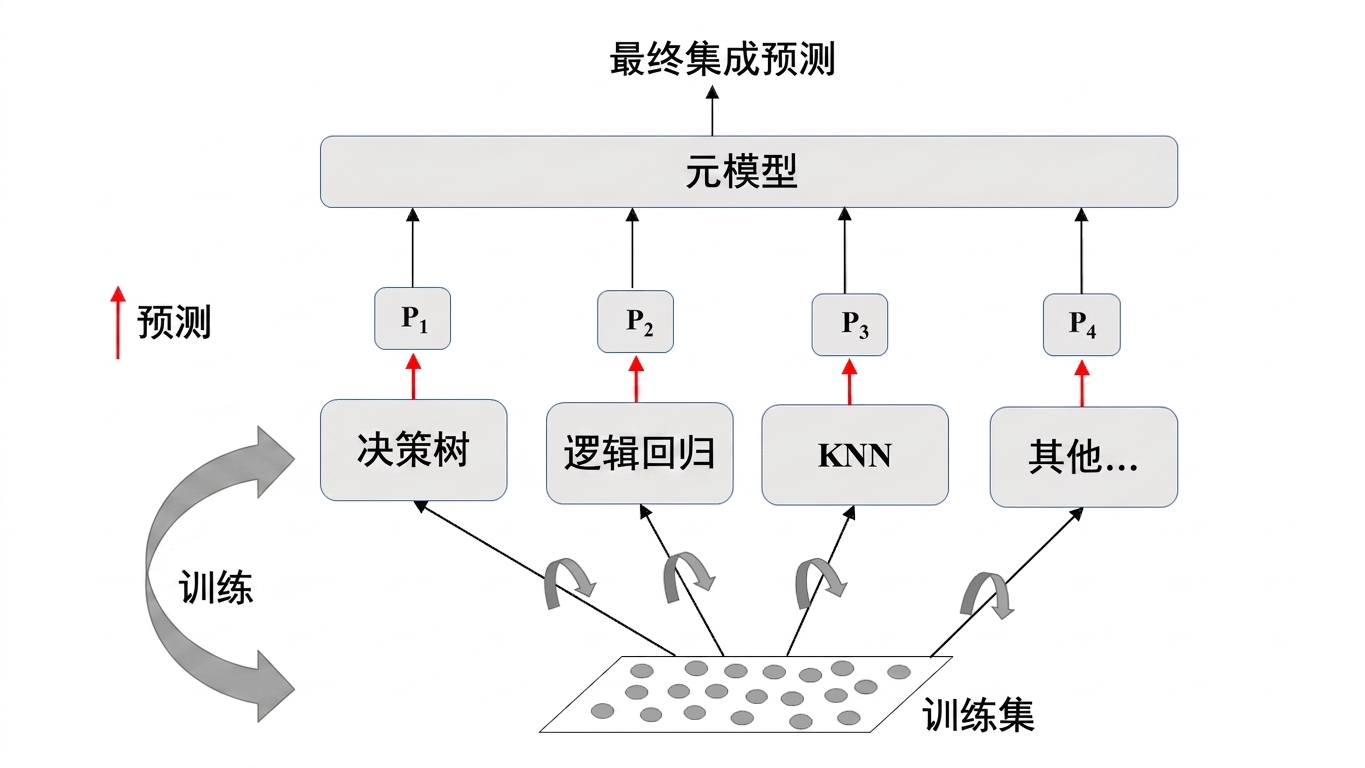
集成学习
在同一数据集上训练不同模型。
让每个模型各自预测。
元模型:聚合各模型预测。
最终预测:更稳健、错误更少。
最佳效果:模型擅长的方面互补。
集成学习:可视化说明
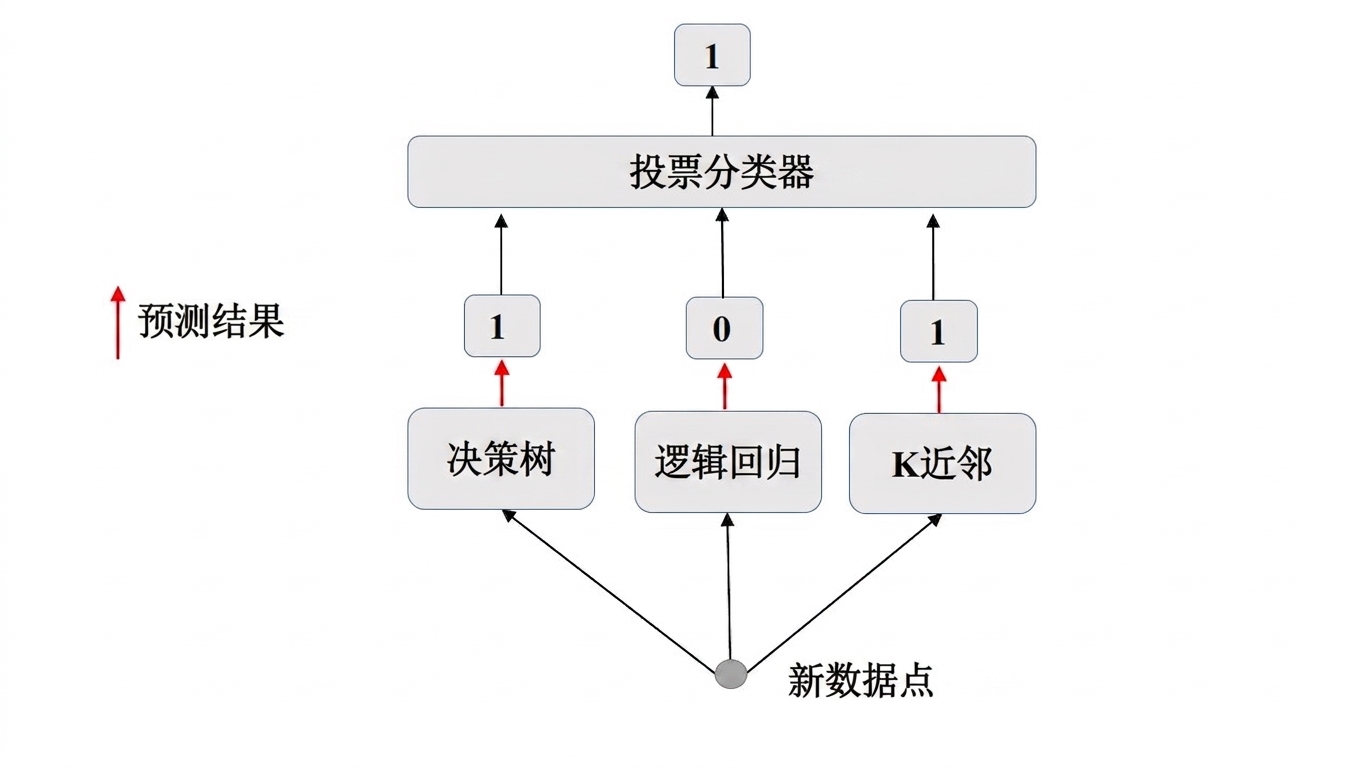
实践中的集成学习:投票分类器
二分类任务。
有 N 个分类器预测:P1、P2、…、PN,且 Pi = 0 或 1。
元模型预测:硬投票。
硬投票
sklearn 中的投票分类器(乳腺癌数据集)
# Import functions to compute accuracy and split data
from sklearn.metrics import accuracy_score
from sklearn.model_selection import train_test_split

# Import models, including VotingClassifier meta-model
from sklearn.linear_model import LogisticRegression
from sklearn.tree import DecisionTreeClassifier
from sklearn.neighbors import KNeighborsClassifier as KNN
from sklearn.ensemble import VotingClassifier

# Set seed for reproducibility
SEED = 1
sklearn 中的投票分类器(乳腺癌数据集)
# Split data into 70% train and 30% test X_train, X_test, y_train, y_test = train_test_split(X, y, test_size= 0.3, random_state= SEED) # Instantiate individual classifiers lr = LogisticRegression(random_state=SEED) knn = KNN() dt = DecisionTreeClassifier(random_state=SEED)# Define a list called classifier that contains the tuples (classifier_name, classifier) classifiers = [('Logistic Regression', lr), ('K Nearest Neighbours', knn), ('Classification Tree', dt)]
# Iterate over the defined list of tuples containing the classifiers
for clf_name, clf in classifiers:
    #fit clf to the training set
    clf.fit(X_train, y_train)

    # Predict the labels of the test set
    y_pred = clf.predict(X_test)

    # Evaluate the accuracy of clf on the test set
    print('{:s} : {:.3f}'.format(clf_name, accuracy_score(y_test, y_pred)))
Logistic Regression: 0.947
K Nearest Neighbours: 0.930
Classification Tree: 0.930
sklearn 中的投票分类器(乳腺癌数据集)
# Instantiate a VotingClassifier 'vc'
vc = VotingClassifier(estimators=classifiers)

# Fit 'vc' to the traing set and predict test set labels
vc.fit(X_train, y_train)
y_pred = vc.predict(X_test)

# Evaluate the test-set accuracy of 'vc'
print('Voting Classifier: {.3f}'.format(accuracy_score(y_test, y_pred)))
Voting Classifier: 0.953
Passons à la pratique !
Python 树模型机器学习

