PyTorch 与面向对象编程
PyTorch 深度学习进阶

Michal Oleszak
Machine Learning Engineer
学习目标
如何训练稳健的深度学习模型:
- 用优化器改进训练
- 缓解梯度消失与爆炸
- 卷积神经网络(CNN)
- 循环神经网络(RNN)
- 多输入与多输出模型

先修要求
本课程默认你已掌握以下主题:
神经网络训练:
- 前向传播
- 损失计算
- 反向传播
用 PyTorch 训练模型:
- Datasets 与 DataLoaders
- 训练循环
- 模型评估
面向对象编程(OOP)
我们将用 OOP 定义:
- PyTorch Datasets
- PyTorch Models
在 OOP 中,我们创建的对象包含:
- 能力(方法)
- 数据(属性)
面向对象编程(OOP)
class BankAccount:
    def __init__(self, balance):
        self.balance = balance
- 创建
BankAccount对象时会调用__init__ balance是BankAccount对象的属性
account = BankAccount(100)
print(account.balance)
100
面向对象编程(OOP)
- 方法:用于执行任务的 Python 函数
deposit方法增加余额
class BankAccount: def __init__(self, balance): self.balance = balancedef deposit(self, amount): self.balance += amount
account = BankAccount(100)
account.deposit(50)
print(account.balance)
150
水可饮用性数据集
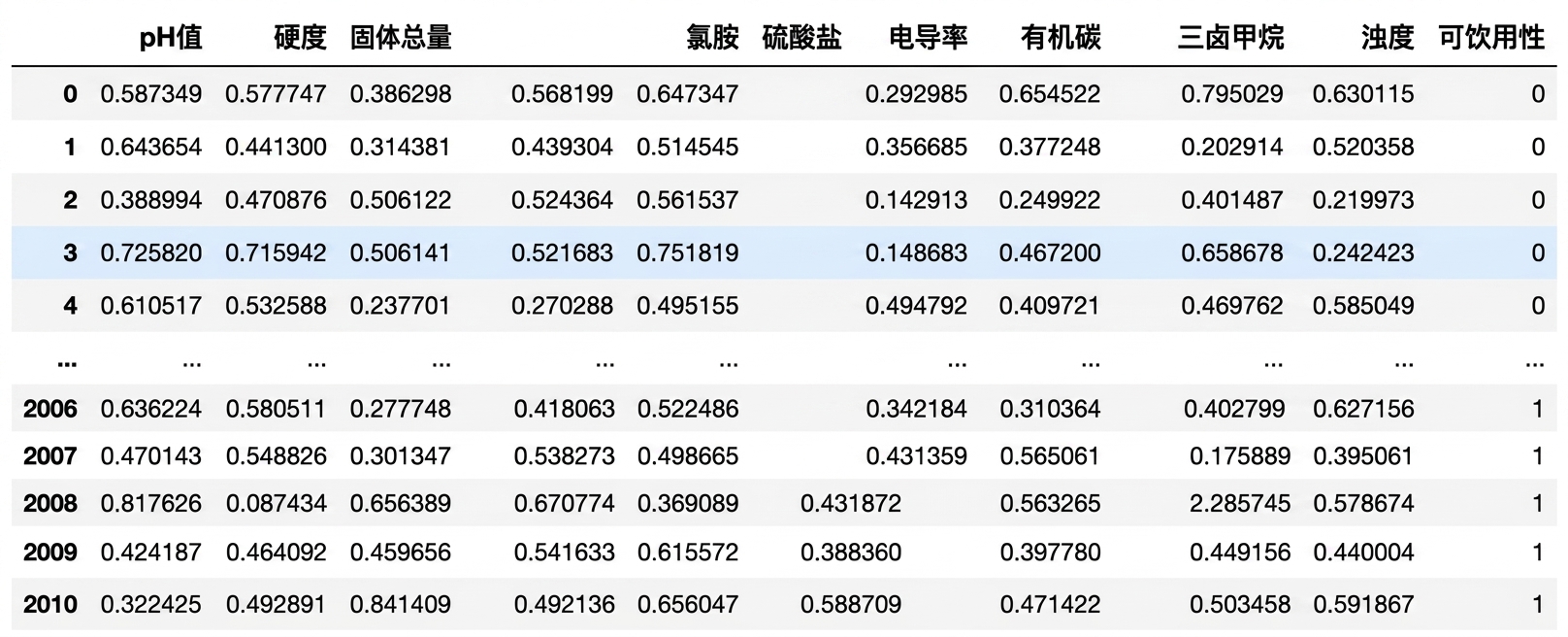
PyTorch Dataset
from torch.utils.data import Dataset class WaterDataset(Dataset):def __init__(self, csv_path): super().__init__() df = pd.read_csv(csv_path) self.data = df.to_numpy()def __len__(self): return self.data.shape[0]def __getitem__(self, idx): features = self.data[idx, :-1] label = self.data[idx, -1] return features, label
- init:加载数据并存为 numpy 数组
super().__init__()确保WaterDataset表现为 torch 的Dataset
- len:返回数据集大小
- getitem:
- 接受参数
idx - 返回索引
idx的单个样本特征和标签
- 接受参数
PyTorch DataLoader
dataset_train = WaterDataset(
    "water_train.csv"
)
from torch.utils.data import DataLoader

dataloader_train = DataLoader(
    dataset_train,
    batch_size=2,
    shuffle=True,
)
features, labels = next(iter(dataloader_train))
print(f"Features: {features},\nLabels: {labels}")
Features: tensor([
  [0.4899, 0.4180, 0.6299, 0.3496, 0.4575,
   0.3615, 0.3259, 0.5011, 0.7545],
  [0.7953, 0.6305, 0.4480, 0.6549, 0.7813,
   0.6566, 0.6340, 0.5493, 0.5789]
]),
Labels: tensor([1., 0.])
PyTorch 模型
顺序式模型定义:
net = nn.Sequential(
  nn.Linear(9, 16),
  nn.ReLU(),
  nn.Linear(16, 8),
  nn.ReLU(),
  nn.Linear(8, 1),
  nn.Sigmoid(),
)
基于类的模型定义:
class Net(nn.Module):def __init__(self): super().__init__() self.fc1 = nn.Linear(9, 16) self.fc2 = nn.Linear(16, 8) self.fc3 = nn.Linear(8, 1)def forward(self, x): x = nn.functional.relu(self.fc1(x)) x = nn.functional.relu(self.fc2(x)) x = nn.functional.sigmoid(self.fc3(x)) return x net = Net()
Passons à la pratique !
PyTorch 深度学习进阶

