evaluate 库

Python 中的 LLM 入门

Jasmin Ludolf

Senior Data Science Content Developer, DataCamp

evaluate 库

import evaluate

accuracy = evaluate.load("accuracy")
print(accuracy.description)
Accuracy is the proportion of correct
predictions among the total number of cases
processed. It can be computed with:
Accuracy = (TP + TN) / (TP + TN + FP + FN)
Where:
TP: True positive
TN: True negative
FP: False positive
FN: False negative


  • 指标: 基于真实标签评估模型表现


  • 对比: 比较两个模型


  • 度量: 洞察数据集属性
Python 中的 LLM 入门

Features 属性

print(accuracy.features)
{'predictions': Value(dtype='int32', id=None),
 'references': Value(dtype='int32', id=None)}

查看指标所需输入

  • 'predictions':模型输出
  • 'references':真实标签
  • .features:指示类别标签支持的类型,如 'int32''float32'
f1 = evaluate.load("f1")
print(f1.features)
{'predictions': Value(dtype='int32', id=None),
 'references': Value(dtype='int32', id=None)}
pearson_corr = evaluate.load("pearsonr")
print(pearson_corr.features)
{'predictions': Value(dtype='float32', id=None),
'references': Value(dtype='float32', id=None)}
Python 中的 LLM 入门

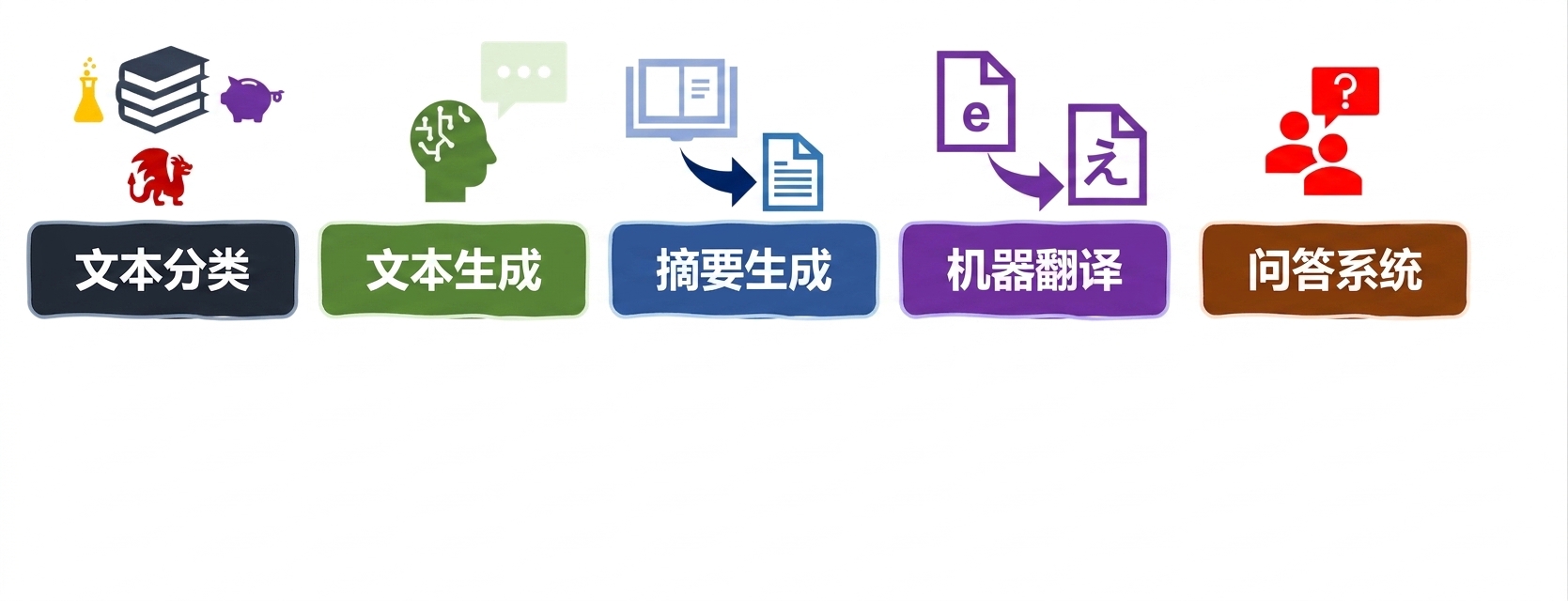
LLM 任务与指标


语言任务的评估指标

Python 中的 LLM 入门

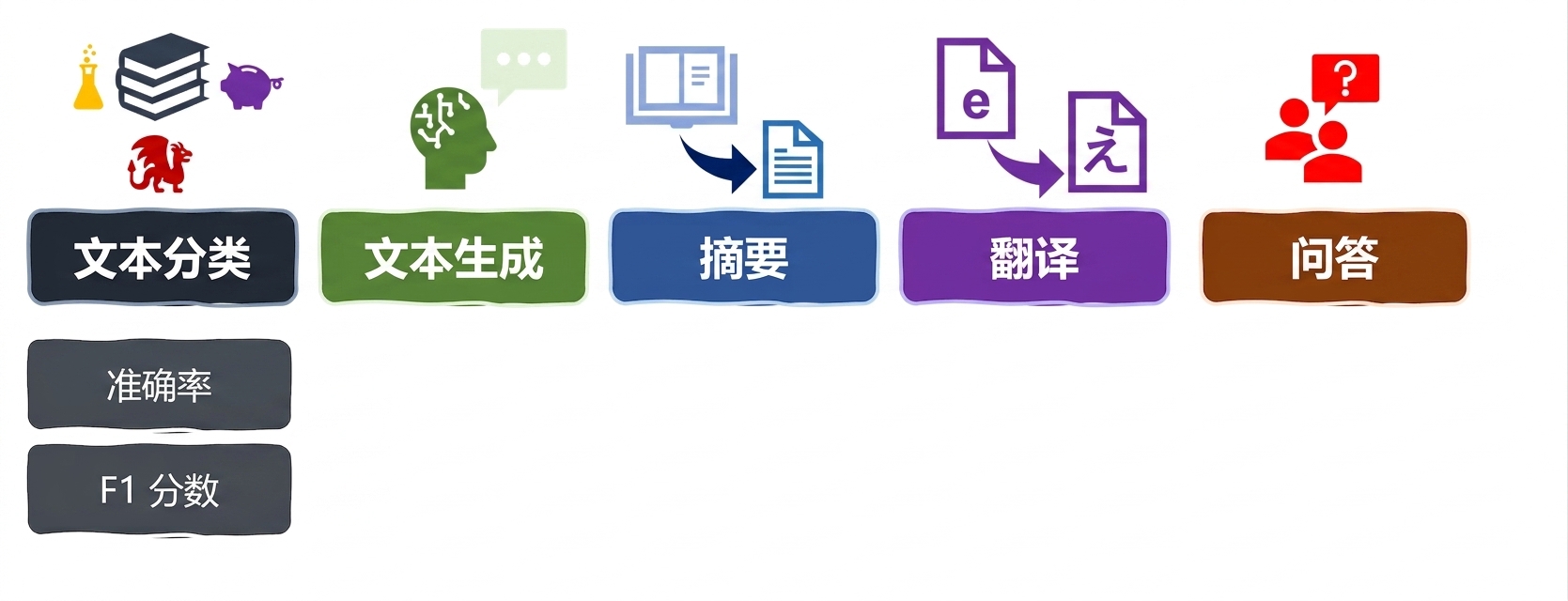
LLM 任务与指标


语言任务的评估指标

Python 中的 LLM 入门

分类指标

accuracy = evaluate.load("accuracy")
precision = evaluate.load("precision")
recall = evaluate.load("recall")
f1 = evaluate.load("f1")
from transformers import pipeline

classifier = pipeline("text-classification", model=model, tokenizer=tokenizer)

predictions = classifier(evaluation_text)

predicted_labels = [1 if pred["label"] == "POSITIVE" else 0 for pred in predictions]
Python 中的 LLM 入门

指标输出

real_labels = [0,1,0,1,1]
predicted_labels = [0,0,0,1,1]

print(accuracy.compute(references=real_labels, predictions=predicted_labels))
print(precision.compute(references=real_labels, predictions=predicted_labels))
print(recall.compute(references=real_labels, predictions=predicted_labels))
print(f1.compute(references=real_labels, predictions=predicted_labels))
{'accuracy': 0.8}
{'precision': 1.0}
{'recall': 0.6666666666666666}
{'f1': 0.8}
Python 中的 LLM 入门

评估微调后的模型

# Load saved model and tokenizer with 
# .from_pretrained("my_finetuned_files")


new_data = ["This is movie was disappointing!", "This is the best movie ever!"] new_input = tokenizer(new_data, return_tensors="pt", padding=True, truncation=True, max_length=64) with torch.no_grad(): outputs = model(**new_input) predicted = torch.argmax(outputs.logits, dim=1).tolist()
real = [0,1]
print(accuracy.compute(references=real,
                       predictions=predicted))
print(precision.compute(references=real,
                        predictions=predicted))
print(recall.compute(references=real,
                     predictions=predicted))
print(f1.compute(references=real, 
                 predictions=predicted))
{'accuracy': 1.0}
{'precision': 1.0}
{'recall': 1.0}
{'f1': 1.0}
Python 中的 LLM 入门

选择合适的指标


  • 注意: 每个指标都有其洞见与局限


  • 全面: 组合使用多种指标(必要时加入领域 KPIs)

一个带灯泡的大脑插图,表示意识、思考与决策。

Python 中的 LLM 入门

Passons à la pratique !

Python 中的 LLM 入门

Preparing Video For Download...