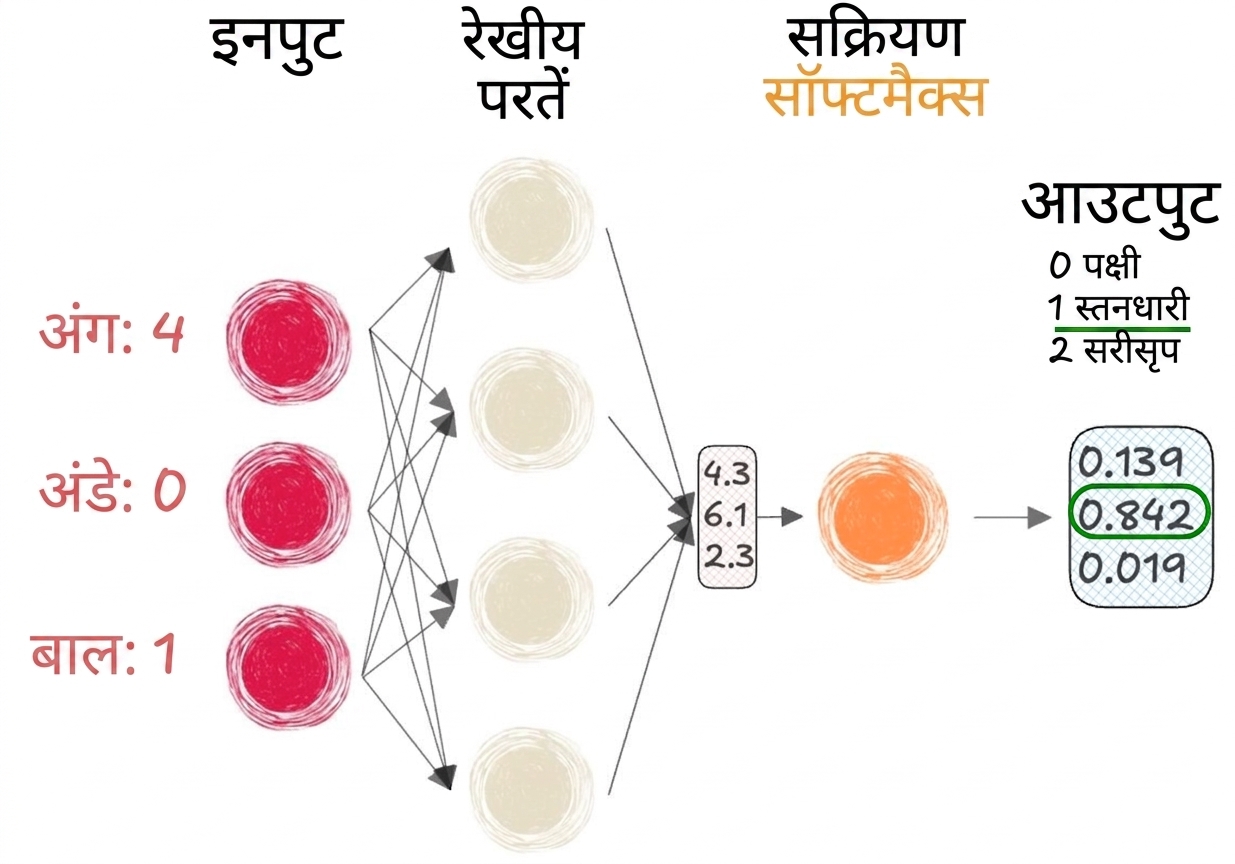
एक्टिवेशन फंक्शन्स की समझ
PyTorch के साथ Deep Learning परिचय

Jasmin Ludolf
Senior Data Science Content Developer, DataCamp
एक्टिवेशन फंक्शन्स
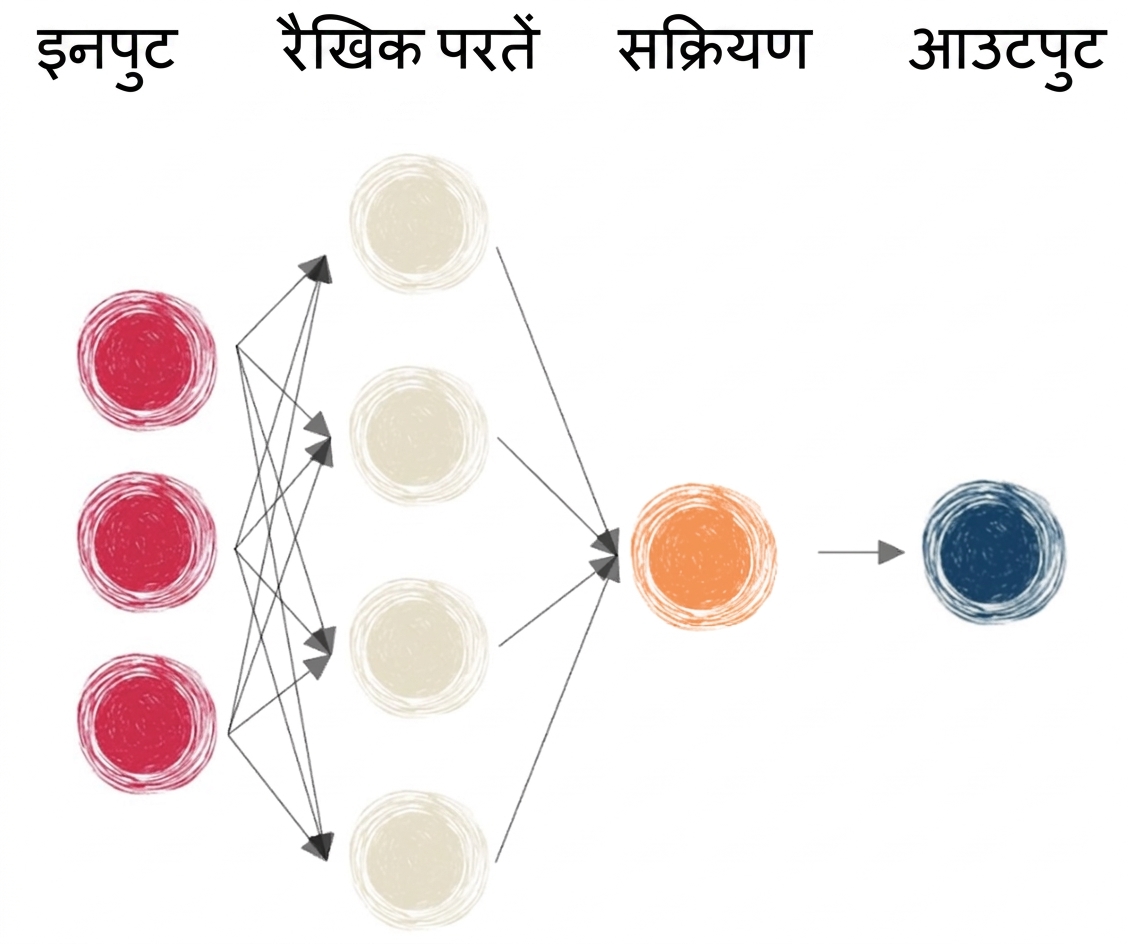
Sigmoid फंक्शन से मिलिए
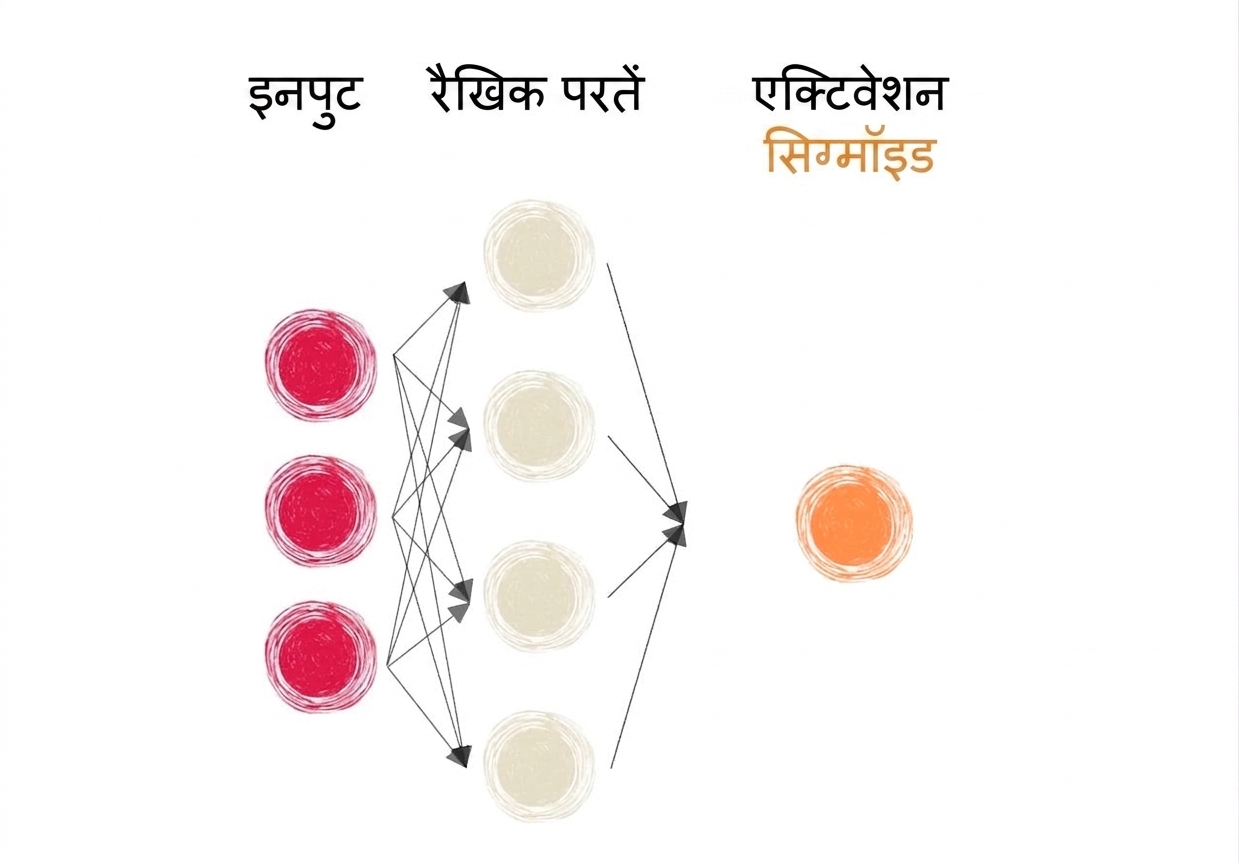
- स्तनपायी है या नहीं?

Sigmoid फंक्शन से मिलिए
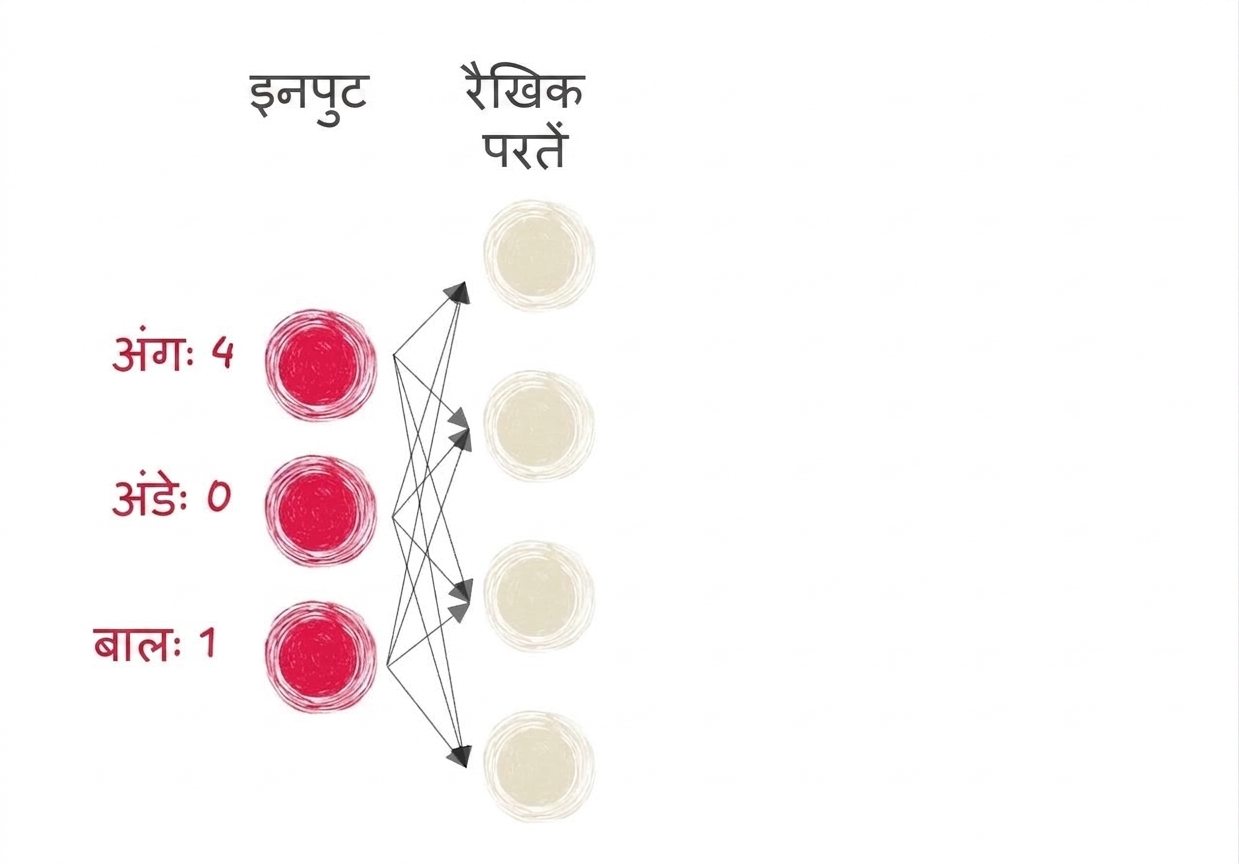
- स्तनपायी है या नहीं?
- इनपुट:
- पैर: 4
- अंडे: 0
- बाल: 1
Sigmoid फंक्शन से मिलिए
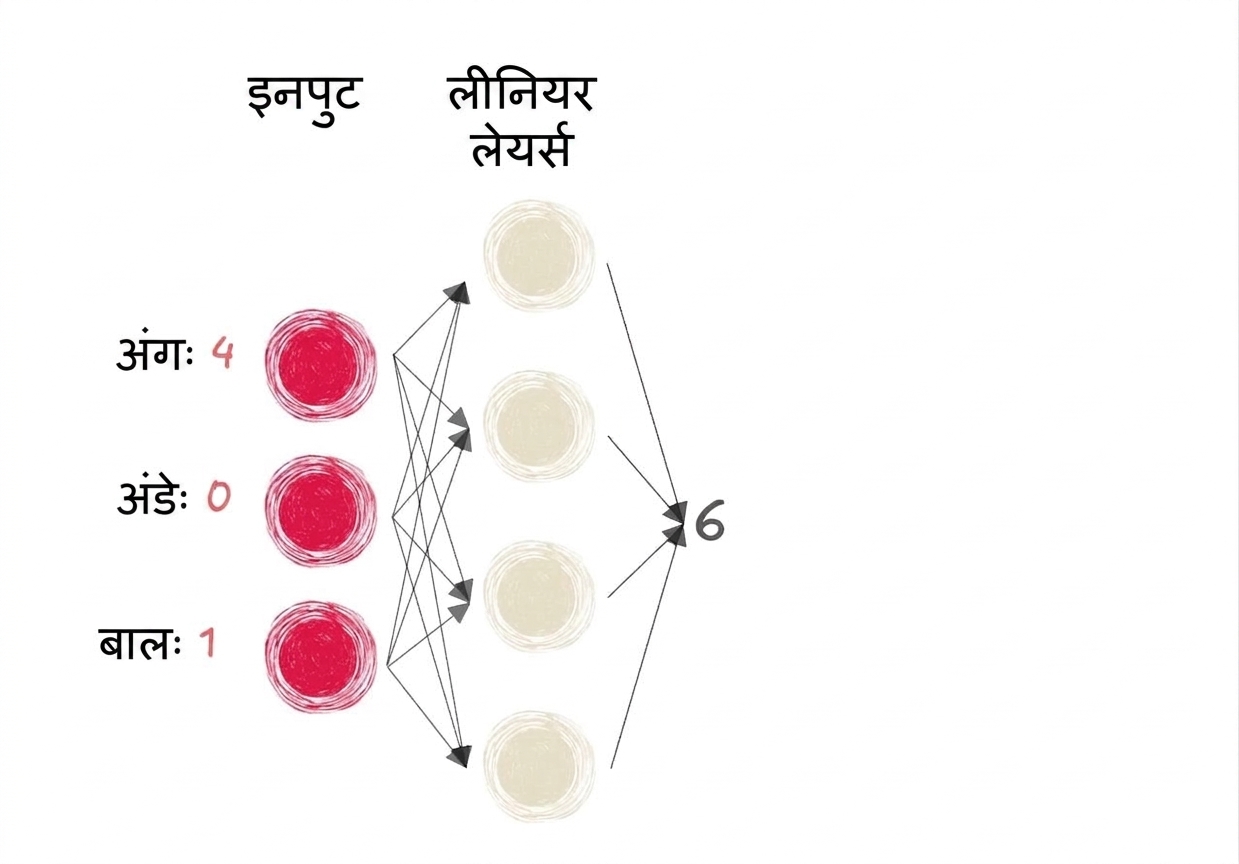
- स्तनपायी है या नहीं?
- लिनियर लेयर्स का आउटपुट 6 है
Sigmoid फंक्शन से मिलिए
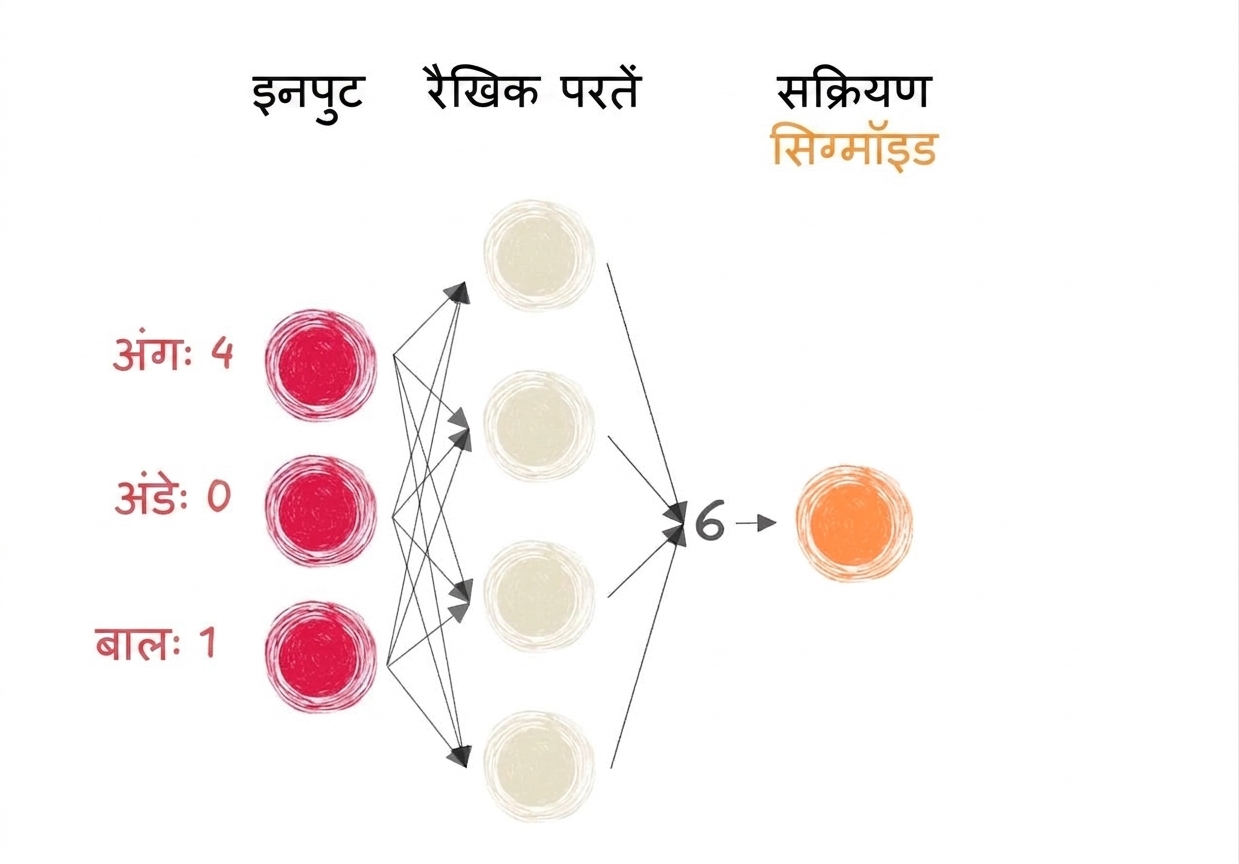
- स्तनपायी है या नहीं?
- हम pre-activation आउटपुट (6) को sigmoid फंक्शन में पास करते हैं
Sigmoid फंक्शन से मिलिए
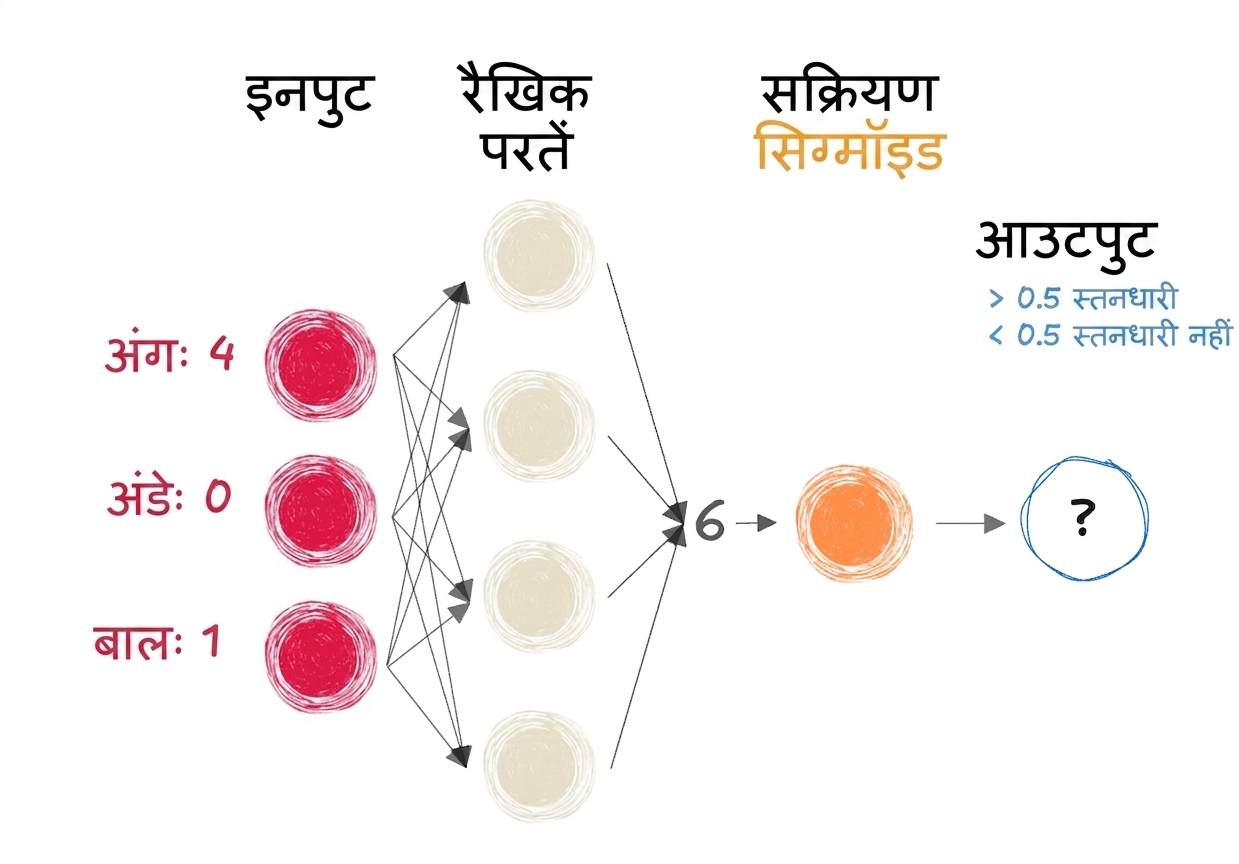
- स्तनपायी है या नहीं?
- हम pre-activation आउटपुट (6) को sigmoid फंक्शन में पास करते हैं
0 और 1 के बीच मान मिलता है
यदि आउटपुट > 0.5, class label = 1 (मेमल)
- यदि आउटपुट <= 0.5, class label = 0 (मेमल नहीं)
Softmax से परिचय
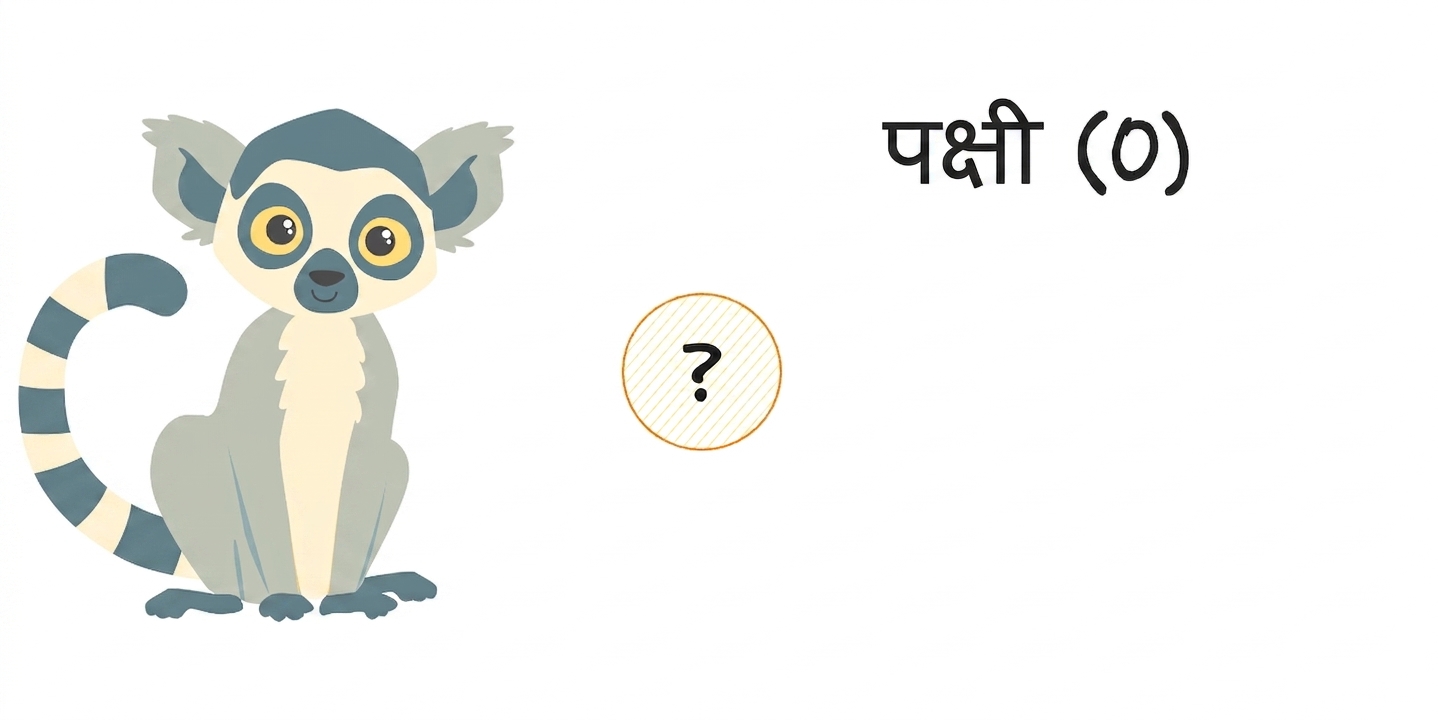
Softmax से परिचय
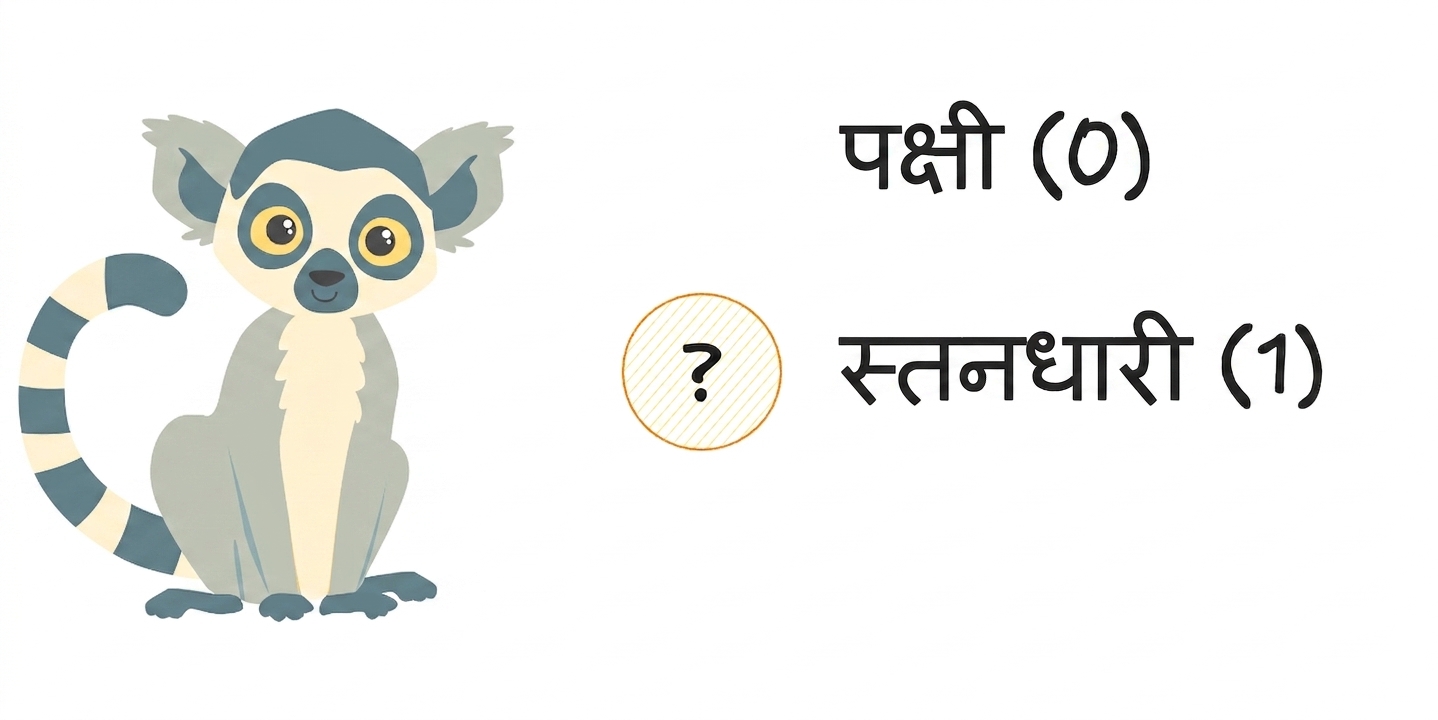
Softmax से परिचय
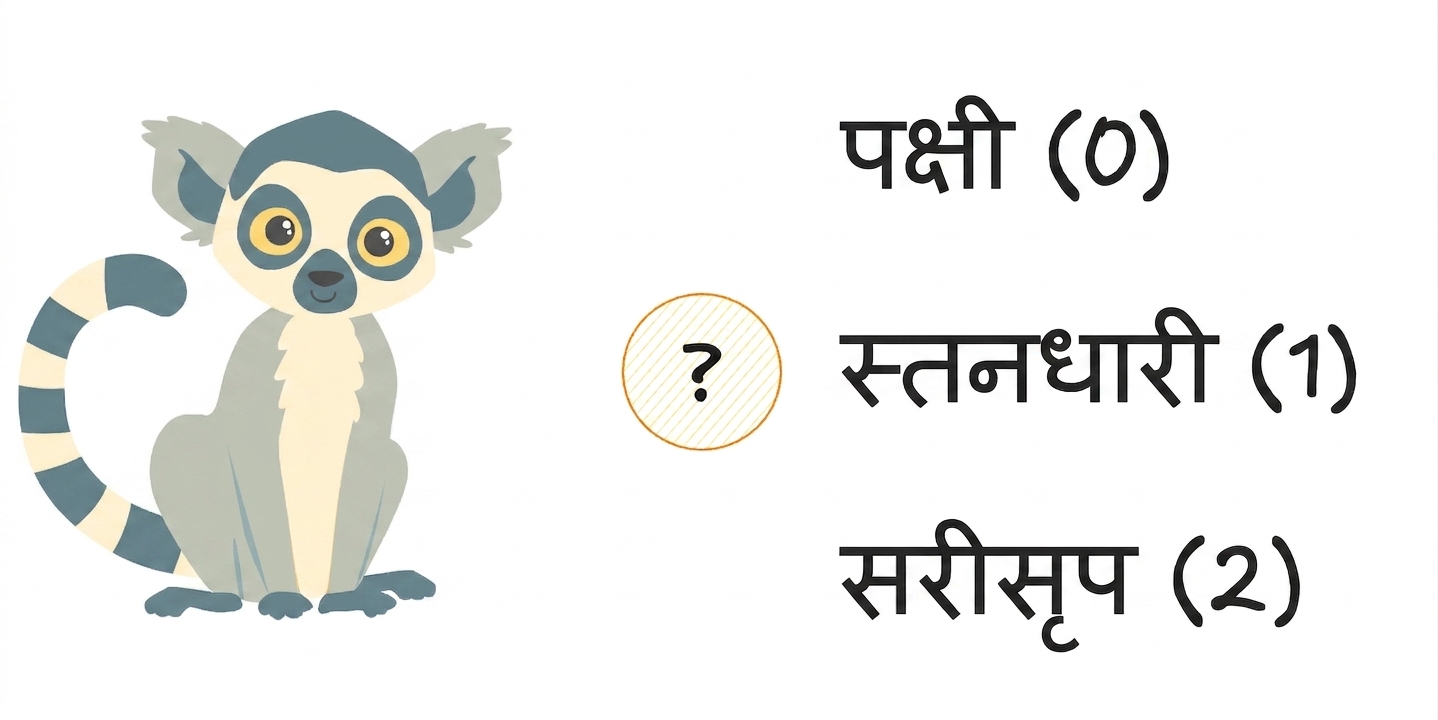
Softmax से परिचय
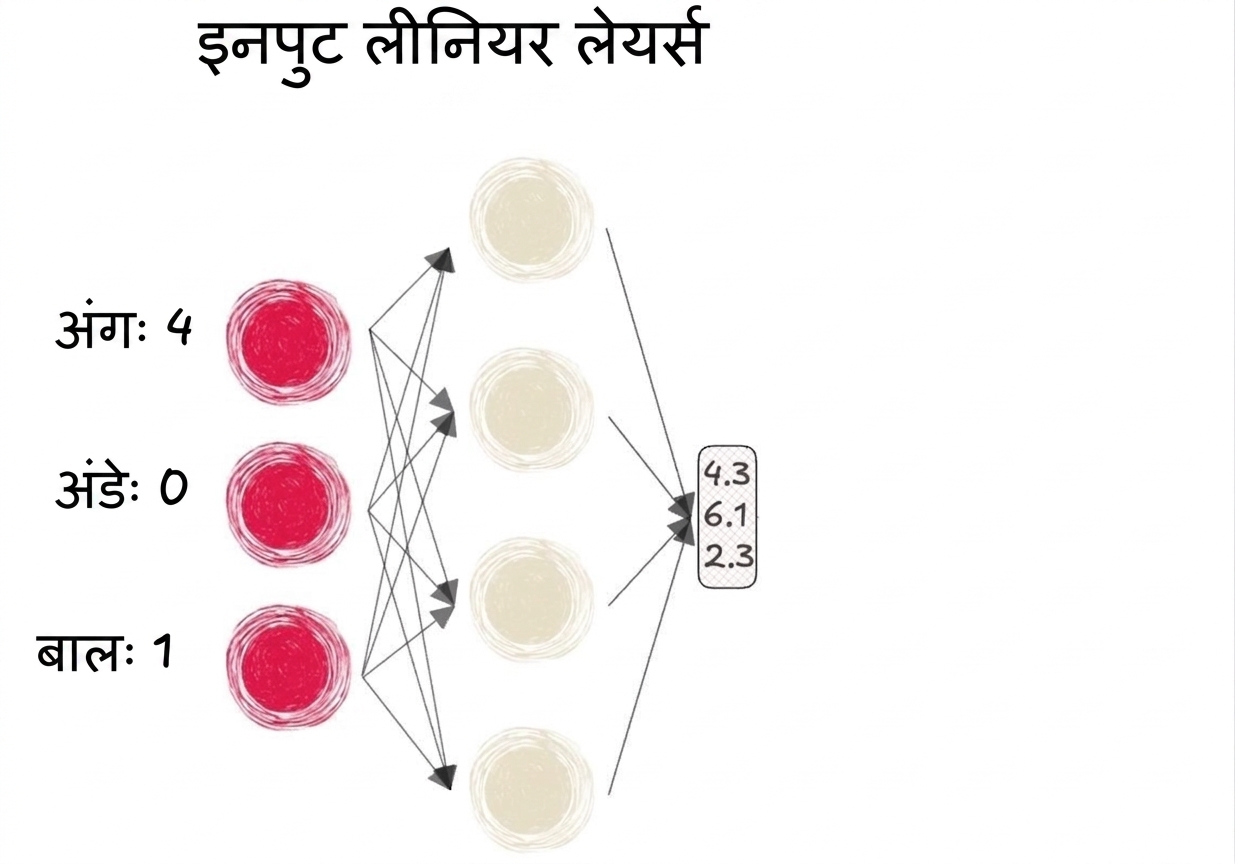
Softmax से परिचय
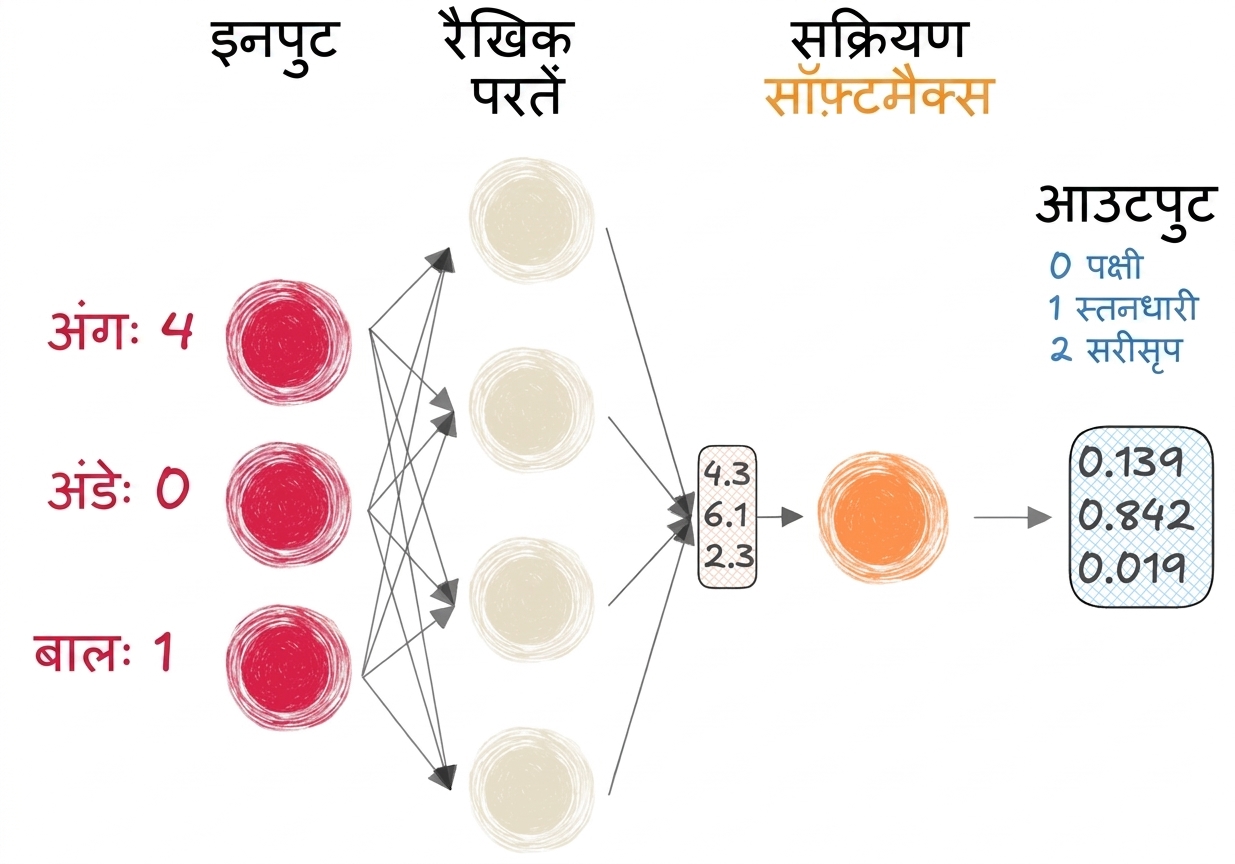
Softmax से परिचय