การประเมินหลายโมเดล
Supervised Learning ด้วย scikit-learn

George Boorman
Core Curriculum Manager, DataCamp
โมเดลต่างกันสำหรับปัญหาต่างกัน
หลักการเบื้องต้น
- ขนาดของชุดข้อมูล
- ฟีเจอร์น้อย = โมเดลเรียบง่าย ฝึกได้เร็วขึ้น
- บางโมเดลต้องการข้อมูลจำนวนมากเพื่อให้ทำงานได้ดี
- ความสามารถในการอธิบาย
- บางโมเดลอธิบายได้ง่ายกว่า ซึ่งสำคัญสำหรับผู้มีส่วนได้ส่วนเสีย
- Linear regression มีความสามารถในการอธิบายสูง เพราะเข้าใจค่าสัมประสิทธิ์ได้
- ความยืดหยุ่น
- ช่วยเพิ่มความแม่นยำโดยตั้งสมมติฐานเกี่ยวกับข้อมูลน้อยลง
- KNN เป็นโมเดลที่ยืดหยุ่นกว่า ไม่สมมติว่าข้อมูลมีความสัมพันธ์เชิงเส้น
ทุกอย่างอยู่ที่เมตริก
ประสิทธิภาพโมเดล Regression:
- RMSE
- R-squared
ประสิทธิภาพโมเดล Classification:
- Accuracy
- Confusion matrix
- Precision, recall, F1-score
- ROC AUC
ฝึกหลายโมเดลและประเมินประสิทธิภาพเบื้องต้น
หมายเหตุเรื่องการ scaling
- โมเดลที่ได้รับผลจากการ scaling:
- KNN
- Linear Regression (รวมถึง Ridge, Lasso)
- Logistic Regression
- Artificial Neural Network
- ควร scale ข้อมูลก่อนประเมินโมเดล
การประเมินโมเดล Classification
import matplotlib.pyplot as plt from sklearn.preprocessing import StandardScaler from sklearn.model_selection import cross_val_score, KFold, train_test_split from sklearn.neighbors import KNeighborsClassifier from sklearn.linear_model import LogisticRegression from sklearn.tree import DecisionTreeClassifierX = music.drop("genre", axis=1).values y = music["genre"].values X_train, X_test, y_train, y_test = train_test_split(X, y, random_state=42)scaler = StandardScaler() X_train_scaled = scaler.fit_transform(X_train)X_test_scaled = scaler.transform(X_test)
การประเมินโมเดล Classification
models = {"Logistic Regression": LogisticRegression(), "KNN": KNeighborsClassifier(), "Decision Tree": DecisionTreeClassifier()} results = []for model in models.values():kf = KFold(n_splits=6, random_state=42, shuffle=True)cv_results = cross_val_score(model, X_train_scaled, y_train, cv=kf)results.append(cv_results)plt.boxplot(results, labels=models.keys()) plt.show()
การแสดงผลลัพธ์
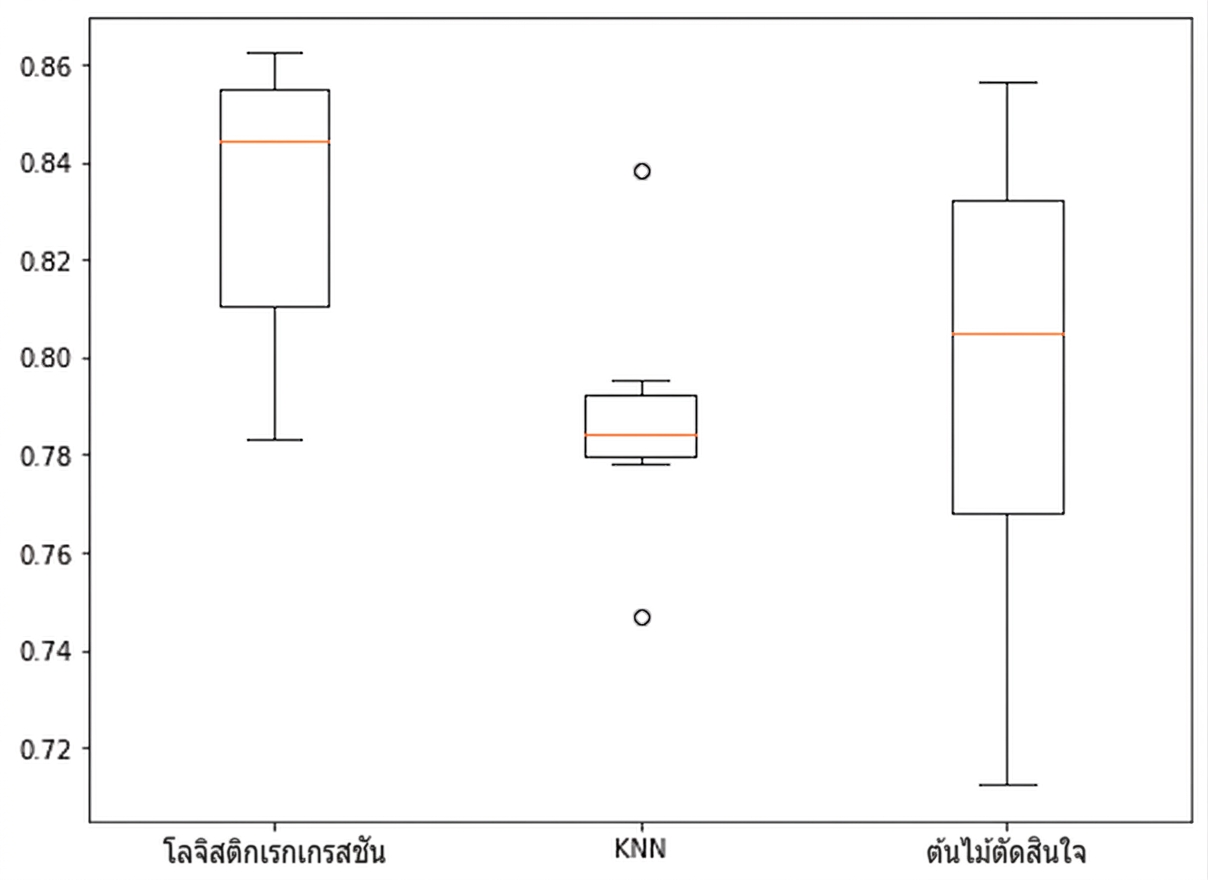
ประสิทธิภาพบน Test Set
for name, model in models.items():model.fit(X_train_scaled, y_train)test_score = model.score(X_test_scaled, y_test)print("{} Test Set Accuracy: {}".format(name, test_score))
Logistic Regression Test Set Accuracy: 0.844
KNN Test Set Accuracy: 0.82
Decision Tree Test Set Accuracy: 0.832
มาฝึกกันเถอะ!
Supervised Learning ด้วย scikit-learn

