Échantillonnage en Python
James Chapman
Curriculum Manager, DataCamp
len(coffee_ratings.sample(n=300))
300
len(coffee_ratings.sample(frac=0.25))
334
coffee_ratings['total_cup_points'].mean()
82.15120328849028
coffee_ratings.sample(n=10)['total_cup_points'].mean()
83.027
coffee_ratings.sample(n=100)['total_cup_points'].mean()
82.4897
coffee_ratings.sample(n=1000)['total_cup_points'].mean()
82.1186
Paramètre de population :
population_mean = coffee_ratings['total_cup_points'].mean()
Estimation ponctuelle :
sample_mean = coffee_ratings.sample(n=sample_size)['total_cup_points'].mean()
Erreur relative en pourcentage :
rel_error_pct = 100 * abs(population_mean-sample_mean) / population_mean
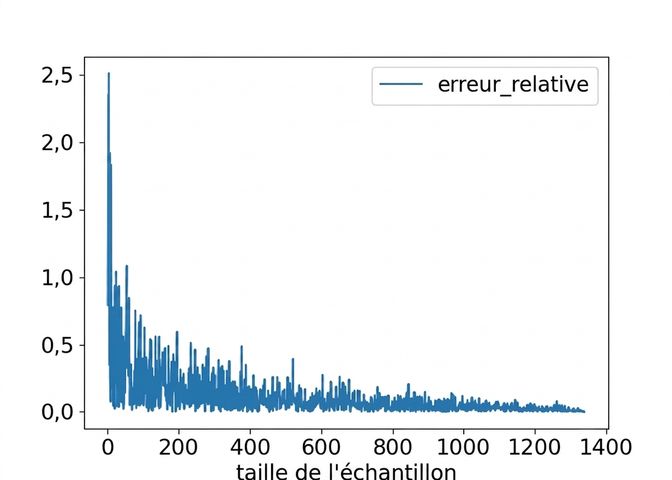
import matplotlib.pyplot as plt
errors.plot(x="sample_size",
            y="relative_error",
            kind="line")
plt.show()
Propriétés :