R 中的树模型机器学习
Sandro Raabe
Data Scientist
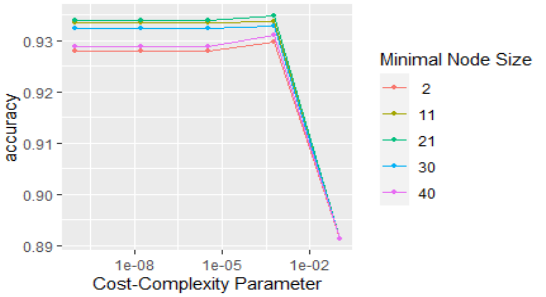
parsnip 决策树的超参数:
parsnip
min_n
tree_depth
cost_complexity
parsnip 的默认值:
decision_tree(min_n = 20, tree_depth = 30, cost_complexity = 0.01)
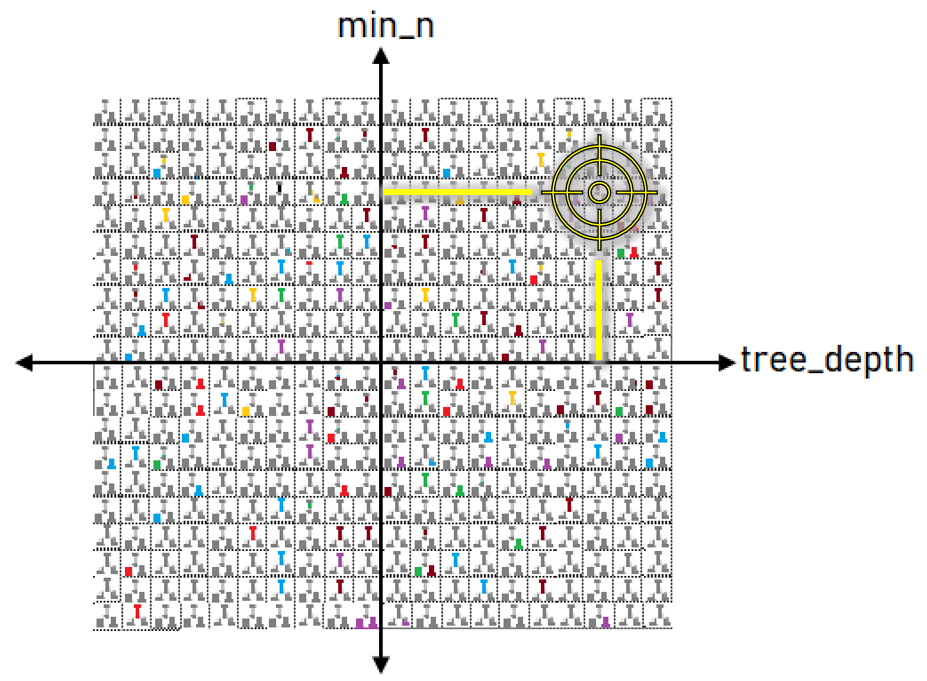
调参的目标是找到超参数的最优组合。
spec_untuned <- decision_tree(

         min_n = tune(),
         tree_depth = tune()

    ) %>%
    set_engine("rpart") %>%
    set_mode("classification")
spec_untuned <- decision_tree(
min_n = tune(), tree_depth = tune()
) %>% set_engine("rpart") %>% set_mode("classification")
Decision Tree Model Specification
(classification)


Main Arguments:
  tree_depth = tune()
  min_n = tune()
Decision Tree Model Specification (classification)
Main Arguments: tree_depth = tune() min_n = tune()
tune()
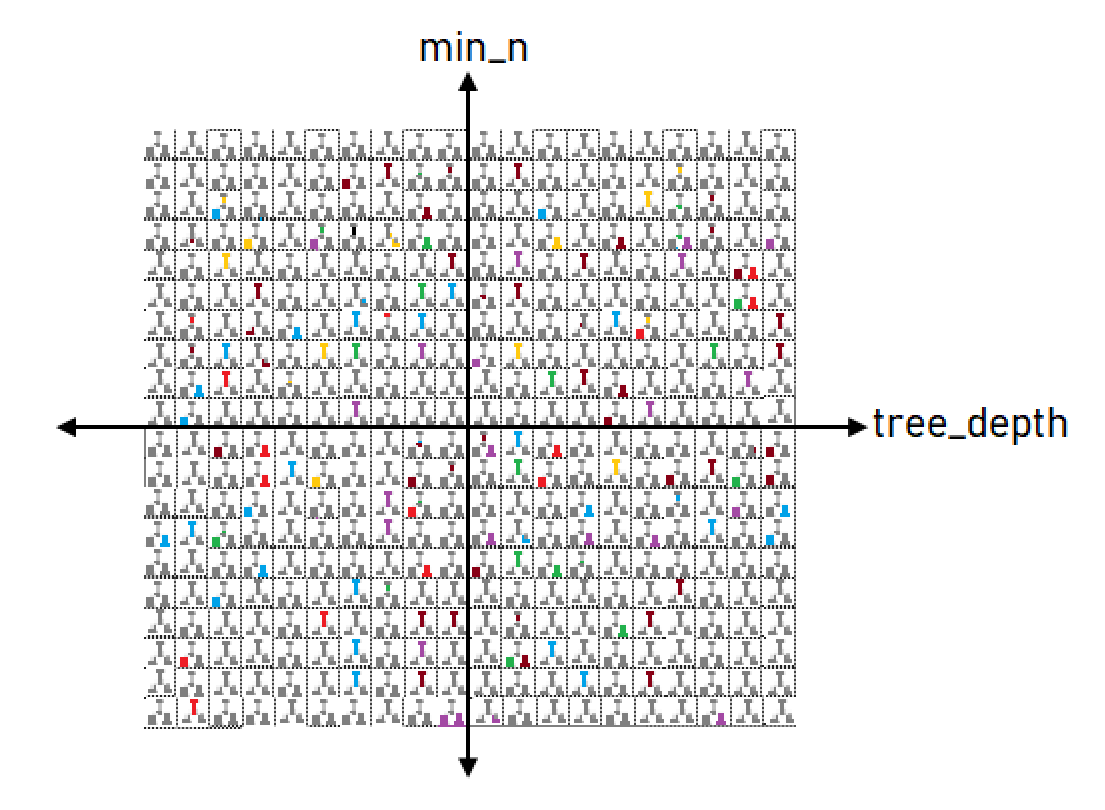
tree_grid <- grid_regular(

        parameters(spec_untuned),

        levels = 3
    )
tree_grid <- grid_regular(
parameters(spec_untuned),
levels = 3 )
# A tibble: 9 x 2
  min_n tree_depth
1     2          1
2    21          1
3    40          1
4     2          8
5    21          8
6    40          8
7     2         15
8    21         15
9    40         15
parameters()
levels
用法与参数:
metric_set()
tune_results <- tune_grid(

  spec_untuned,

  outcome ~ .,

  resamples = my_folds,

  grid = tree_grid,

  metrics = metric_set(accuracy))
tune_results <- tune_grid(
spec_untuned,
outcome ~ .,
resamples = my_folds,
grid = tree_grid,
metrics = metric_set(accuracy))
autoplot(tune_results)
# 选择表现最佳的参数
final_params <- select_best(tune_results)


final_params
# 选择表现最佳的参数 final_params <- select_best(tune_results)
final_params
# A tibble: 1 x 3
    min_n    tree_depth    .config
    <int>         <int>      <chr>
1      2              8     Model4
# 填入规范中
best_spec <- finalize_model(spec_untuned,
                            final_params)

best_spec
# 填入规范中 best_spec <- finalize_model(spec_untuned, final_params)
best_spec
Decision Tree Model Specification
                 (classification)

Main Arguments:
  tree_depth = 8
  min_n = 2

Computational engine: rpart