目标基因
R 中的 Bioconductor 入门

Paula Andrea Martinez, PhD.
Data Scientist
基因组区间示例
- 比对到参考序列的reads
- 目标基因
- 外显子区域
- 单核苷酸多态性(SNP)
- 转录区或结合位点(RNA-seq 或 ChIP-seq)
Genomic Ranges
library(GenomicRanges)
(myGR <- GRanges("chr1:200-300"))
 GRanges 对象:1 个区间,0 个元数据列:
  seqnames     ranges strand
     <Rle>  <IRanges>  <Rle>
[1]     chr1 [200, 300]    *
 -----
seqinfo: 未指定基因组的 1 条序列;无序列长度
- GRanges 类按染色体存储基因组区间
- 最少参数
chr1:200-300 - GRanges 的
seqnames与seqinfo
# df 类 data.frame 的结构
   seqnames start end strand score  GC
1     chrX    50 120      +     1 0.25
2     chrX   130 140      +     2 0.25
3     chrX   153 154      +     3 0.25
4     chrY    30  40      *     4 0.25
5     chrY    50  55      -     5 0.25
(myGR <- as(df, "GRanges")) # 将 df 转为 GRanges
GRanges 对象:5 个区间,2 个元数据列:
      seqnames     ranges strand |     score        GC
         <Rle>  <IRanges>  <Rle> | <integer> <numeric>
  [1]     chrX [ 50, 120]      + |         1      0.25
  [2]     chrX [130, 140]      + |         2      0.25
  [3]     chrX [153, 154]      + |         3      0.25
  [4]     chrY [ 30,  40]      * |         4      0.25
  [5]     chrY [ 50,  55]      - |         5      0.25
 -----
 seqinfo: 未指定基因组的 2 条序列;无序列长度
Genomic Ranges 的访问器
methods(class = "GRanges") # 查看可用的访问器# 染色体名称 seqnames(gr)# 返回区间的 IRanges 对象 ranges(gr)# 元数据列 mcols(gr)# 序列信息(通用函数) seqinfo(gr)# 基因组名称 genome(gr)
- 访问器既可读也可写
- 访问器因 S4 定义可被继承
目标基因:ABCD1
- ABCD1 位于 X 染色体长臂末端
- 编码与哺乳动物脑和肺细胞正常功能相关的蛋白
- chrX 约 1.56 亿 bp
- 位置:chrX 约 1.5370 亿 bp
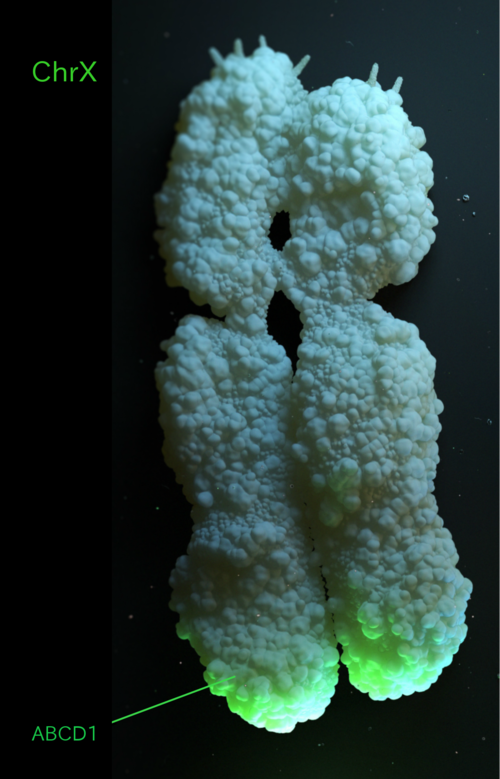
X 染色体的 GRanges
library(TxDb.Hsapiens.UCSC.hg38.knownGene)
hg <- TxDb.Hsapiens.UCSC.hg38.knownGene
从X染色体选择基因
hg_chrXg <- genes(hg, filter = list(tx_chrom = c("chrX")))
GRanges 对象:1192 个区间,1 个元数据列:
            seqnames              ranges strand |     gene_id
               <Rle>           <IRanges>  <Rle> | <character>
  100008586     chrX   49551278-49568218      + |   100008586
      10009     chrX 120250752-120258398      + |       10009
  100093698     chrX   13310652-13319933      + |   100093698
        ...      ...                 ...    ... .         ...
  -------
  seqinfo: 来自 hg38 基因组的 640 条序列(1 条环状)
来练习在人体基因组中查找一个目标基因!
R 中的 Bioconductor 入门

