两资产情形下的驱动因素

R 中的投资组合分析入门

Kris Boudt

Professor, Free University Brussels & Amsterdam

未来回报具有随机性
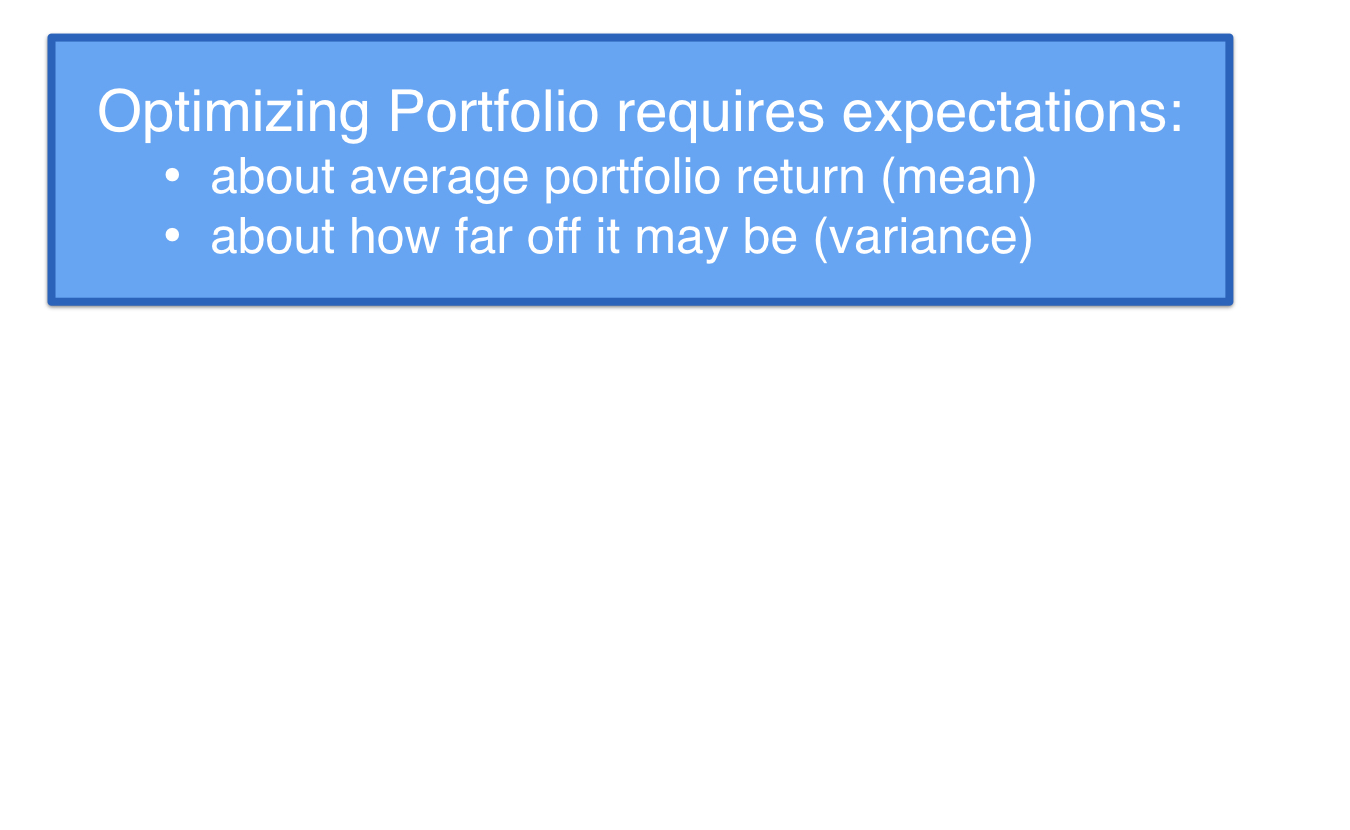
第3章视频1.002.png

R 中的投资组合分析入门

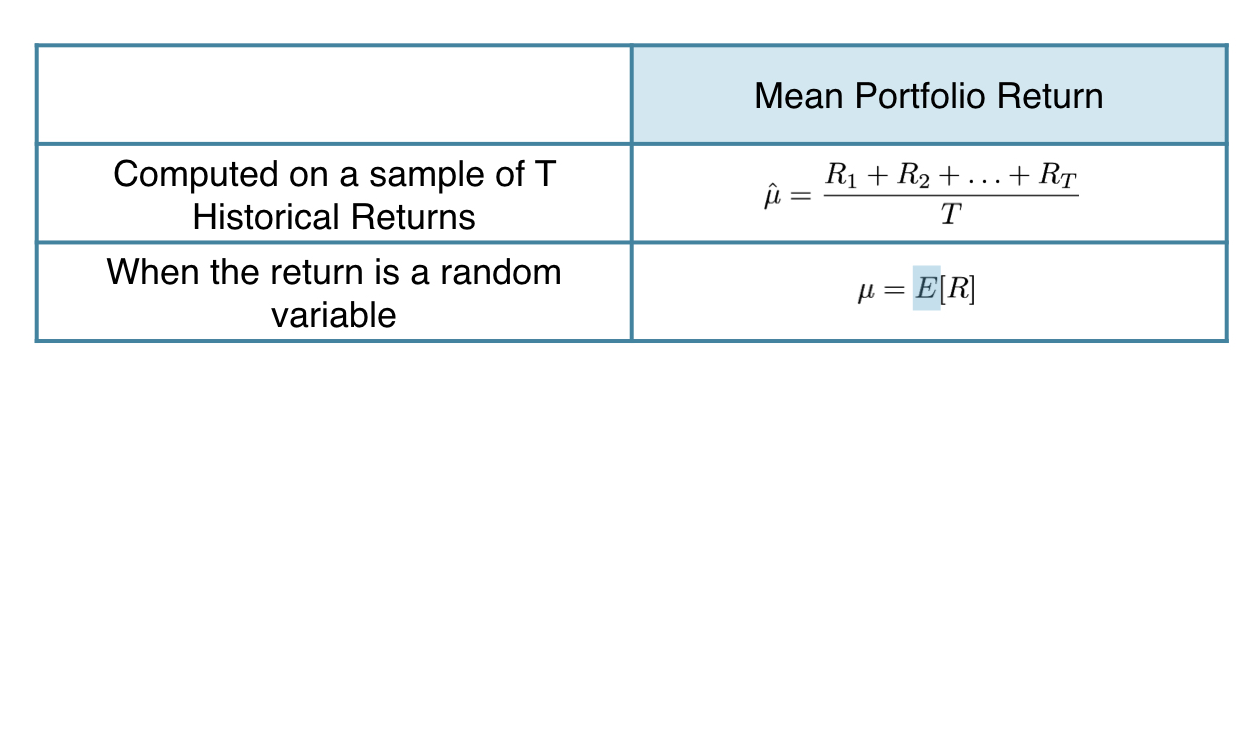
未来回报具有随机性

第3章视频1.003.png

R 中的投资组合分析入门

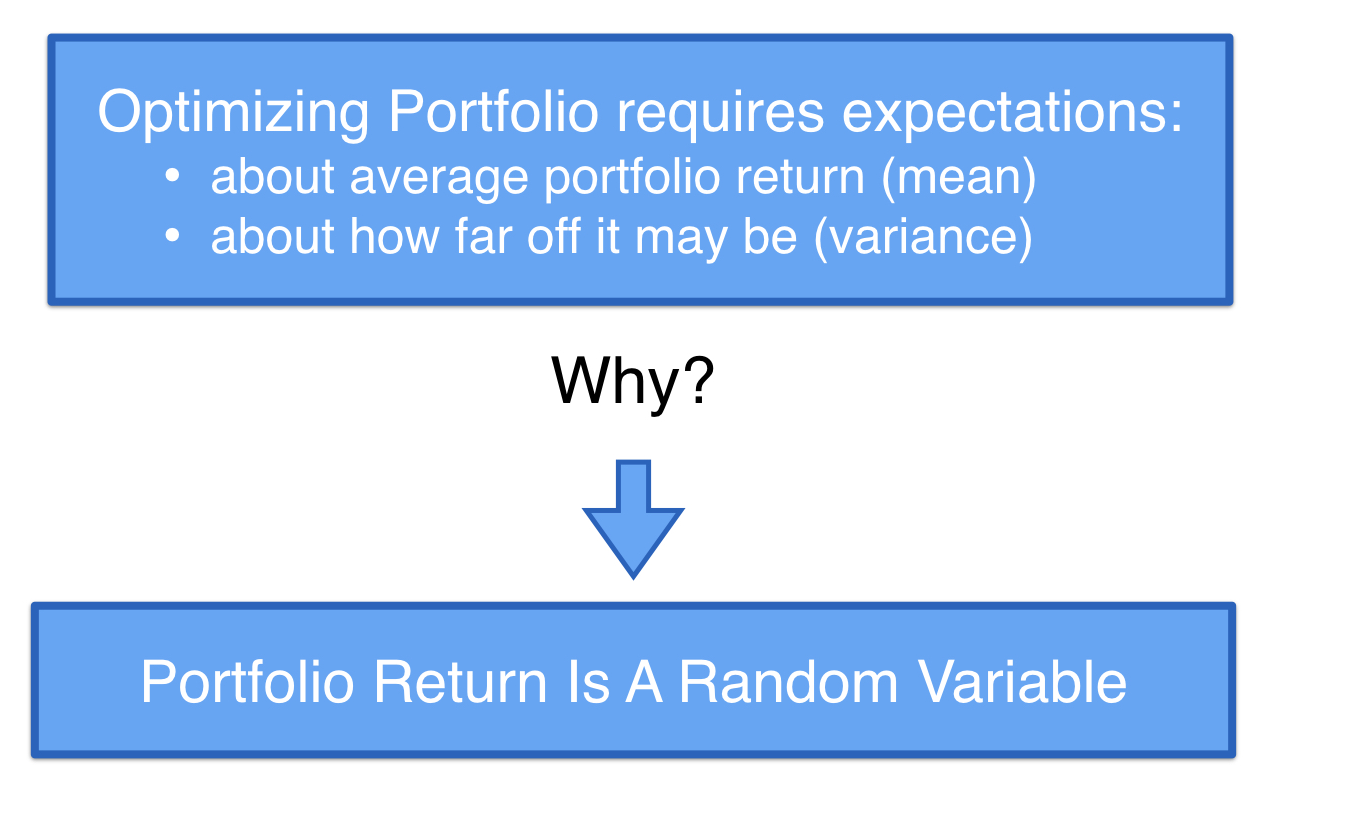
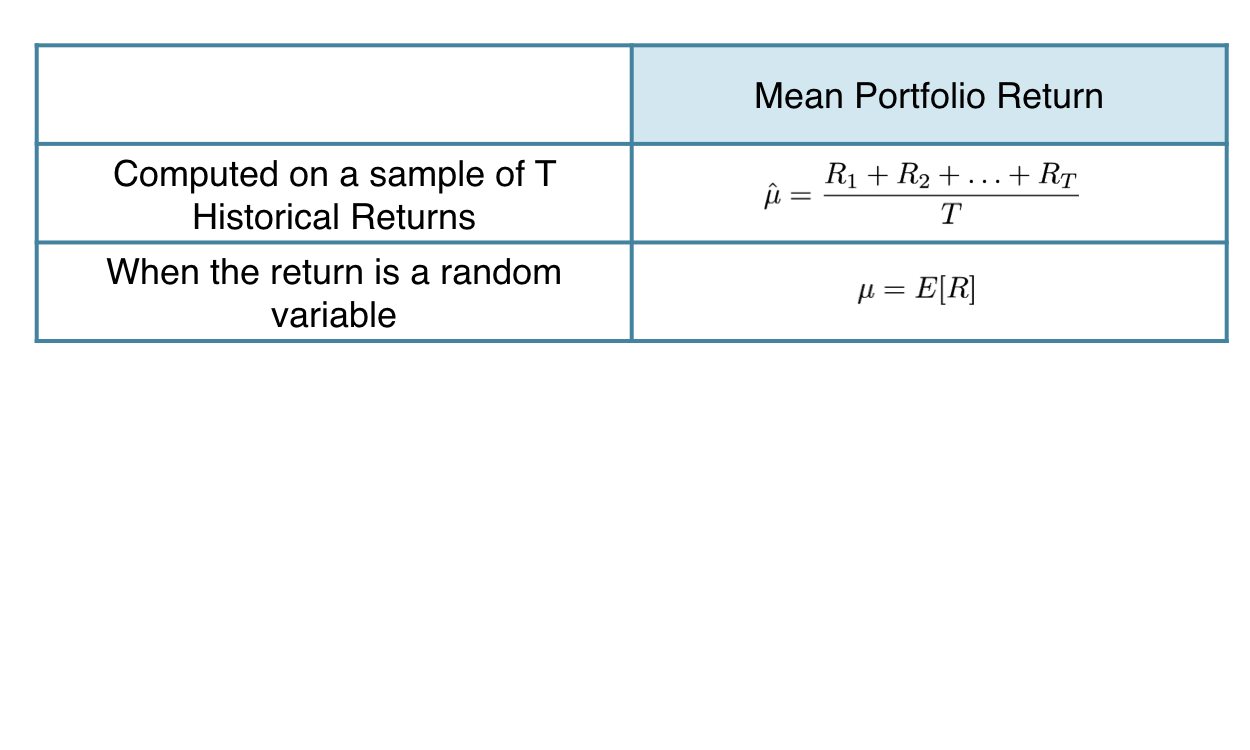
未来回报具有随机性

第3章视频1.004.png

R 中的投资组合分析入门

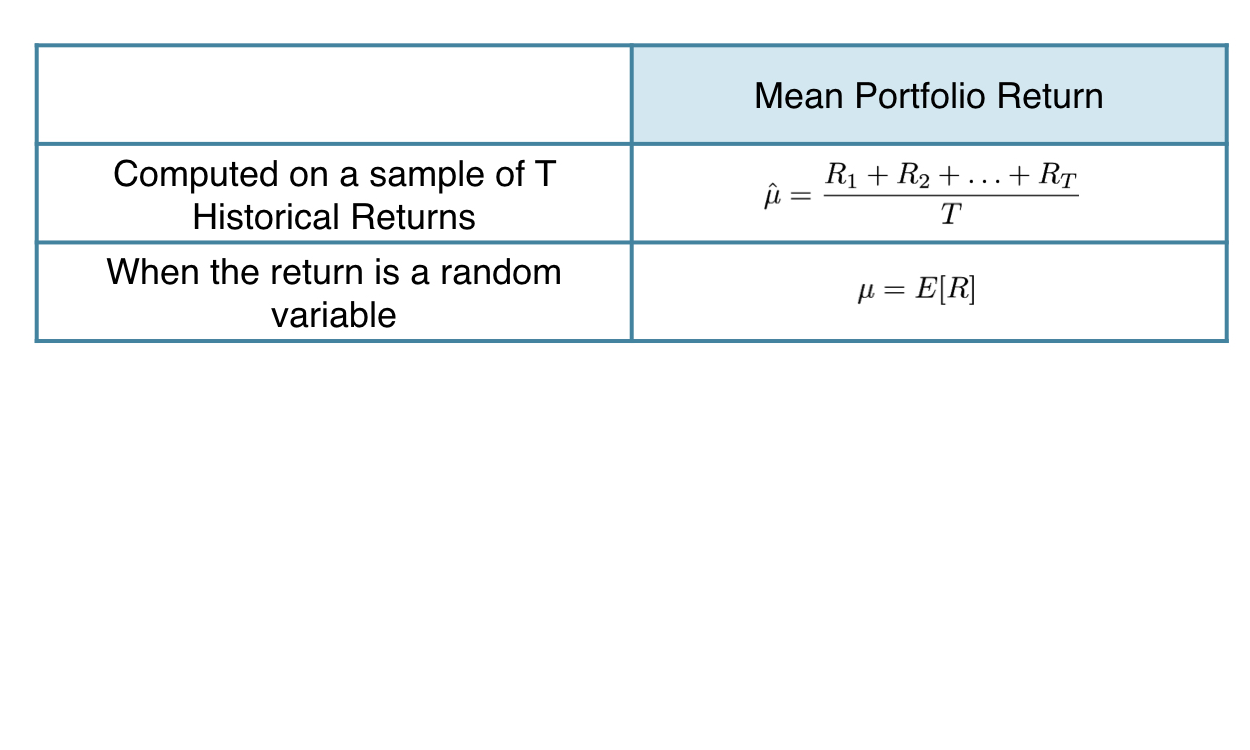
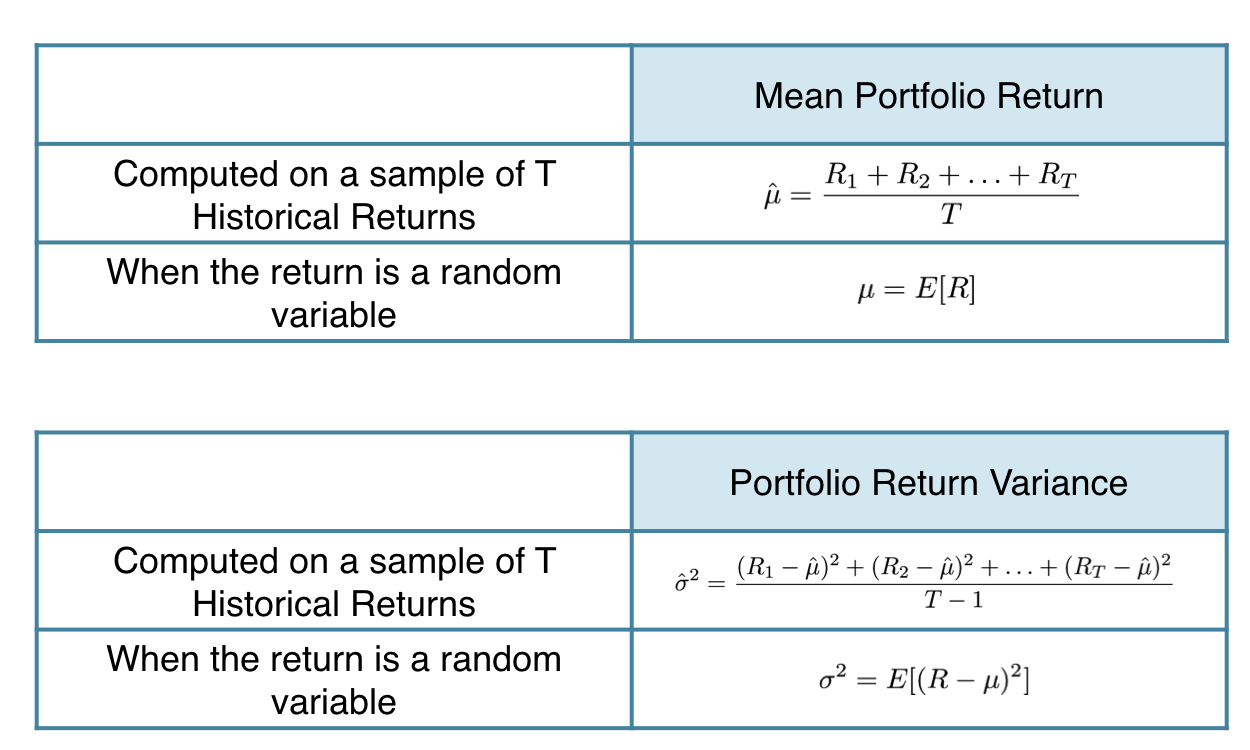
未来回报具有随机性

第3章视频1.005.png

R 中的投资组合分析入门

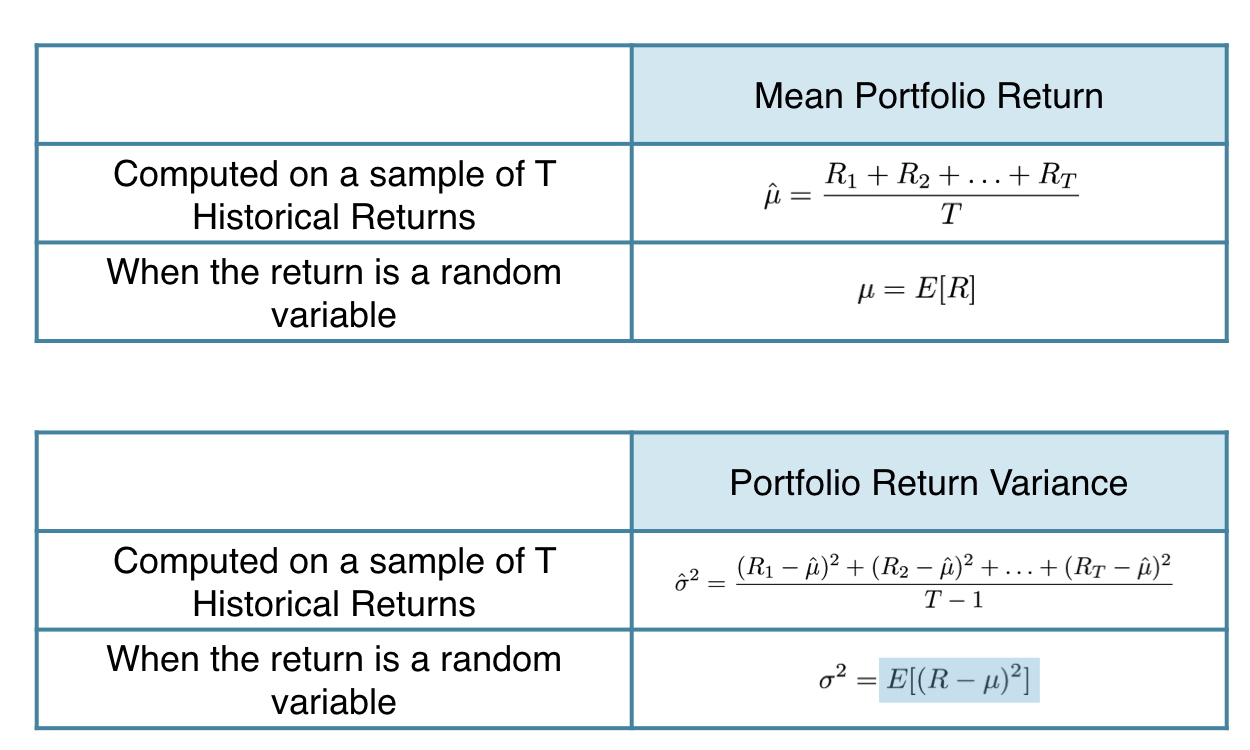
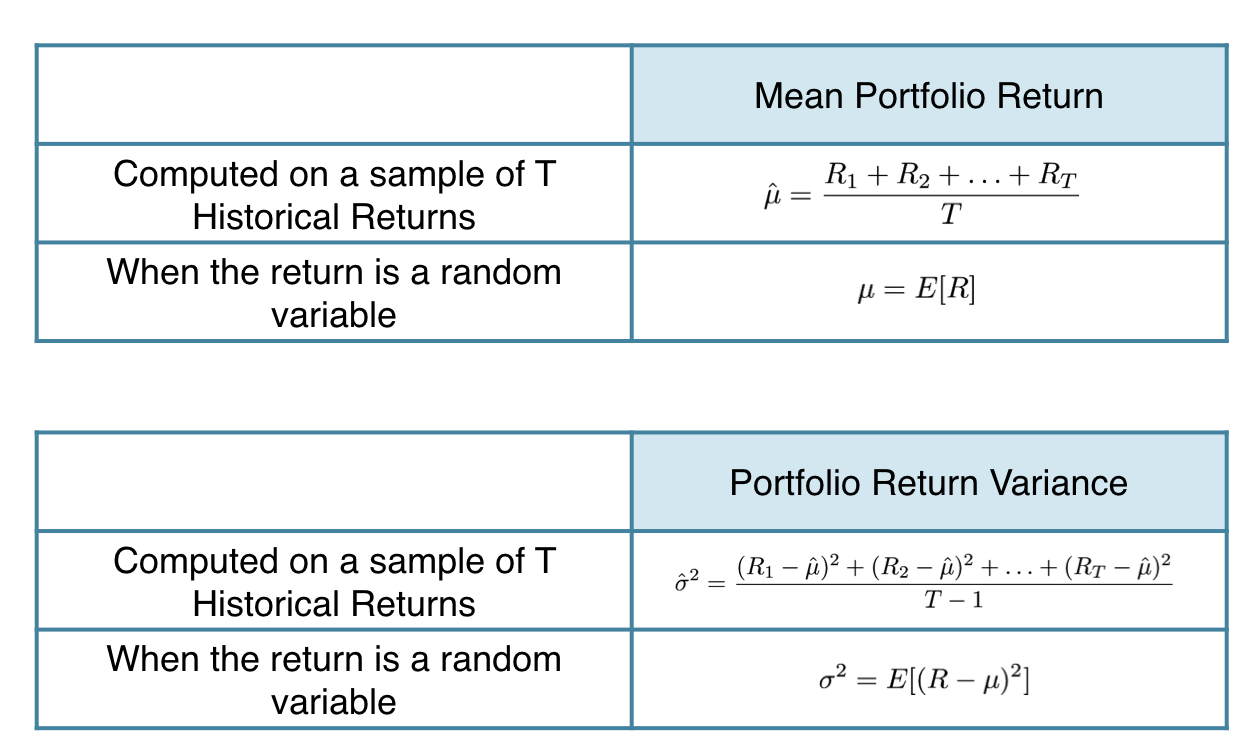
由历史表现到预测

第3章视频1.007.png

R 中的投资组合分析入门

由历史表现到预测

第3章视频1.008.png

R 中的投资组合分析入门

由历史表现到预测

第3章视频1.009.png

R 中的投资组合分析入门

由历史表现到预测

第3章视频1.010.png

R 中的投资组合分析入门

由历史表现到预测

第3章视频1.011.png

R 中的投资组合分析入门

由历史表现到预测

第3章视频1.012.png

R 中的投资组合分析入门

均值与方差的驱动因素

  • 假设两种资产:
资产1 资产2
权重:$w_1$ 权重:$w_2$
回报:$R_1$ 回报:$R_2$


  • 组合回报:$P = w1 \cdot R1 + w2\cdot R2$
  • 因此:$E[P] = w_1\cdot E[R_1]+ w_2\cdot E[R_2]$
R 中的投资组合分析入门

组合回报的方差

仍以两资产组合为例

  • $var(P)$ = $w_1^2\cdot var(R_1) $ $+ w_2^2\cdot var(R_2) $ $+ 2\cdot w_1 \cdot w_2 \cdot cov(R_1, R_2)$

回报1与回报2的协方差

  • $Cov(R_1,R_2)$
    • $ = E[(R_1 - E[R_1])(R_2 - E(R_2))]$
    • $ = StdDev(R_1)\cdot StdDev(R_2)\cdot corr(R_1,R_2)$
R 中的投资组合分析入门

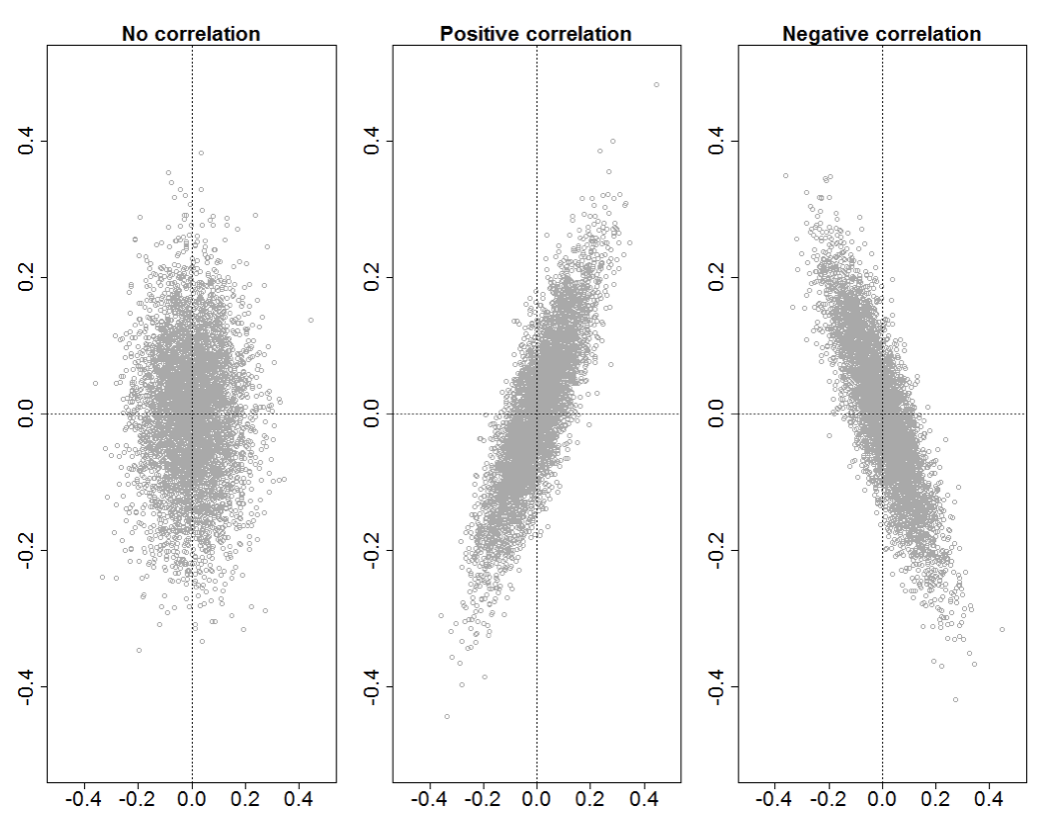
相关性

截图 2019-08-21 13.13.54.png

R 中的投资组合分析入门

关键公式

  • E[组合回报] = $E[P] = w_1\cdot E[R_1] + w_2\cdot E[R_2]$

  • var(组合回报) = $var(P)$ = $w_1^2\cdot var(R_1) $ $+ w_2^2\cdot var(R_2) $ $+ 2\cdot w_1 \cdot w_2 \cdot cov(R_1, R_2)$

R 中的投资组合分析入门

Passons à la pratique !

R 中的投资组合分析入门

Preparing Video For Download...