超参数调优
在 R 中使用 tidymodels 建模

David Svancer
Data Scientist
超参数
在训练前设定、控制模型复杂度的模型参数
parsnip 的决策树
cost_complexity- 惩罚过多的叶节点数
tree_depth- 根到叶节点的最长路径
min_n- 继续分裂所需的最少样本数
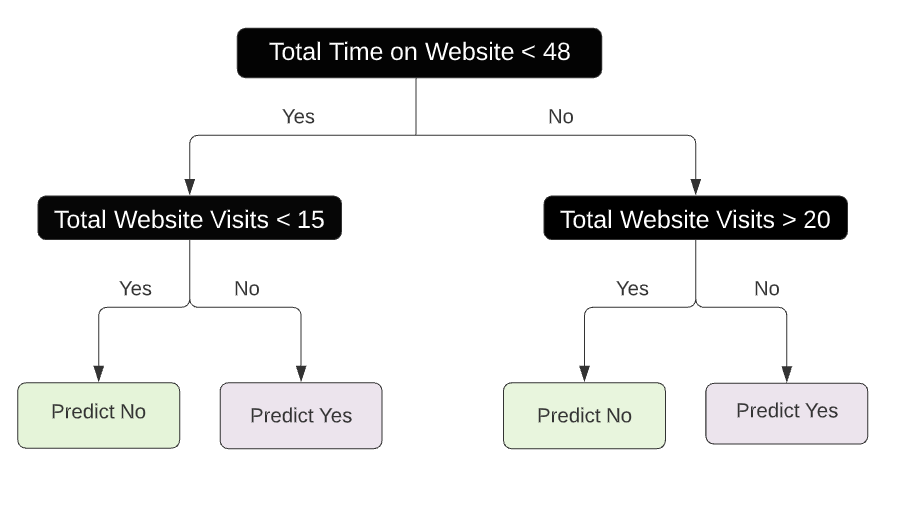
默认超参数值
decision_tree() 为超参数设置默认值
cost_complexity默认为 0.01tree_depth默认为 30min_n默认为 20
这些值并不一定适用于所有数据集
- 进行超参数调优
- 用交叉验证寻找最优超参数组合的过程
dt_model <- decision_tree() %>%
  set_engine('rpart') %>%
  set_mode('classification')
标记待调优的超参数
tune 包的 tune() 函数
- 在
parsnip模型规范中,将待调优的超参数设为tune() - 创建带可调参数的模型对象
- 提示其他函数需要对其进行优化
dt_tune_model <- decision_tree(cost_complexity = tune(), tree_depth = tune(), min_n = tune()) %>% set_engine('rpart') %>% set_mode('classification')dt_tune_model
Decision Tree Model Specification (classification)

Main Arguments:
  cost_complexity = tune()
  tree_depth = tune()
  min_n = tune()

Computational engine: rpart
创建调参工作流
可以轻松更新 workflow 对象
- 现有
leads_wkfl- 线索评分数据的特征工程步骤,决策树模型使用默认超参数
- 将
leads_wkfl传给update_model(),并提供带可调参数的决策树模型
leads_tune_wkfl <- leads_wkfl %>%update_model(dt_tune_model)leads_tune_wkfl
== Workflow ===============
Preprocessor: Recipe
Model: decision_tree()
-- Preprocessor -----------
3 Recipe Steps
* step_corr()
* step_normalize()
* step_dummy()
-- Model ------------------
Decision Tree Model Specification (classification)
Main Arguments: cost_complexity = tune()
                tree_depth = tune()
                min_n = tune()
Computational engine: rpart
网格搜索
最常见的超参数调优方法
- 生成超参数取值的唯一组合网格
- 对每个组合,用交叉验证估计模型性能
- 选择表现最佳的组合
| cost_complexity | tree_depth | min_n |
|---|---|---|
| 0.001 | 20 | 35 |
| 0.001 | 20 | 15 |
| 0.001 | 35 | 35 |
| 0.001 | 35 | 15 |
| 0.2 | 20 | 35 |
| ... | ... | ... |
识别超参数
dials 包的 parameters() 函数
- 接收一个
parsnip模型对象 - 返回包含由
tune()标记的超参数的 tibble(如有)- 用于配合
dials生成调参网格
- 用于配合
parameters(dt_tune_model)
Collection of 3 parameters for tuning

  identifier            type     object
cost_complexity  cost_complexity nparam[+]
tree_depth       tree_depth      nparam[+]
min_n            min_n           nparam[+]
随机网格
生成随机组合
- 此方法往往更易找到更优的超参数取值
grid_random() 函数
- 第一个参数为
parameters()的结果 - 用
size指定要生成的随机组合数- 在
grid_random()前执行set.seed()以保证可复现
- 在
set.seed(214) grid_random(parameters(dt_tune_model),size = 5)
# A tibble: 5 x 3
  cost_complexity  tree_depth min_n
            <dbl>      <int>  <int>
1    0.0000000758        14     39
2    0.0243               5     34
3    0.00000443          11      8
4    0.000000600          3      5
5    0.00380              5     36
保存调参网格
调参的第一步
- 创建并保存一个调参网格
dt_grid包含 5 组随机的超参数组合
set.seed(214) dt_grid <- grid_random(parameters(dt_tune_model), size = 5)dt_grid
# A tibble: 5 x 3
  cost_complexity  tree_depth min_n
            <dbl>      <int>  <int>
1    0.0000000758        14     39
2    0.0243               5     34
3    0.00000443          11      8
4    0.000000600          3      5
5    0.00380              5     36
用交叉验证进行超参数调优
tune_grid() 函数执行超参数调优
需要以下参数:
workflow或parsnip模型- 交叉验证对象
resamples - 调参网格
grid - 可选的
metrics函数
返回结果 tibble
.metrics- 每个折的结果列表列
dt_tuning <- leads_tune_wkfl %>%tune_grid(resamples = leads_folds,grid = dt_grid,metrics = leads_metrics)
dt_tuning
# Tuning results
# 10-fold cross-validation using stratification
# A tibble: 10 x 4
   splits             id       .metrics         ..
   <list>            <chr>      <list>          ..
<split [896/100]>   Fold01   <tibble [15 x 7]>  ..
................    ......   ...............    ..
<split [897/99]>    Fold09   <tibble [15 x 7]>  ..
<split [897/99]>    Fold10   <tibble [15 x 7]>  ..
查看调参结果
collect_metrics() 默认给出汇总结果
- 对每个组合,计算各折指标的平均值
dt_tuning %>%
  collect_metrics()
# A tibble: 15 x 9
   cost_complexity tree_depth min_n .metric .estimator  mean     n std_err .config
             <dbl>      <int> <int> <chr>   <chr>      <dbl> <int>   <dbl> <chr>
 1    0.0000000758         14    39 roc_auc binary     0.827    10 0.0147  Model1
 2    0.0000000758         14    39 sens    binary     0.728    10 0.0277  Model1
 3    0.0000000758         14    39 spec    binary     0.865    10 0.0156  Model1
 4    0.0243                5    34 roc_auc binary     0.823    10 0.0147  Model2
 .    ......               ..    .. ....    ......     .....    .. .....   ......
14    0.00380               5    36 sens    binary     0.747    10 0.0209  Model5
15    0.00380               5    36 spec    binary     0.858    10 0.0161  Model5
开始调参吧!
在 R 中使用 tidymodels 建模

