Python 中的机器学习监控
Hakim Elakhrass
CEO and co-founder
# Initialize multivariate drift detection calculator
mv_calc = nannyml.DataReconstructionDriftCalculator(
    column_names=features_column_names,
    timestamp_column_name='timestamp',
    chunk_period='m'
    )
# Fit and calculate the results
mv_calc.fit(reference)
mv_results = mv_calc.calculate(analysis)
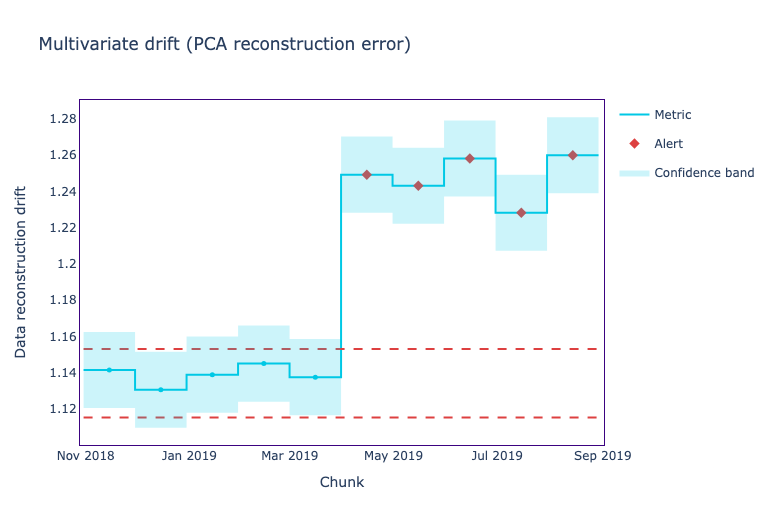
mv_figure = mv_results.filter(period='analysis').plot()
mv_figure.show()
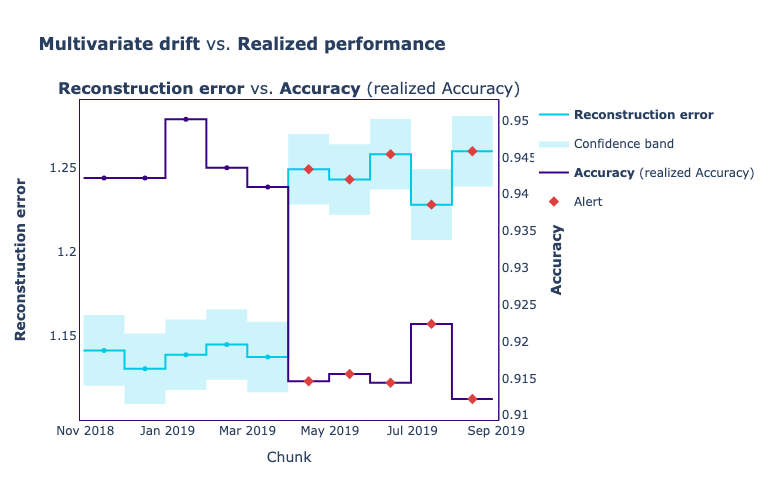
figure = mv_results.filter(period='analysis').compare(perf_results).plot()
figure.show()