SELECT receipts.cookie_id,
       sum(receipts.total)
FROM receipts
JOIN cookies ON receipts.cookie_id = cookies.cookie_id
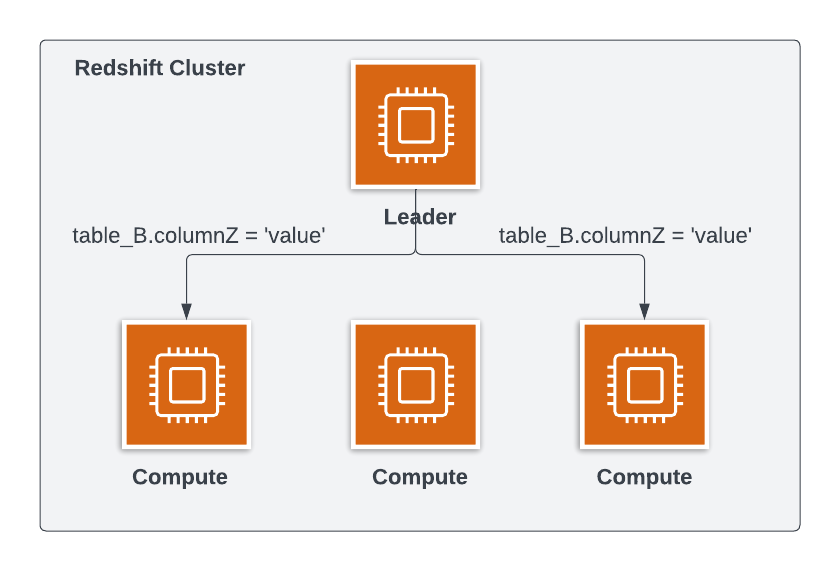
  -- Keep cookies predicates in the join to push down to nodes holding the records for cookies
 AND cookies.available_on < '2023-11-14'
 AND cookies.end_of_sale IS null
-- Predicates that are not part of the join or on the joined table stay in the WHERE clause
WHERE receipts.order_time > '2023-11-13'
GROUP BY 1 ORDER BY 1;
保持列顺序一致
当使用:
GROUP BY
ORDER BY
不佳
GROUP BY col_one, col_two, col_three
ORDER BY col_two, col_three, col_one
良好
GROUP BY col_two, col_three, col_one
ORDER BY col_two, col_three, col_one
谨慎使用子查询
优先使用合适的连接策略,而非一味使用子查询
仅需判断子查询是否存在时,在谓词中使用 EXISTS
SELECT column_name
FROM table_name
WHERE EXISTS
  (SELECT column_name
   FROM table_name
   WHERE active is True);