结合确定性与非确定性过程
Python 中的离散事件模拟

Diogo Costa (PhD, MSc)
Adjunct Professor, University of Saskatchewan, Canada & CEO of ImpactBLUE-Scientific
确定性与非确定性过程
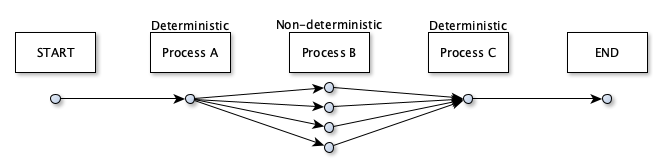
示例:机场客流管理
- 非确定性:乘客到达机场的时间
- 确定性:值机后行李在机场内的运输
示例:工厂装配线
非确定性过程
- 原材料订购
- 复杂部件的手工装配
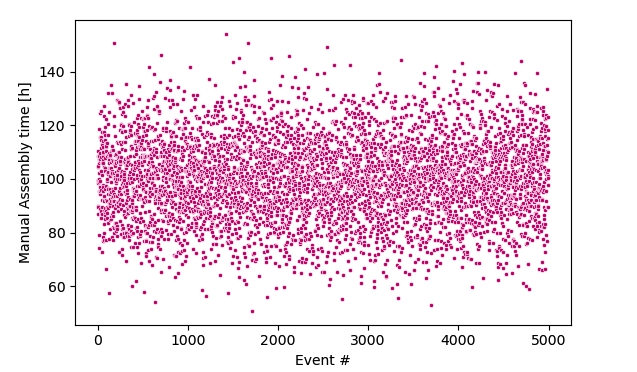
构建基于事件的仿真
制造流程顺序

离散事件模型
# Initiate time-tracking variable time = numpy.zeros(number_of_processes)# Next-event time progression time[0] = 0 time[1] = time[0] + welding_1["time_hours"] time[2] = time[1] + rd.gauss(manual_assembly_1["time_hours"], manual_assembly_1["std_hours"]) time[3] = time[2] + rd.gauss(manual_assembly_2["time_hours"], manual_assembly_2["std_hours"]) time[4] = time[3] + welding_2["time_hours"] time[5] = time[4]

