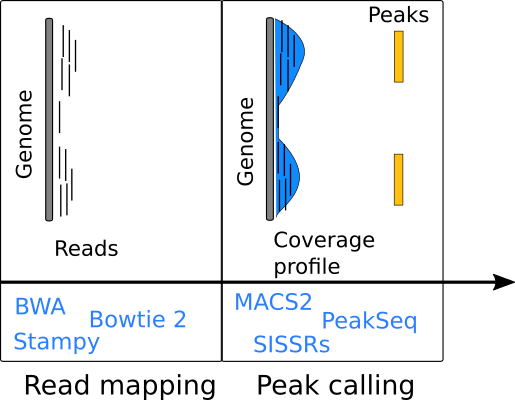
在 R 中使用 Bioconductor 进行 ChIP-seq 分析
Peter Humburg
Statistician, Macquarie University
SRR1782620.7265769
0
chr20 29803915
51M
0 0
AATGAAATGGAA
CCCFFFFFHHHH
Rsamtools
使用 readGAlignments 导入已比对的读取。
readGAlignments
library(GenomicAlignments)
reads <- readGAlignments(bam_file)
返回 GAlignments 对象。
GAlignments
BamViews
library(GenomicRanges)
library(Rsamtools)
ranges <- GRanges(...)
views <- BamViews(bam_file, bamRanges=ranges)
reads <- readGAlignments(views)
BamViews 支持多个 BAM 文件。
使用 import.bed 从 BED 文件加载峰位调用。
import.bed
library(rtracklayer)
peaks <- import.bed(peak_bed, genome="hg19")
使用 peaks 定义 BAM 文件的视图。
peaks
bams <- BamViews(bam_file, bamRanges=peaks)
reads <- readGAlignments(bams)