用 future_map() 做更多事
R 并行编程

Nabeel Imam
Data Scientist
数据与场景
head(data)
   state  year month plurality
 1 AK     1995     1         1
 2 AK     1995     1         1
 3 AK     1995     1         1
 4 AK     1995     1         1
 5 AK     1995     1         1
 6 AK     1995     1         1
生成新的字符列
twins <- function (x) {
    ifelse(x == 2,"Twins", "Not twins")
}
为双胞胎打标签
plan(multisession, workers = 4)data %>% mutate(label = future_map_chr(plurality, twins))plan(sequential)
   state  year month plurality label
 1 AK     1995     1         1 Not twins
 2 AK     1995     1         1 Not twins
 3 AK     1995     1         1 Not twins
 4 AK     1995     1         1 Not twins
 5 AK     1995     1         1 Not twins
 6 AK     1995     1         1 Not twins
 7 AK     1995     1         1 Not twins
 8 AK     1995     1         1 Not twins
 9 AK     1995     1         1 Not twins
10 AK     1995     1         1 Not twins
...
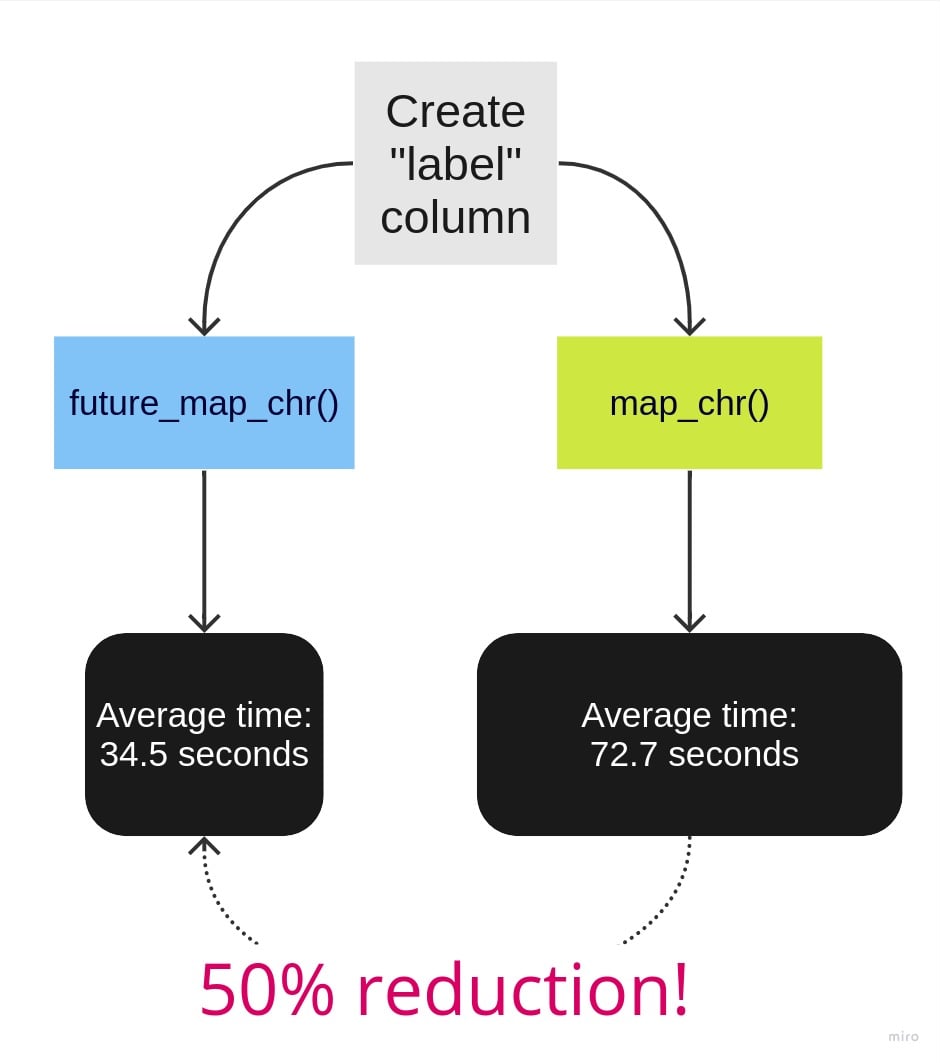
为双胞胎打标签
microbenchmark(
  "map_chr" = {
    data %>%
 mutate(label = map_chr(plurality, twins))
  },
  "future_map_chr" = {
    data %>%
 mutate(label = future_map_chr(plurality, twins))
  }
)
Unit: seconds
            expr     mean   median neval
1        map_chr 72.69067 73.50705    10
2 future_map_chr 34.52351 34.56357    10
分组操作
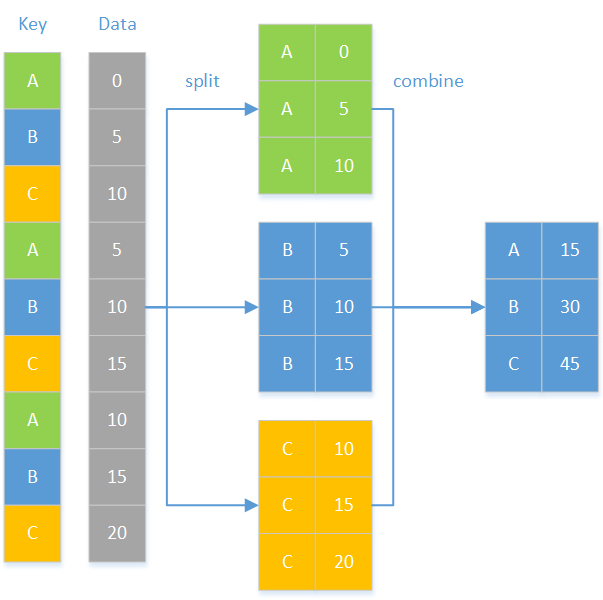
双胞胎占比
birth_prop <- function (df) {

  N <- sum(df$plurality == 2)  # 双胞胎出生总数
  prop <- N/nrow(df)           # 占所有出生的比例
  names(prop) <- "proportion"  # 为值命名

  return(prop)
}
分组操作
分组操作
plan(multisession, workers = 6)data %>% # 按州拆分,传入 future_map_dfr() split(data$state) %>%# 只在此处提供函数 future_map_dfr(birth_prop,# 分组列名传给 .id 参数 .id = "state")plan(sequential)
结果按行绑定为一个数据框
   year  proportion
 1 AK        0.0114
 2 AL        0.0264
 3 AR        0.0196
 4 AZ        0.0218
 5 CA        0.0197
 6 CO        0.0217
 7 CT        0.0225
 8 DC        0.0283
 9 DE        0.0268
10 FL        0.0212
...
使用全局变量
# 第二个参数指定多胎数值 birth_prop <- function (df, plur_value) { N <- sum(df$plurality == plur_value) # 指定多胎的总出生数 prop <- N/nrow(df) names(prop) <- "proportion" return(prop) }new_plur <- 3 # 全局单值变量
使用全局变量
config <- furrr_options(globals = "new_plur")plan(multisession, workers = 4)data %>% split(data$state) %>% future_map_dfr(birth_prop, plur_value = new_plur, .options = config, .id = "state") plan(sequential)
   state proportion
 1 AK      0
 2 AL      0.000659
 3 AR      0
 4 AZ      0.000605
 5 CA      0.000673
 6 CO      0.000776
 7 CT      0.000867
 8 DC      0.00189
 9 DE      0
10 FL      0.00106
...
按列绑定到数据框
data %>%
  split(data$state) %>%
  future_map_dfc(birth_prop, # _dfc 变体
                 plur_value = new_plur,
                 .options = config)
     AK       AL    AR       AZ       CA       CO       CT      DC
1     0 0.000659     0 0.000605 0.000673 0.000776 0.000867 0.00189 ...
Vamos praticar!
R 并行编程

