Introduction à la segmentation d'images
Deep Learning pour les images avec PyTorch

Michal Oleszak
Machine Learning Engineer
Segmentation sémantique
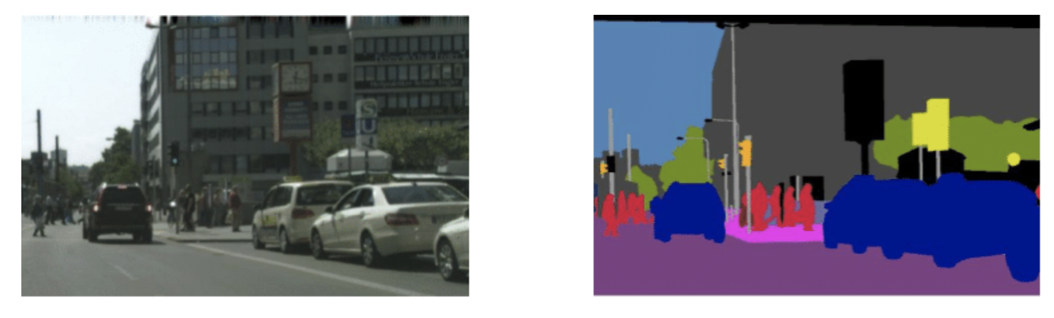
- Chaque pixel est classé dans une catégorie
- Tous les pixels d'une même catégorie sont traités de la même façon
Segmentation d'instances
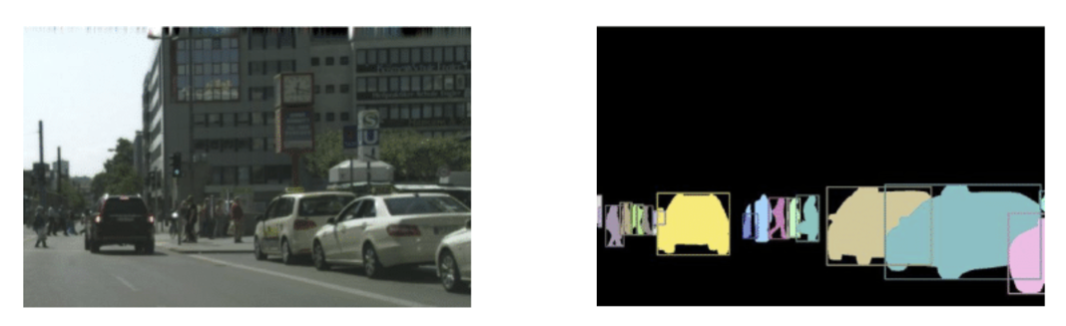
- Distingue les différentes occurrences d'une même catégorie
- L'arrière-plan est souvent non segmenté
Segmentation panoptique
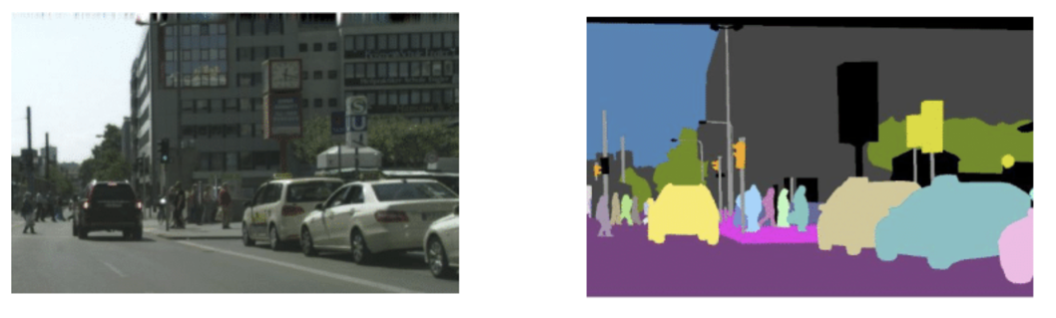
- Combine les segmentations sémantique et d'instances
- Assigne une étiquette unique à chaque occurrence d'objet
- Classe l'arrière-plan au niveau des pixels
Annotations des données

Créer un masque binaire
binary_mask = torch.where( mask_tensor == 1/255, torch.tensor(1.0), torch.tensor(0.0), )to_pil_image = transforms.ToPILImage() mask = to_pil_image(binary_mask)plt.imshow(mask)

Segmenter l'objet
object_tensor = image_tensor * binary_maskto_pil_image = transforms.ToPILImage() object_image = to_pil_image(object_tensor)plt.imshow(object_image)