Doublons dans les rapports
Création de rapports en SQL

Tyler Pernes
Learning & Development Consultant
Qu'est-ce qui cause les doublons ?
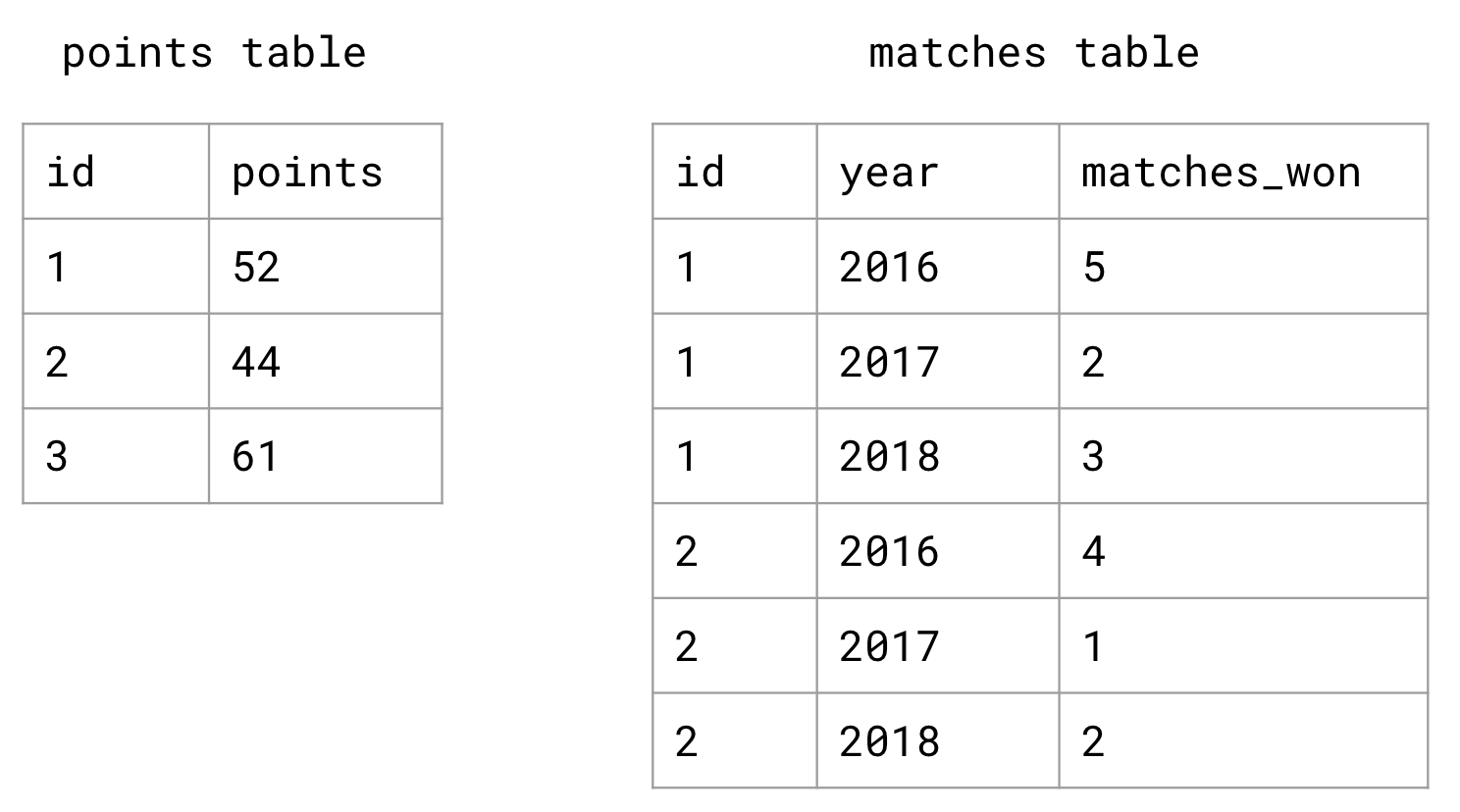
Qu'est-ce qui cause les doublons ?
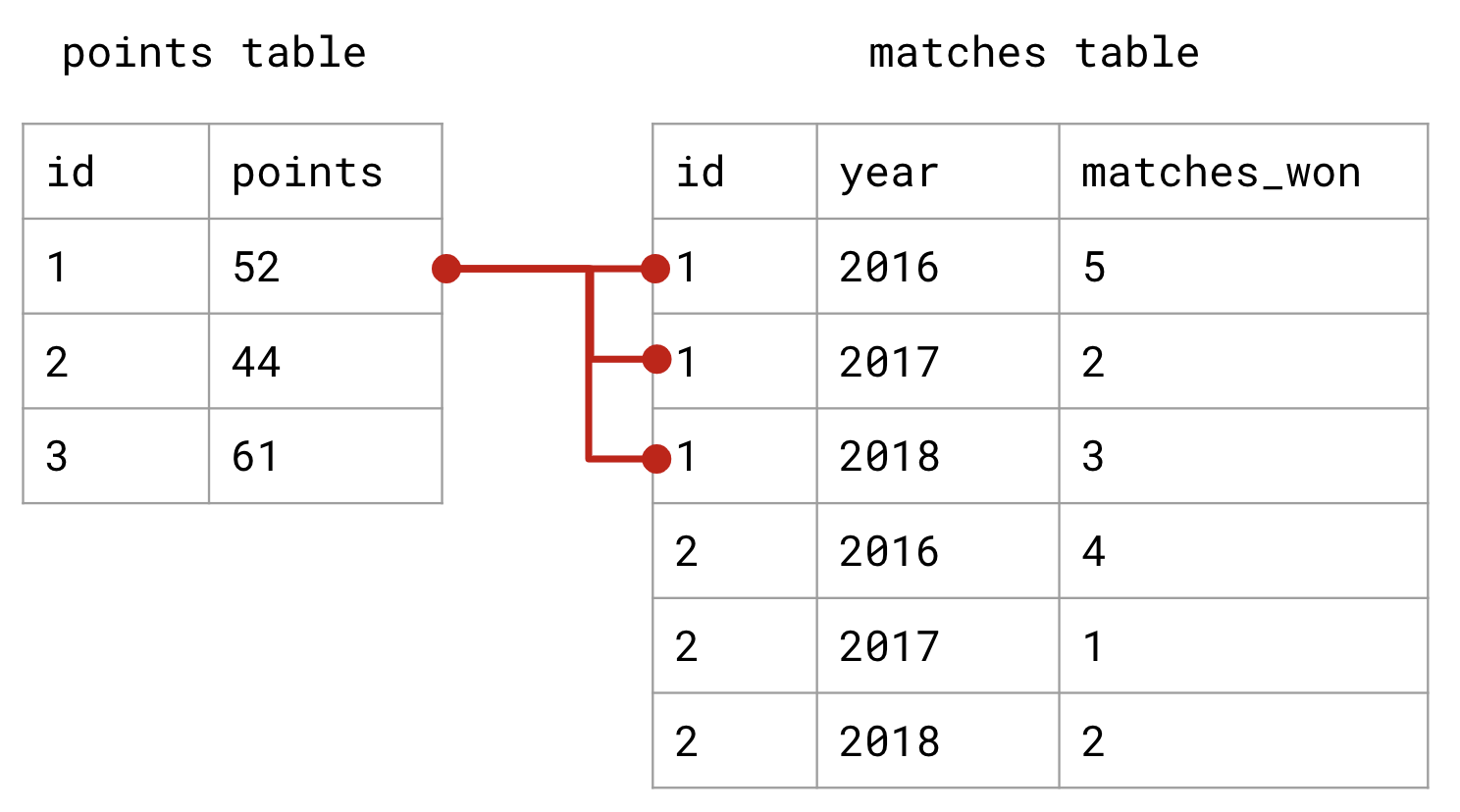
SELECT p.id, SUM(points) AS points, SUM(matches_win) AS matches_won
FROM points AS p
JOIN matches AS m ON p.id = m.id
GROUP BY p.id;
Qu'est-ce qui cause les doublons ?
+-----+--------+--------------+
| id  | points | matches_won  |
|-----|--------|--------------|
| 1   | 156    | 10           |
+-----+--------+--------------+
1 donnera une valeur de points trois fois trop élevée, ici 156.
Qu'est-ce qui cause les doublons ?
Table intermédiaire
+-----+------+--------------+---------+
| id  | year | matches_won  | points  |
|-----+------+--------------+---------+
| 1   | 2016 | 5            | 52      |
| 1   | 2017 | 2            | 52      |
| 1   | 2018 | 3            | 52      |
+-----+------+--------------+---------+
Qu'est-ce qui cause les doublons ?
Table intermédiaire
+-----+------+--------------+---------+
| id  | year | matches_won  | points  |
|-----+------+--------------+---------+
| 1   | 2016 | 5            | 52      | <--
| 1   | 2017 | 2            | 52      | <-- SUM(points) = 52 x 3 = 156
| 1   | 2018 | 3            | 52      | <--
+-----+------+--------------+---------+
Façons de corriger les doublons
Façons de corriger les doublons
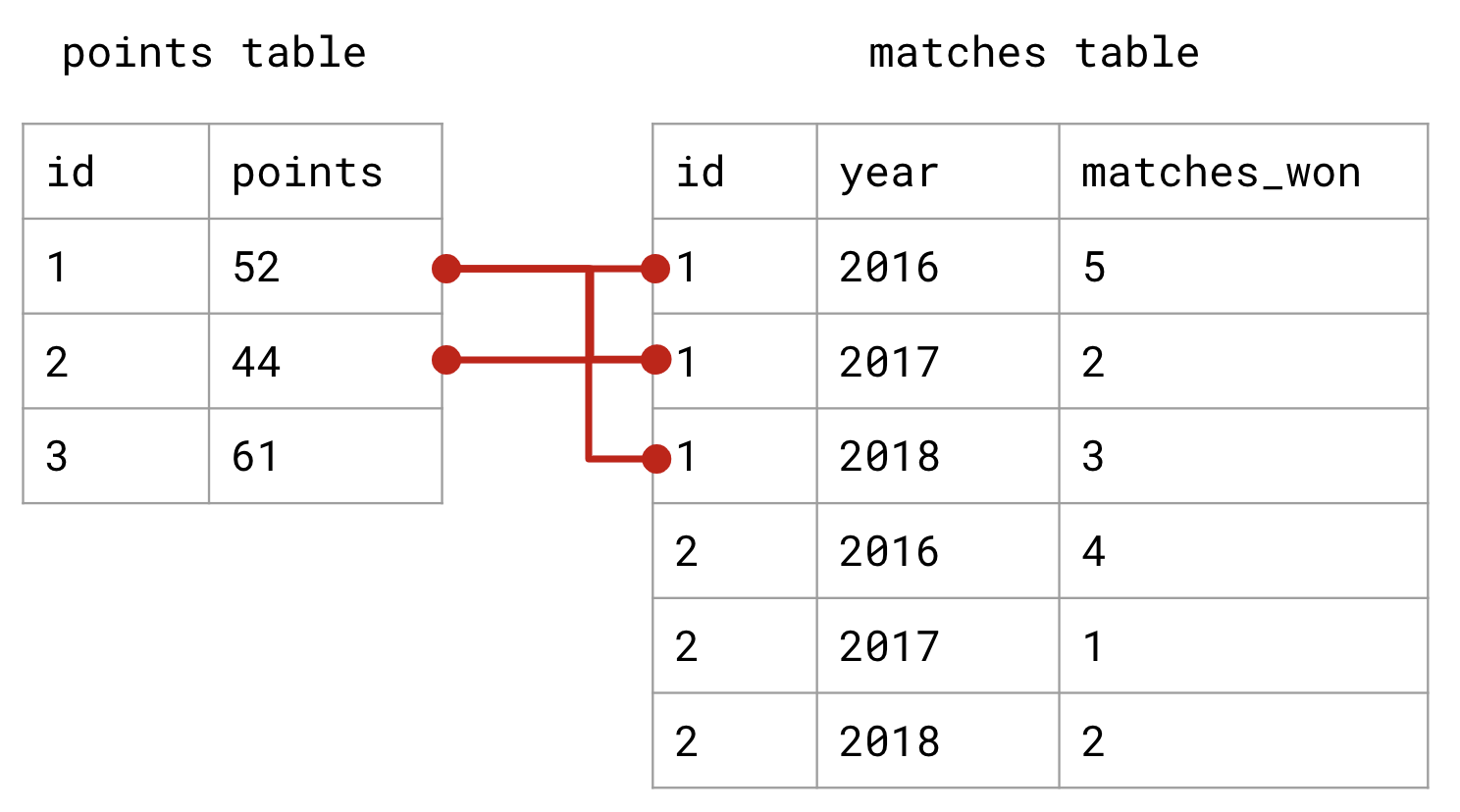
2. Ajouter un champ à l'instruction JOIN
SELECT p.id, SUM(points) AS points, SUM(matches_win) AS matches_won
FROM points AS p
JOIN matches AS m ON p.id = m.id AND p.year = m.year
GROUP BY p.id;
Façons de corriger les doublons
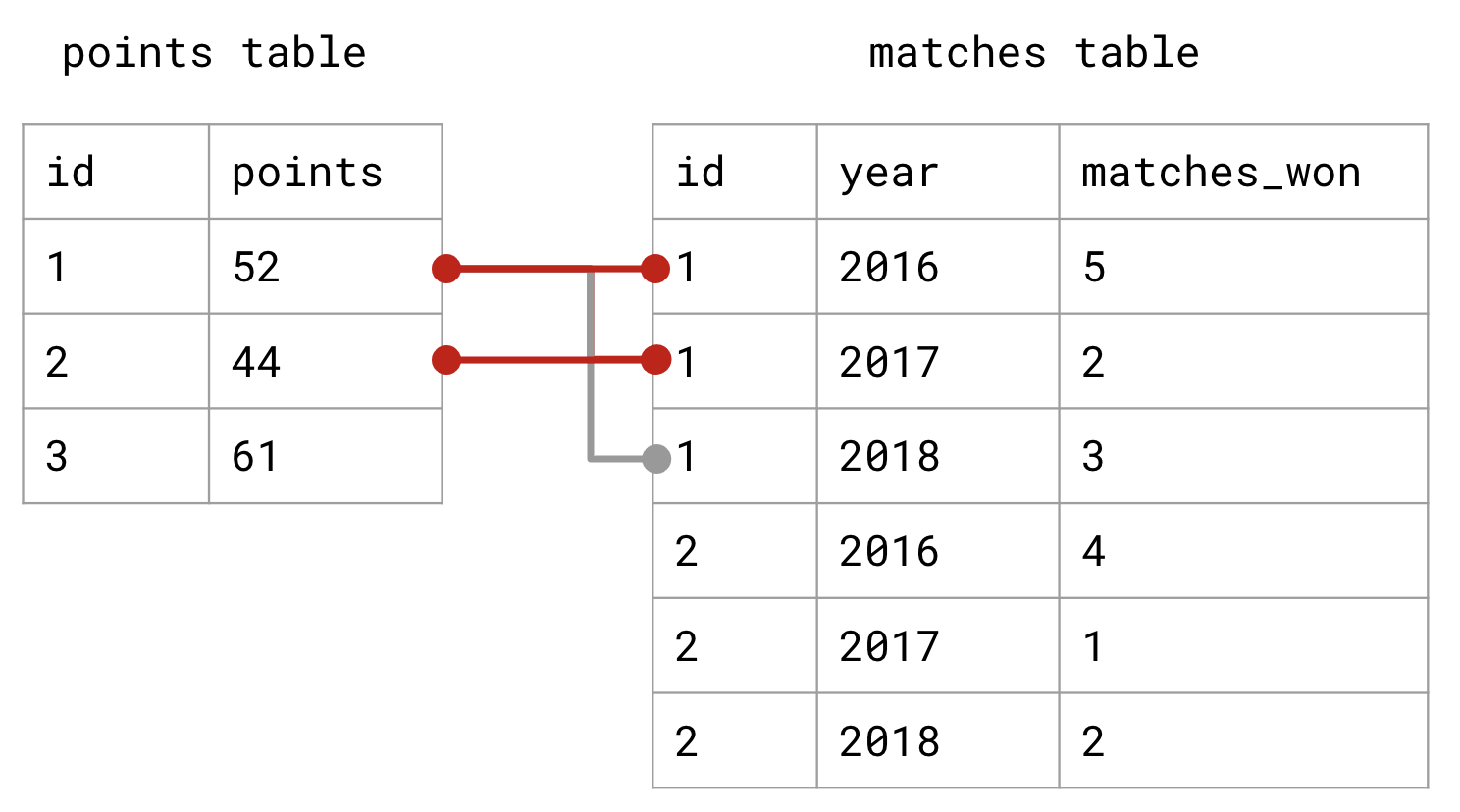
2. Ajouter un champ à l'instruction JOIN
SELECT p.id, SUM(points) AS points, SUM(matches_win) AS matches_won
FROM points AS p
JOIN matches AS m ON p.id = m.id AND p.year = m.year
GROUP BY p.id;
Façons de corriger les doublons
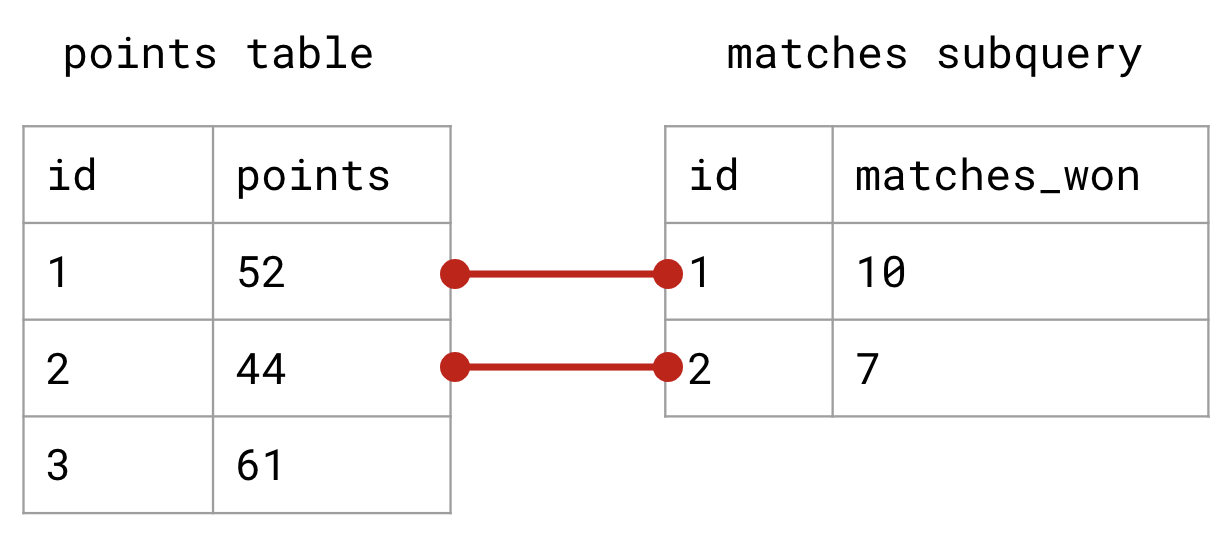
3. Regrouper avec une sous-requête
SELECT p.id, points, matches_won
FROM points AS p
JOIN
    (SELECT id, SUM(matches_won) AS matches_won
    FROM matches
    GROUP BY id) AS m
ON p.id = m.id;
Objectif du chapitre