S'entraîner aux questions d'entrevue de programmation en Python
Kirill Smirnov
Data Science Consultant, Altran
$n! = n\cdot(n-1)\cdot(n-2)\cdot...\cdot1$
$n = 4$ :
$4! = 4\cdot3\cdot2\cdot1$
4! = 24
$n! = n\cdot(n-1)\cdot(n-2)\cdot...\cdot1 = $
$ = 1\cdot2\cdot3\cdot...\cdot n$
Solution itérative :
# iterative factorial
def fact_iter(n):
result = 1
# looping over numbers from 1 to n
for num in range(1, n+1)
result = num * result
return result
$n = 4$ :
result = 1
result = 1 * result(1) = 1result = 2 * result(1) = 2result = 3 * result(2) = 6result = 4 * result(4) = 24$4! = 1 \cdot 2 \cdot 3 \cdot 4 = 24$
$n!$ $=n\cdot(n-1)!$
def fact_rec(n):
return n * fact_rec(n-1)
Quel est le problème avec ce code ?
fact_rec(4)
RecursionError
Il faut définir un cas de base !
$n! = n\cdot(n-1)\cdot(n-2)\cdot...\cdot1$
Un critère d'arrêt / cas de base : $1! = 1$
def fact_rec(n):
if n == 1:
return 1
return n * fact_rec(n-1)
fact_rec(4)
24
Les fonctions récursives ont deux composantes principales :


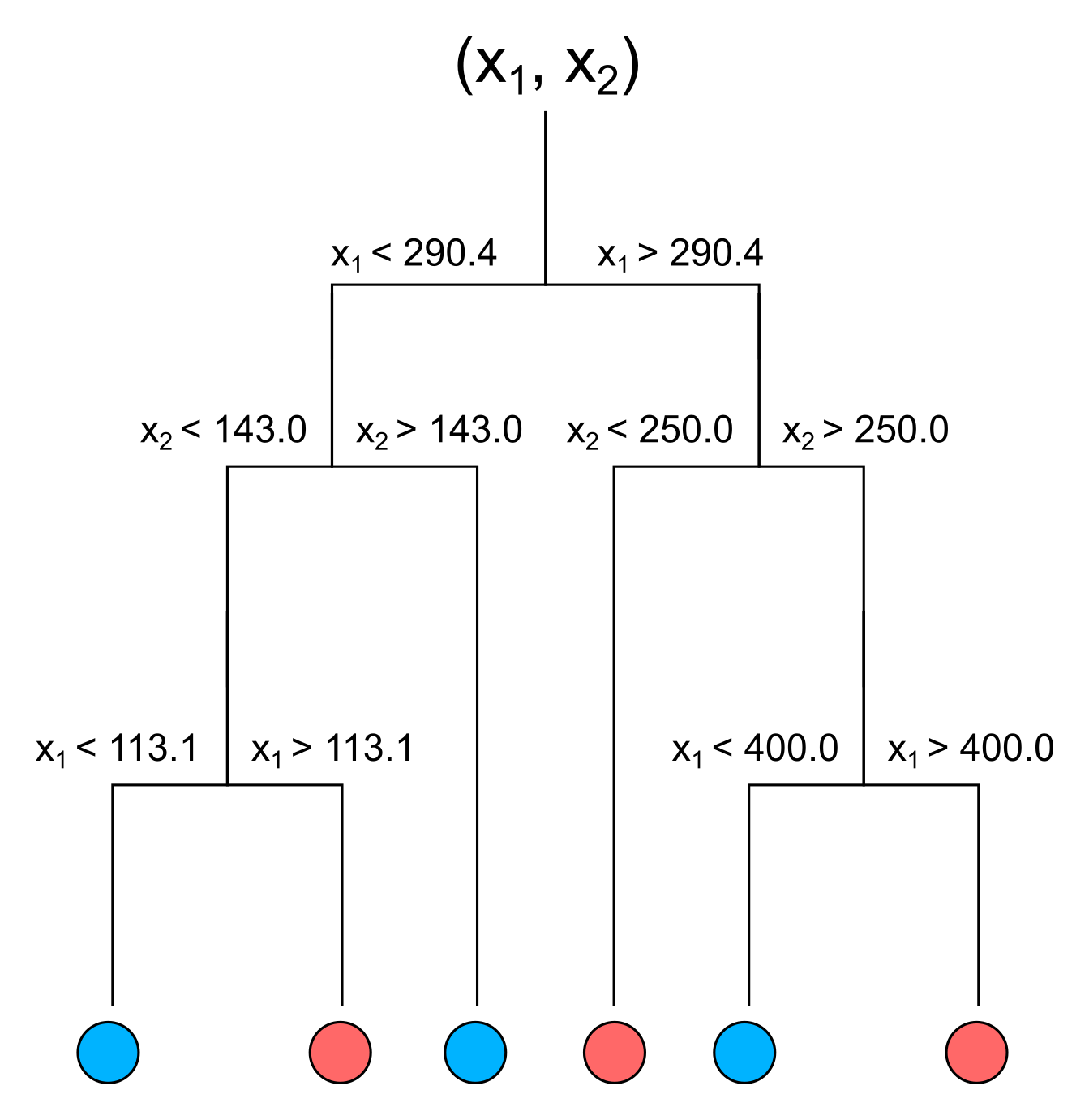
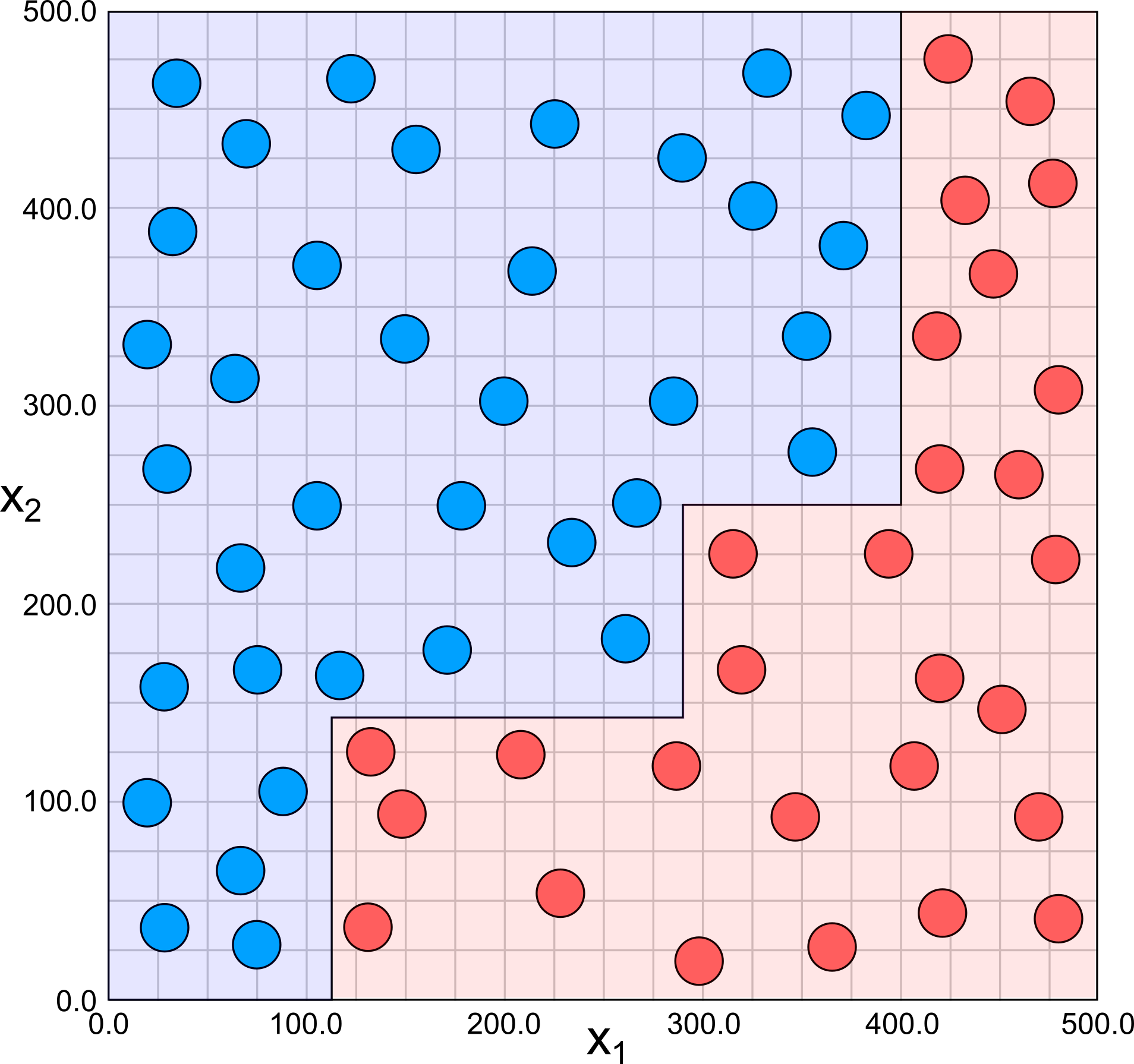
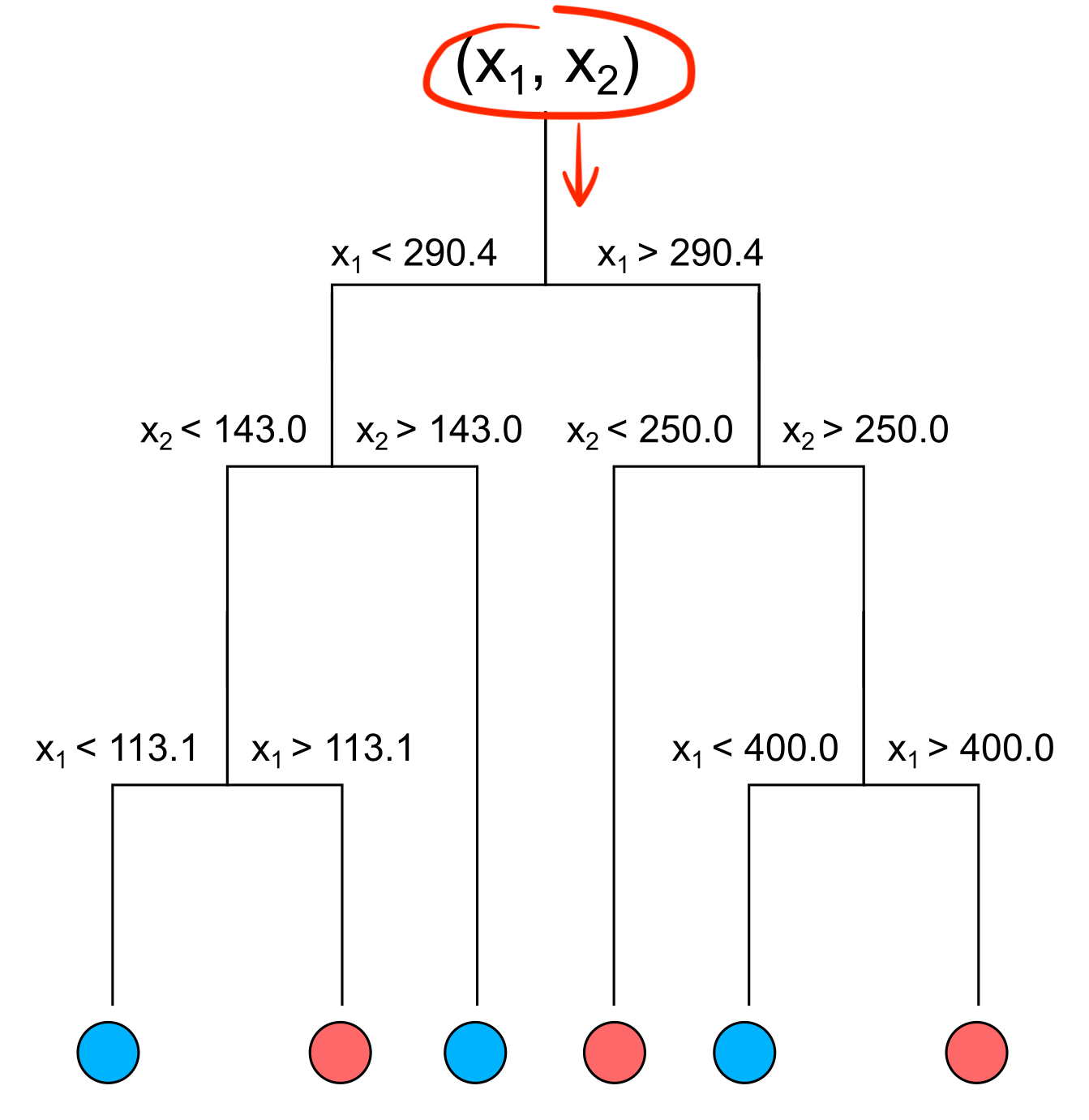
x – un nouvel échantillon $(x_1, x_2)$
# Pseudo-algorithme pour trouver la catégorie :category = pred(node, x):# Vérifier s'il y a une division if node.hasSplitting:# Déterminer quel nœud enfant prendre if node.goToLeftChild(x): return pred(node.leftChild, x) if node.goToRightChild(x): return pred(node.rightChild, x)

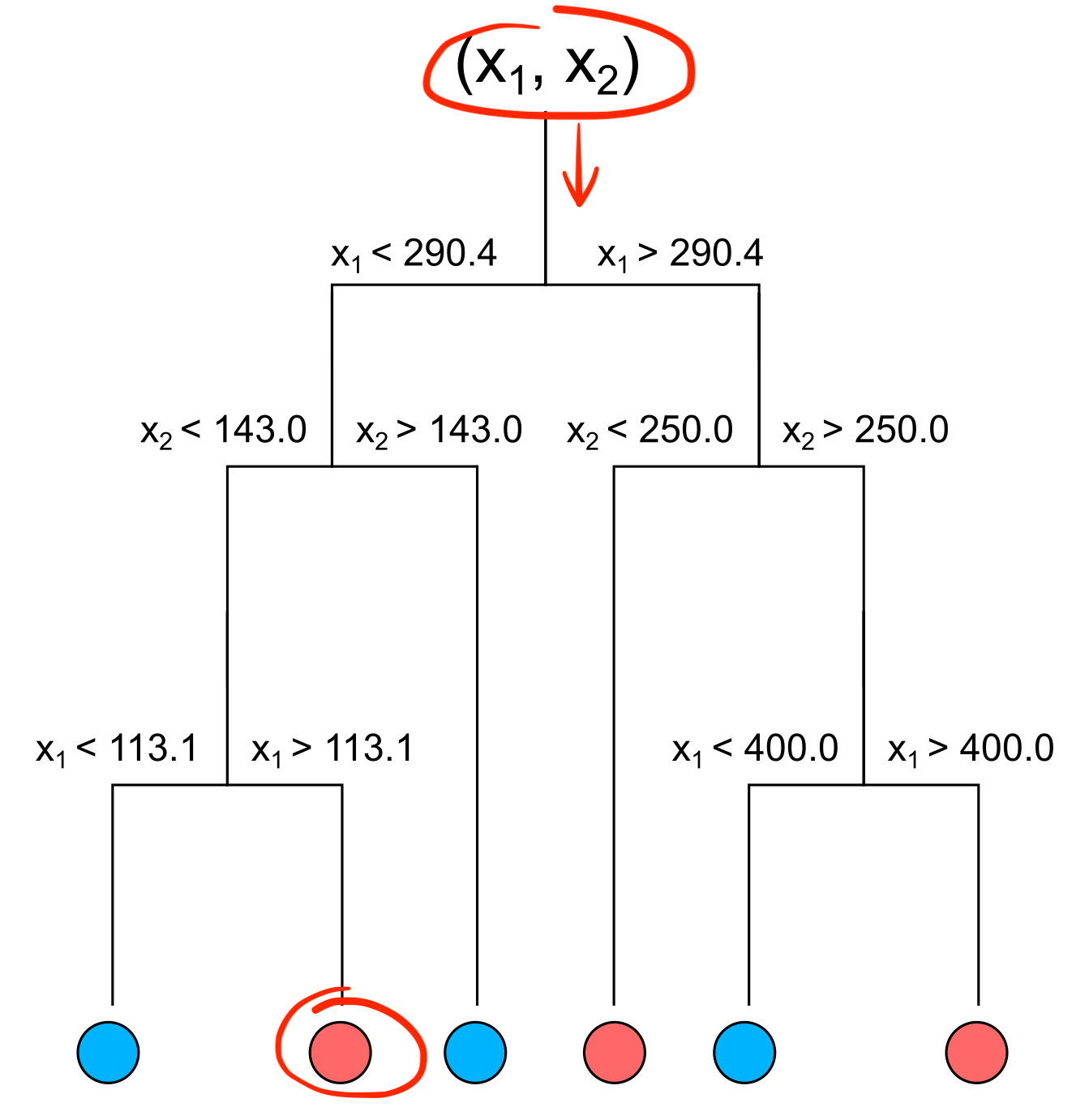
x – un nouvel échantillon $(x_1, x_2)$
# Pseudo-algorithme pour trouver la catégorie :category = pred(node, x):# Vérifier s'il y a une division if node.hasSplitting:# Déterminer quel nœud enfant prendre if node.goToLeftChild(x): return pred(node.leftChild, x) if node.goToRightChild(x): return pred(node.rightChild, x)# Retourner la catégorie return node.category
S'entraîner aux questions d'entrevue de programmation en Python