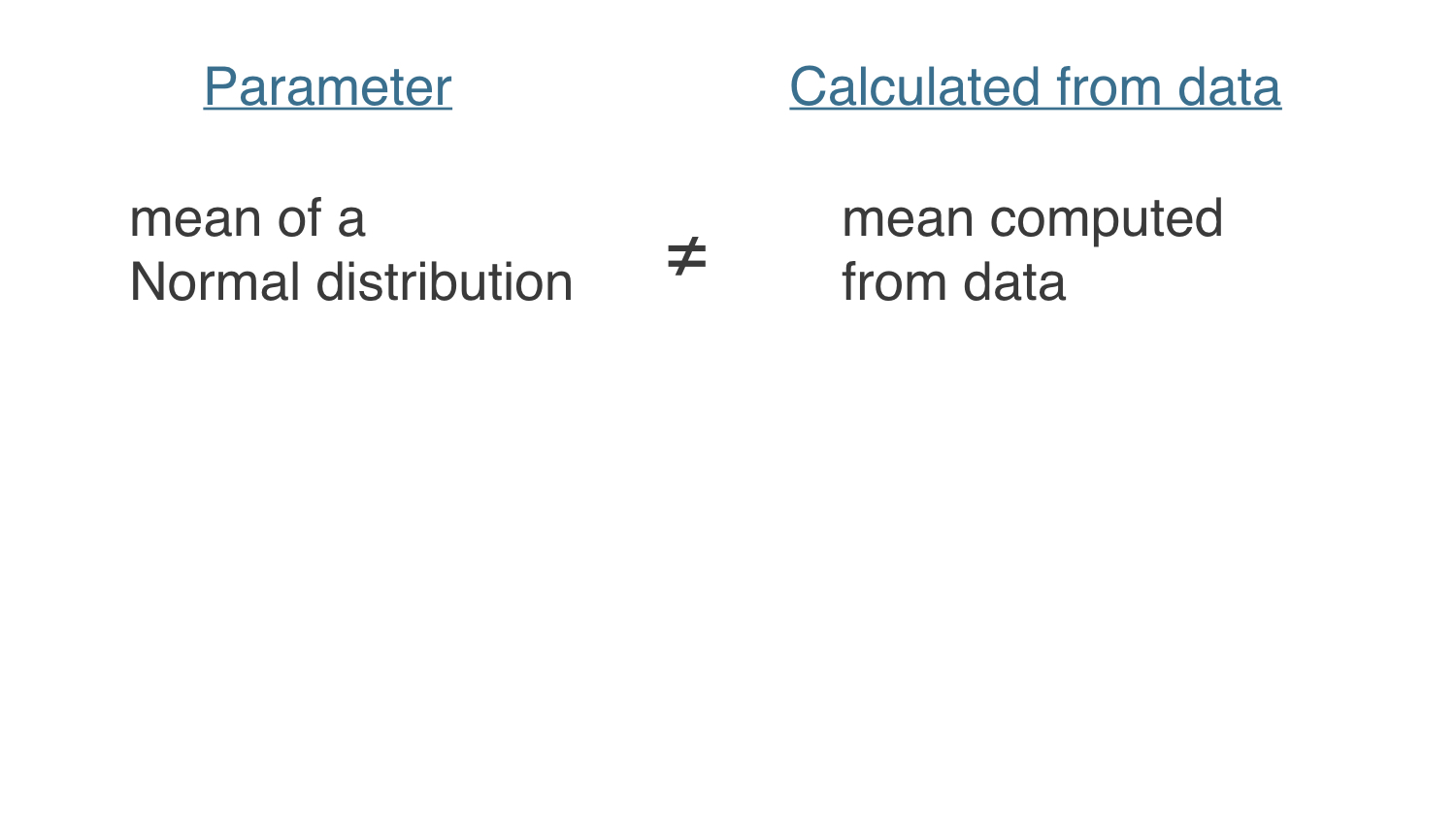
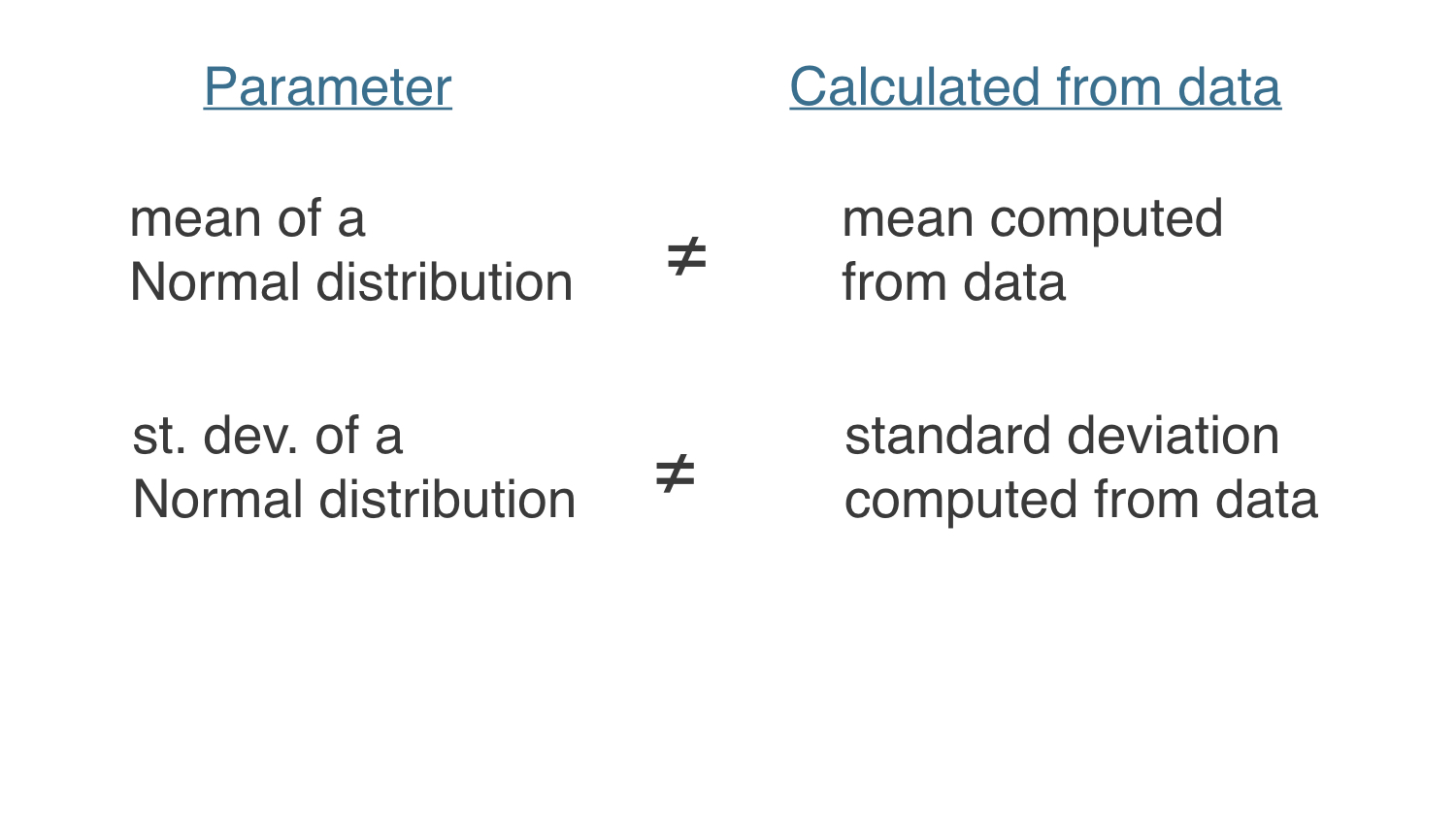
Introduction à la loi normale

Réflexion statistique en Python (Partie 1)

Justin Bois

Teaching Professor at the California Institute of Technology

Loi normale
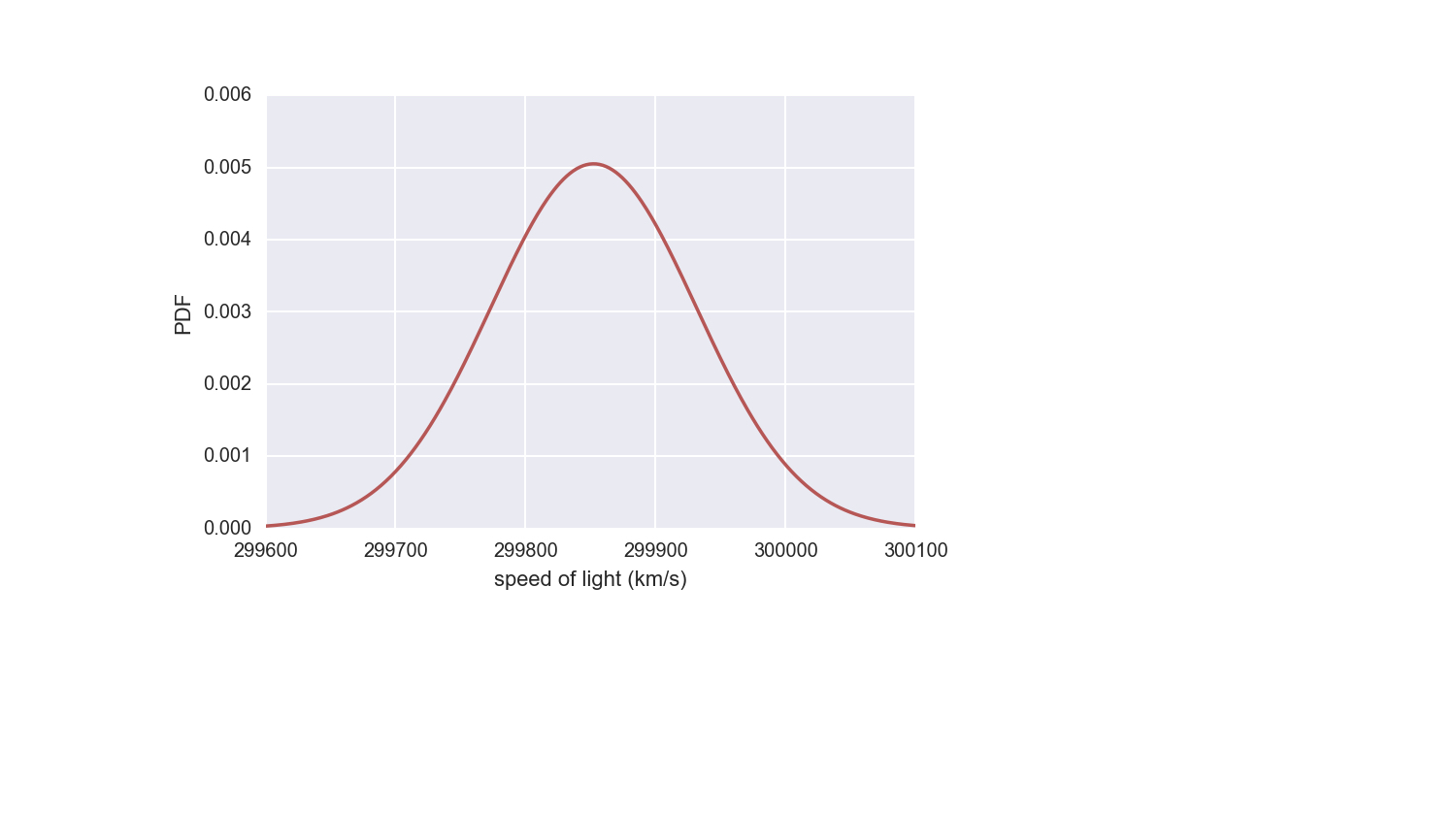
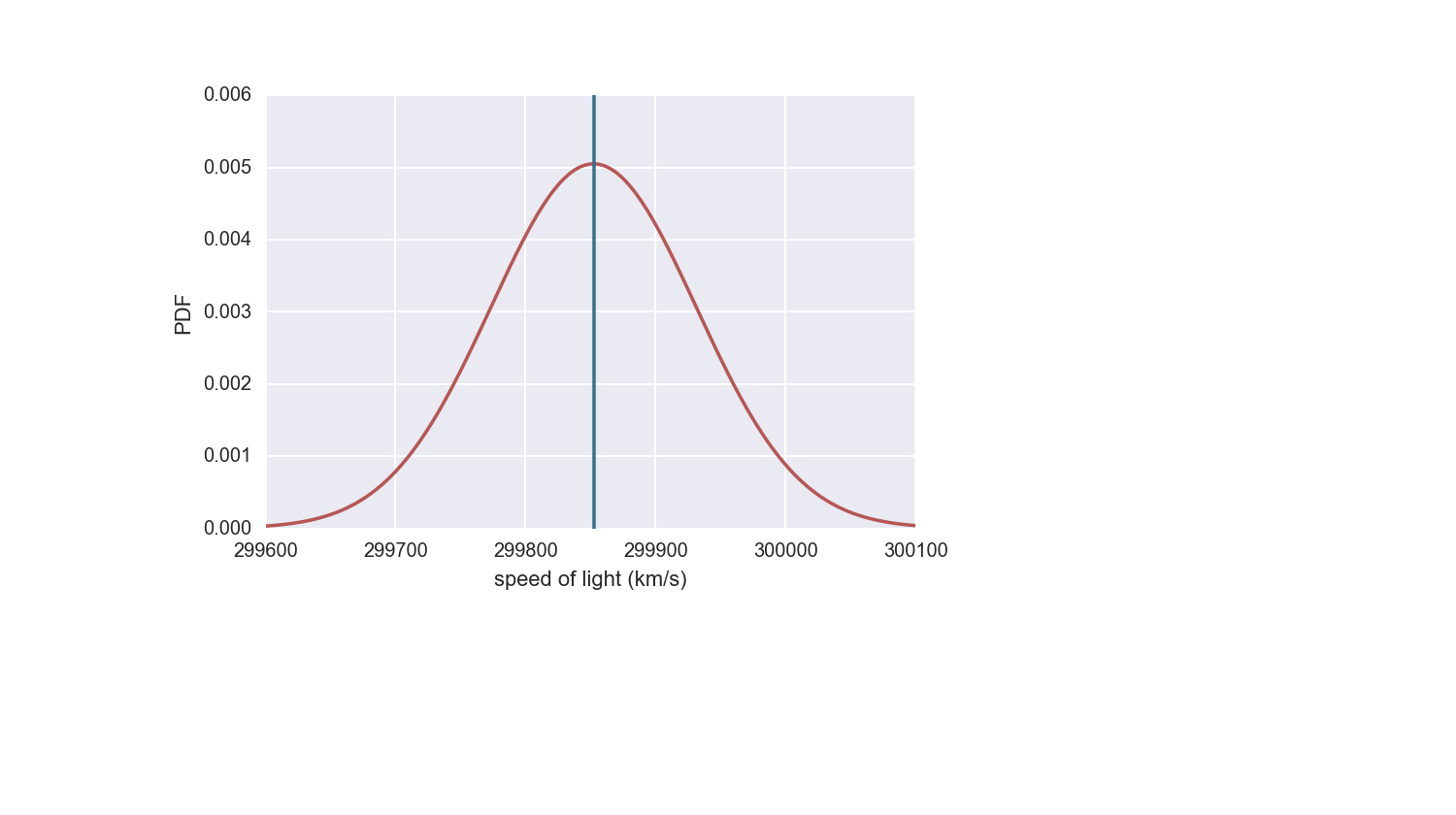
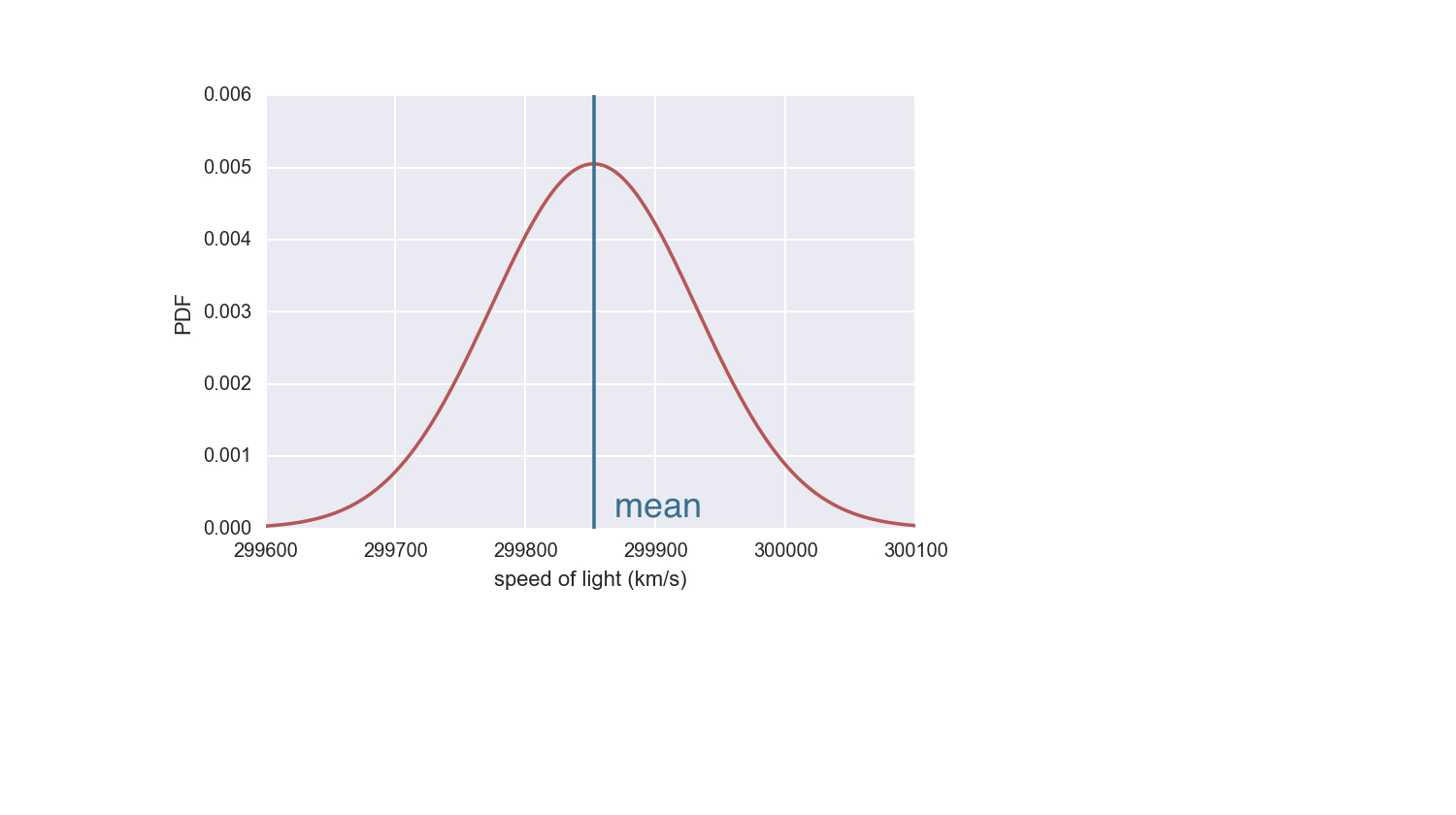
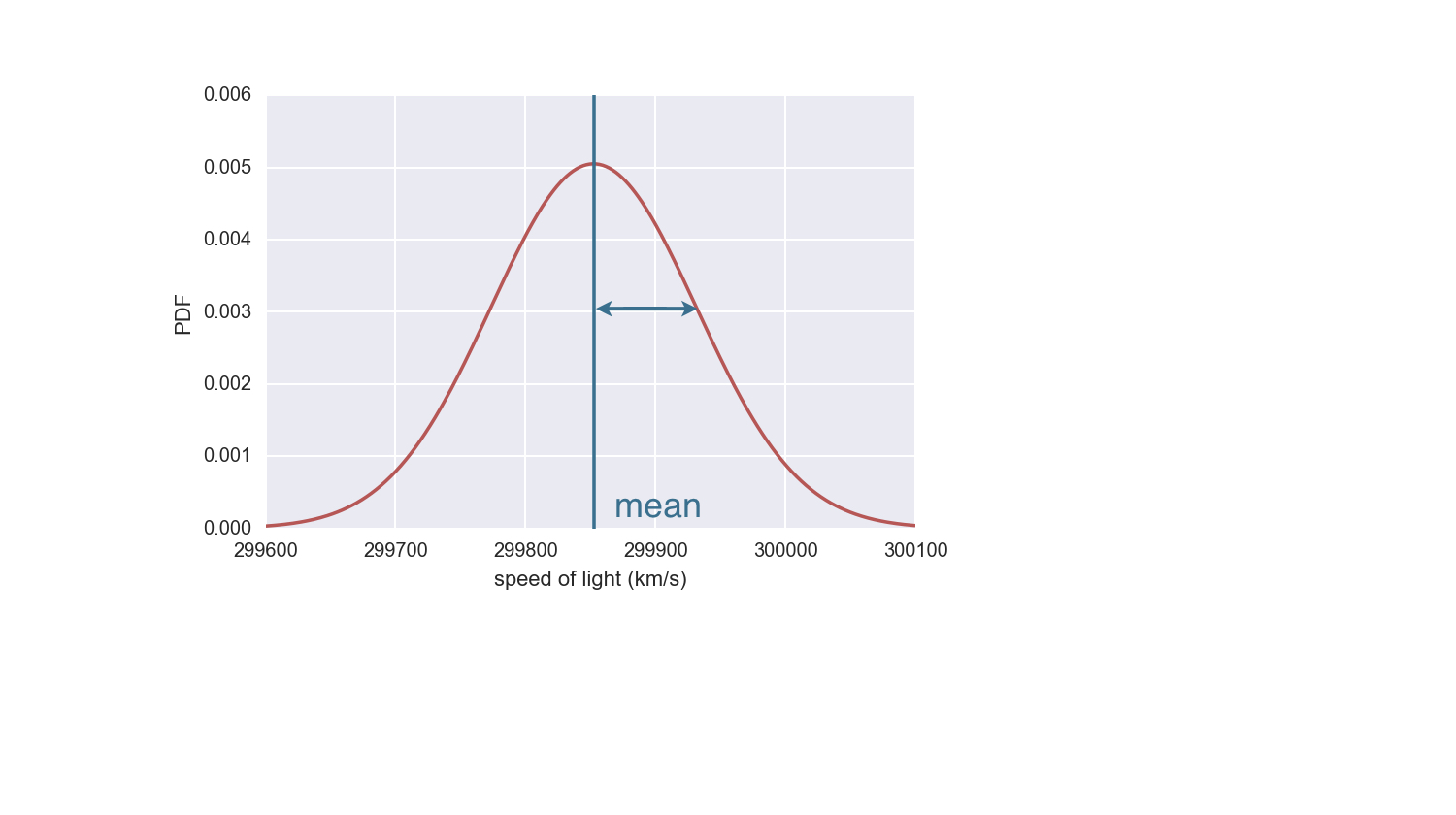
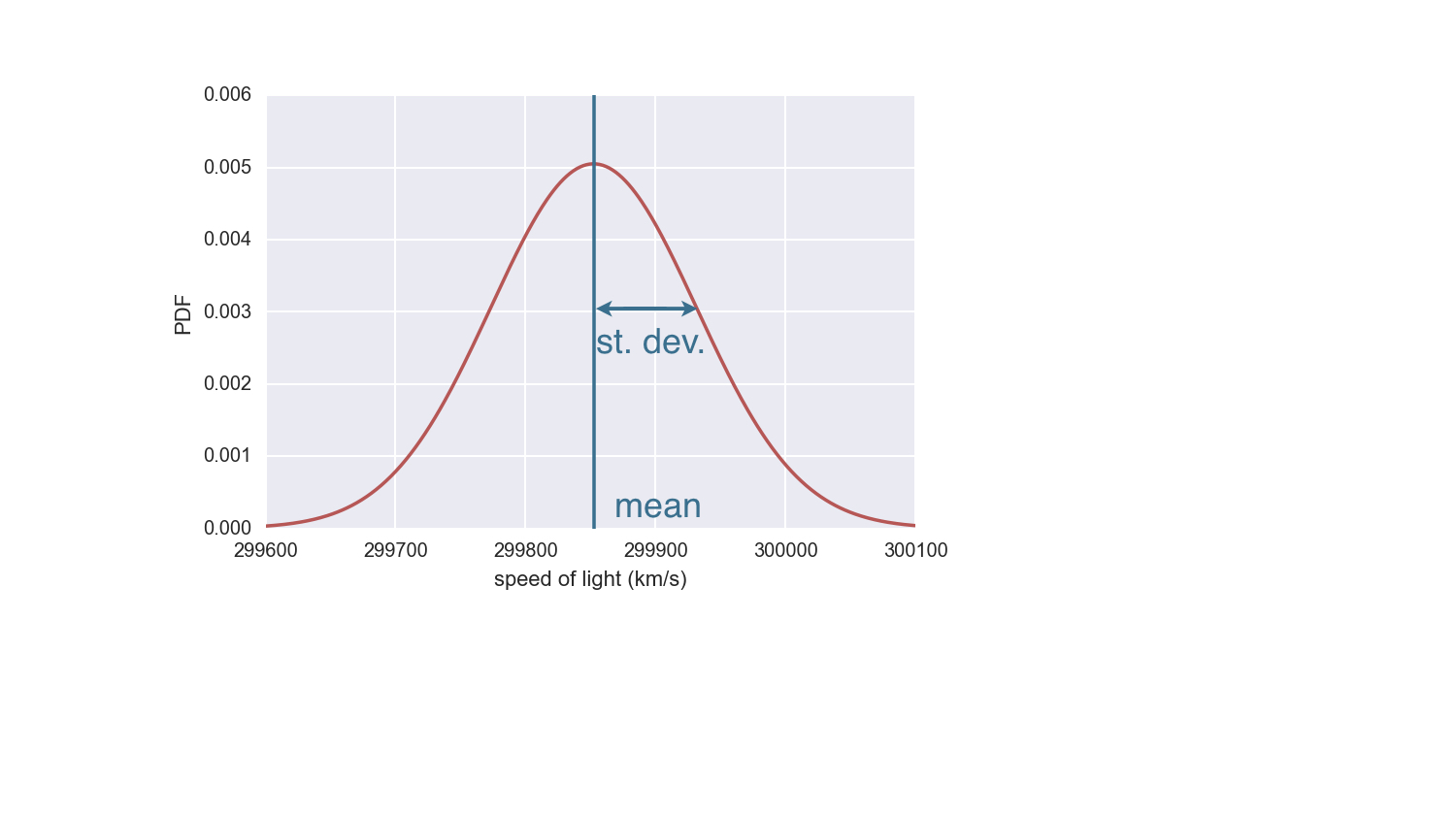
  • Décrit une variable continue dont la FDP a un seul sommet symétrique.
Réflexion statistique en Python (Partie 1)

Loi normale

ch4-2.004.png

Réflexion statistique en Python (Partie 1)

Loi normale

ch4-2.005.png

Réflexion statistique en Python (Partie 1)

Loi normale

ch4-2.006.png

Réflexion statistique en Python (Partie 1)

Loi normale

ch4-2.007.png

Réflexion statistique en Python (Partie 1)

Loi normale

ch4-2.008.png

Réflexion statistique en Python (Partie 1)

ch4-2.009.png

Réflexion statistique en Python (Partie 1)

ch4-2.010.png

Réflexion statistique en Python (Partie 1)

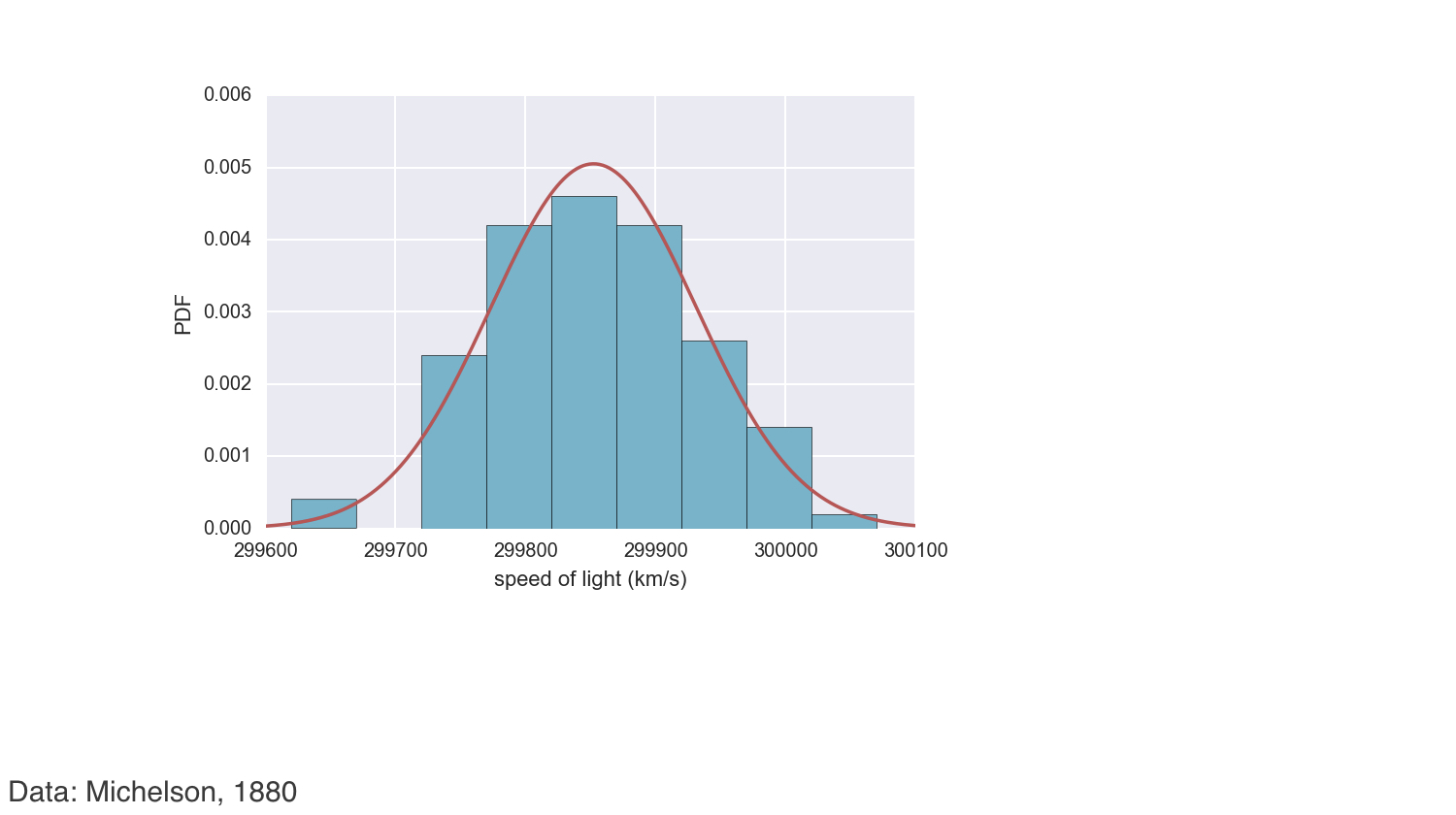
Comparer des données à une FDP normale
ch4-2.012.png

Réflexion statistique en Python (Partie 1)

Vérifier la normalité des données de Michelson
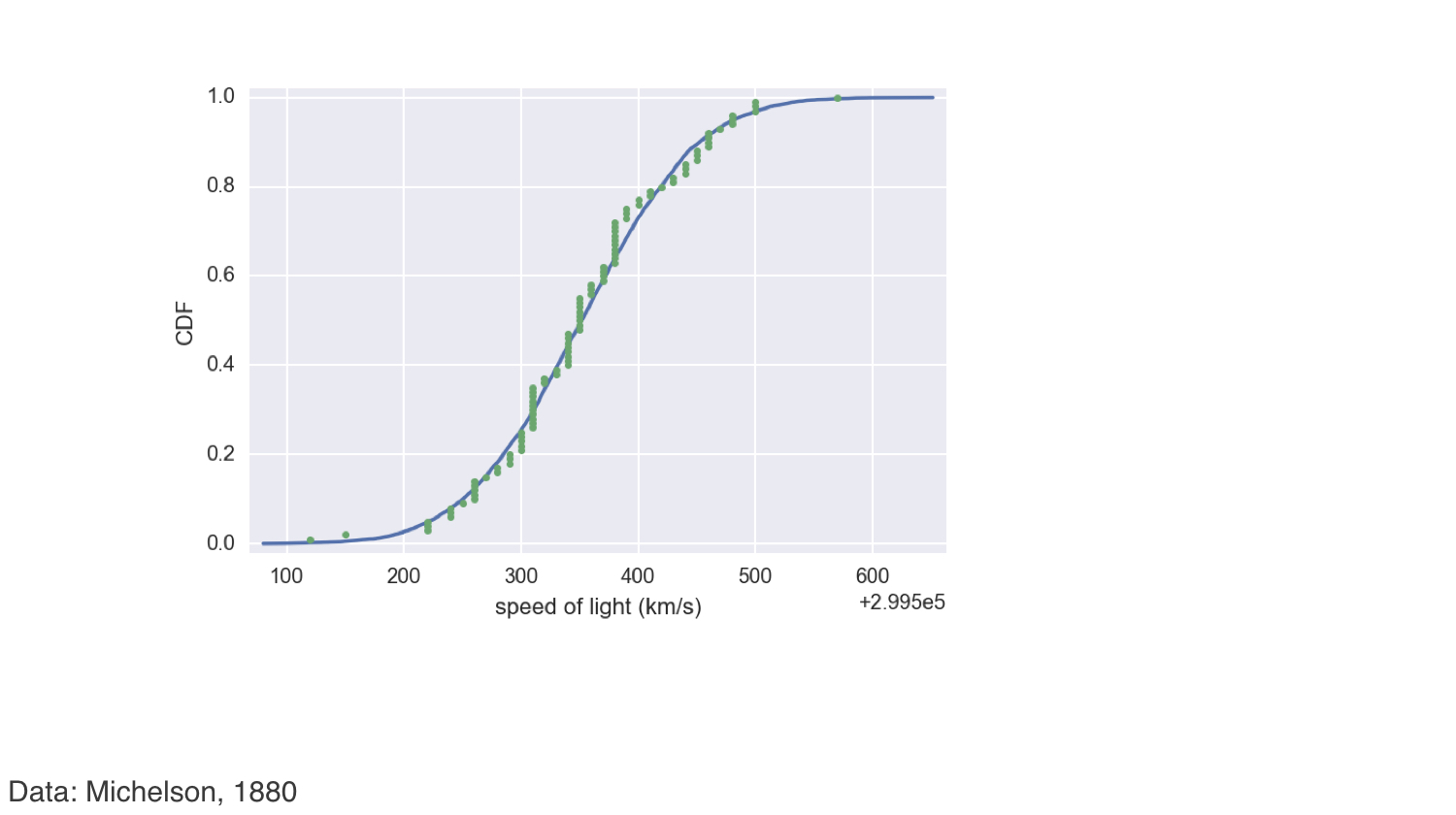
import numpy as np
rng = np.random.default_rng()
mean = np.mean(michelson_speed_of_light)
std = np.std(michelson_speed_of_light)
samples = rng.normal(mean, std, size=10000)
x, y = ecdf(michelson_speed_of_light)
x_theor, y_theor = ecdf(samples)
Réflexion statistique en Python (Partie 1)

Vérifier la normalité des données de Michelson

import matplotlib.pyplot as plt
import seaborn as sns
sns.set()
_ = plt.plot(x_theor, y_theor)
_ = plt.plot(x, y, marker='.', linestyle='none')
_ = plt.xlabel('speed of light (km/s)')
_ = plt.ylabel('CDF')
plt.show()
Réflexion statistique en Python (Partie 1)

Vérifier la normalité des données de Michelson

ch4-2.029.png

Réflexion statistique en Python (Partie 1)

Passons à la pratique !

Réflexion statistique en Python (Partie 1)

Preparing Video For Download...