Évaluation des produits d'assurance vie en R
Katrien Antonio, Ph.D.
Professor, KU Leuven and University of Amsterdam
But du calcul des primes :
Méthode :

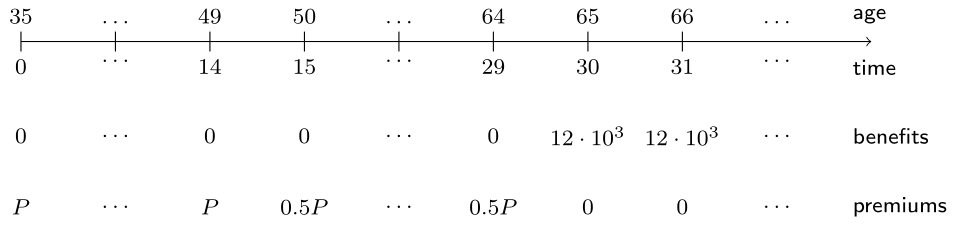
Mme Incroyable a 35 ans.
Elle veut acheter une rente viagère versant 12 000 EUR par année à vie, à compter de 65 ans.
Elle finance ce produit par des primes annuelles, payables pendant 30 ans à partir de 35 ans. Les primes sont réduites de moitié après 15 ans.
Quelle est sa prime initiale ?

Elle a 35 ans, vit en Belgique, année 2013.
Taux d'intérêt : 3 %.
Probabilités de survie
# Survival probabilities of (35)
kpx <- c(1, cumprod(px[(35 + 1):length(px)]))
Facteurs d'actualisation
# Discount factors
discount_factors <- (1 + 0.03) ^ - (0:(length(kpx) - 1))
Prestations
# Benefits
benefits <- c(rep(0, 30), rep(12000, length(kpx) - 30))
# EPV of the life annuity benefits
sum(benefits * discount_factors * kpx)
70928.84
Profil de primes rho
# Premium pattern rho
rho <- c(rep(1, 15), rep(0.5, 15), rep(0, length(kpx) - 30))
# EPV of the premium pattern
sum(rho * discount_factors * kpx)
16.01978
$$ P = \frac{\text{EPV}(\text{benefits})}{\text{EPV}(\text{rho})}. $$
# The ratio of the EPV of the life annuity benefits
# and the EPV of the premium pattern
sum(benefits * discount_factors * kpx) / sum(rho * discount_factors * kpx)
4427.578
Évaluation des produits d'assurance vie en R