Python में क्रेडिट रिस्क मॉडलिंग
Michael Crabtree
Data Scientist, Ford Motor Company
loan_status के मान ही क्लास हैं01y_train['loan_status'].value_counts()
| loan_status | Training Data Count | Percentage of Total |
|---|---|---|
| 0 | 13,798 | 78% |
| 1 | 3,877 | 22% |
xgboost में Gradient Boosted Trees की loss function log-loss होती है| True loan status | Predicted probability | Log Loss |
|---|---|---|
| 1 | 0.1 | 2.3 |
| 0 | 0.9 | 2.3 |
| Person | Loan Amount | Potential Profit | Predicted Status | Actual Status | Losses |
|---|---|---|---|---|---|
| A | $1,000 | $10 | Default | Non-Default | -$10 |
| B | $1,000 | $10 | Non-Default | Default | -$1,000 |
| Method | Pros | Cons |
|---|---|---|
| Gather more data | defaults की संख्या बढ़ती है | defaults का प्रतिशत बदल न भी सके |
| Penalize models | defaults के लिए recall बढ़ता है | मॉडल को अधिक ट्यूनिंग और मेंटेनेंस चाहिए |
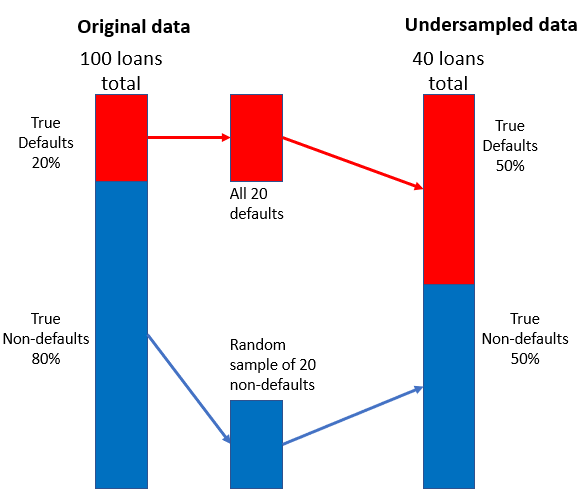
| Sample data differently | सबसे कम तकनीकी बदलाव | डेटा में defaults कम हो सकते हैं |
loan_status के आधार पर दो नए सेट बनाएँ# Concat the training sets
X_y_train = pd.concat([X_train.reset_index(drop = True),
y_train.reset_index(drop = True)], axis = 1)
# Get the counts of defaults and non-defaults
count_nondefault, count_default = X_y_train['loan_status'].value_counts()
# Separate nondefaults and defaults
nondefaults = X_y_train[X_y_train['loan_status'] == 0]
defaults = X_y_train[X_y_train['loan_status'] == 1]
# Undersample the non-defaults using sample() in pandas
nondefaults_under = nondefaults.sample(count_default)
# Concat the undersampled non-defaults with the defaults
X_y_train_under = pd.concat([nondefaults_under.reset_index(drop = True),
defaults.reset_index(drop = True)], axis=0)
Python में क्रेडिट रिस्क मॉडलिंग