# Keras मॉडल की पहली layer को access करना
first_layer = model.layers[0]

# layer, उसके input, output और weights प्रिंट करना
print(first_layer.input)
print(first_layer.output)
print(first_layer.weights)
# Keras backend import करें
import tensorflow.keras.backend as K

# मॉडल की किसी layer के input और output tensors पाएँ
inp = model.layers[0].input
out = model.layers[0].output

# फ़ंक्शन जो layer inputs को outputs से मैप करता है
inp_to_out = K.function([inp], [out])

# हम input पास करते हैं और उस पहली layer का output पाते हैं
print(inp_to_out([X_train])
# X_train में प्रति sample पहली layer के outputs
[array([[0.7, 0],...,[0.1, 0.3]])]
Autoencoders!
Autoencoders!
Autoencoder उपयोग के मामले
Dimensionality reduction:
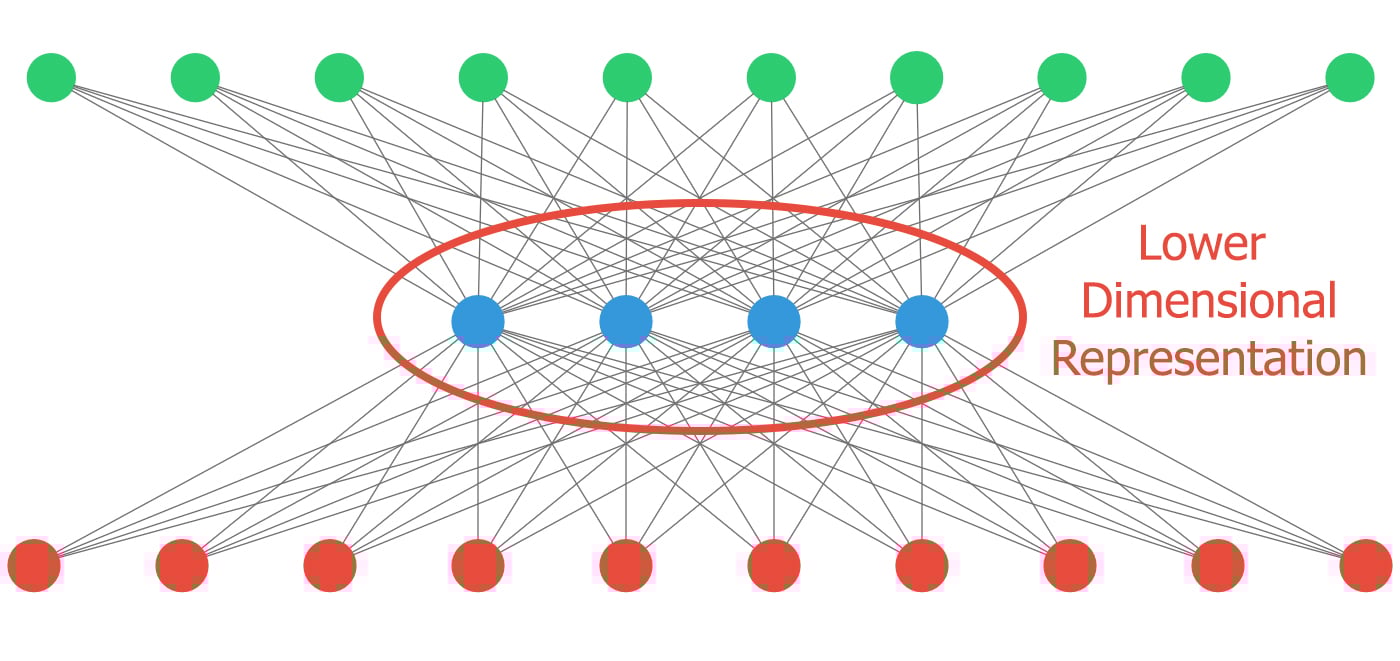
हमारे inputs का छोटे आयाम वाला प्रतिनिधित्व.
De-noising data:
यदि clean data पर train किया जाए, तो reconstruction के दौरान अनावश्यक noise फ़िल्टर हो जाएगा.
Anomaly detection:
अनदेखे inputs पर मॉडल का reconstruction कमज़ोर होगा.
...
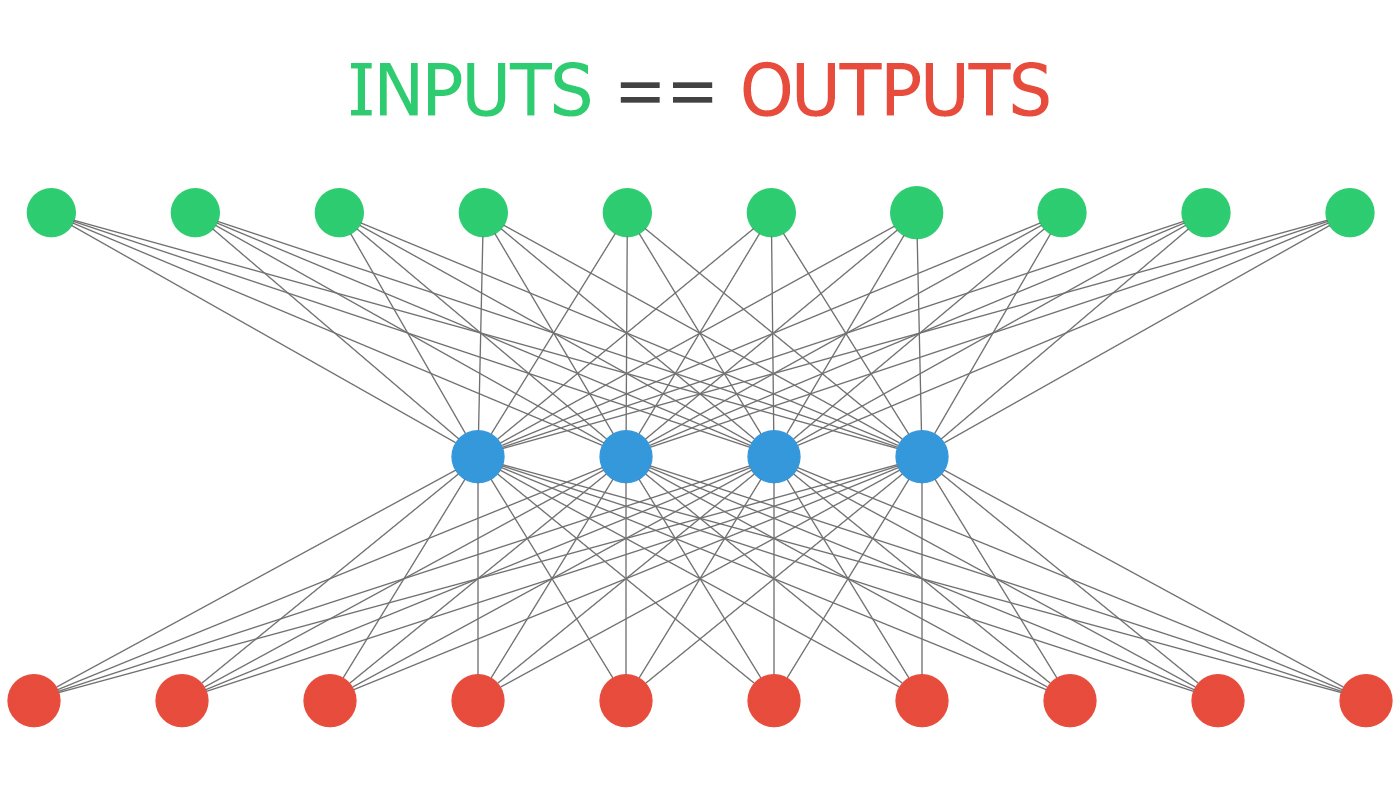
एक सरल autoencoder बनाना
# एक sequential मॉडल instantiate करें
autoencoder = Sequential()

# 4 neurons की hidden layer और 100 की input layer जोड़ें
autoencoder.add(Dense(4, input_shape=(100,), activation='relu'))

# 100 neurons की output layer जोड़ें
autoencoder.add(Dense(100, activation='sigmoid'))

# उपयुक्त loss के साथ अपना मॉडल compile करें
autoencoder.compile(optimizer='adam', loss='binary_crossentropy')
इसे encoder में बाँटना
# inputs को encode करने के लिए अलग मॉडल बनाना
encoder = Sequential()
encoder.add(autoencoder.layers[0])

# Predict करने पर चार hidden layer neurons के outputs मिलते हैं
encoder.predict(X_test)
# X_test की प्रत्येक observation के लिए चार संख्याएँ
array([10.0234375, 5.833543, 18.90444, 9.20348],...)