DVC के साथ डेटा वर्ज़निंग परिचय
Ravi Bhadauria
Machine Learning Engineer
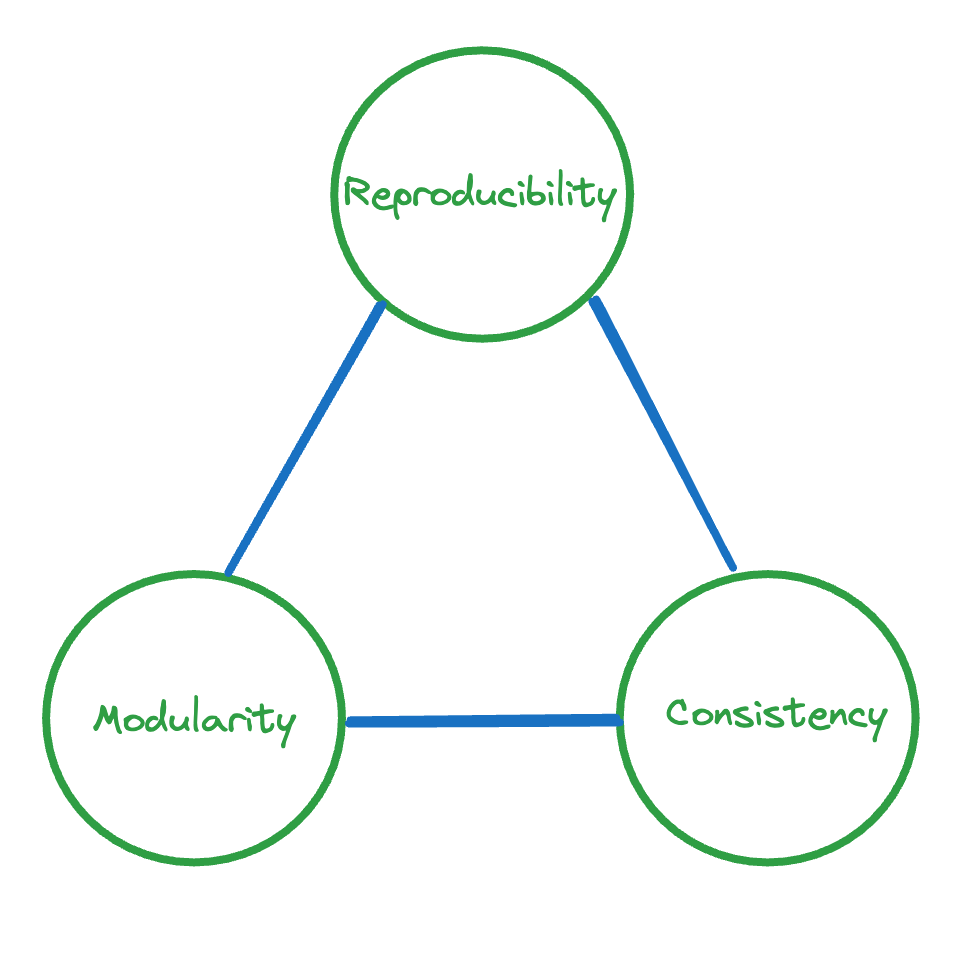
Reproducible: अलग environments और समय में वही outputs पुनः बनाएँ
Modular: अलग, स्वतंत्र, और testable modules के रूप में लिखा हुआ
Consistent: सभी parameters के लिए single source of truth

फ़ाइलें supported format में हों
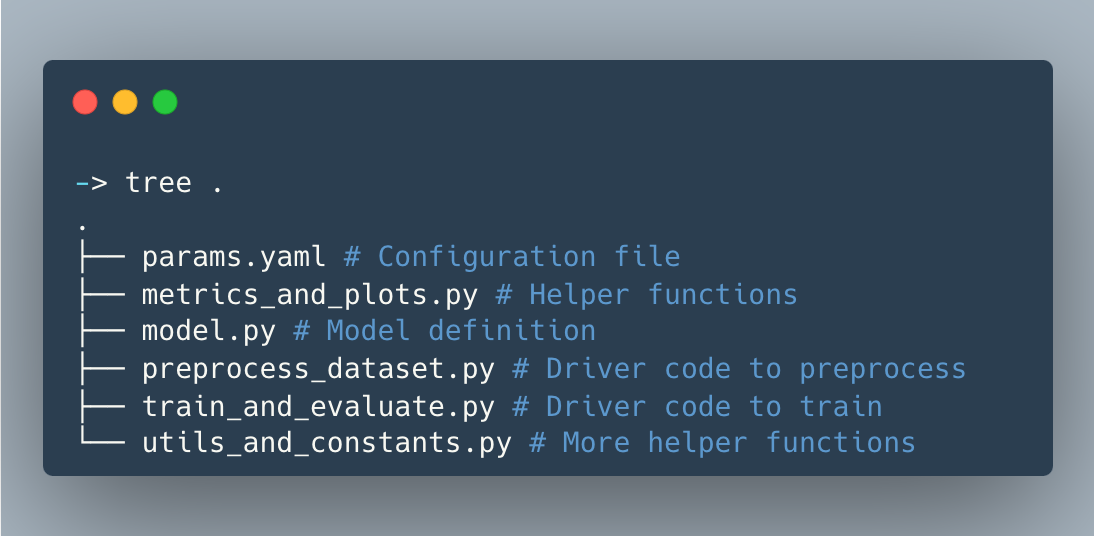
params.yamlहम YAML के साथ काम करेंगे
.yaml या .ymlparameters को dictionaries के रूप में specify करें
: से अलग होती हैंComments # से शुरू होते हैं
Data types:
Data structures:
Indentation महत्वपूर्ण है
# Key-value pairs
a: 1
b: 1.2
c: "String value"
# Arrays
a: [1, 2.2, 3, 4.8]
b:
- 5
- "String value"
# Nested dictionaries
a:
b: "Some value"
c: "Some other value"
# Data preprocessing paramters preprocess: ... target_column: RainTomorrow categorical_features: - Location - WindGustDir - ...# Model training/evaluation paramters train_and_evaluate: rfc_params: n_estimators: 2 ...
# In model.py
def evaluate_model(model, X_test, y_test):
"""Evaluate a model on a test set and return metrics."""
y_pred = model.predict(X_test)
precision = precision_score(y_test, y_pred)
...
return { "accuracy": accuracy, "precision": precision,
"recall": recall, "f1_score": f1 }
# In entry-point code (train_and_evaluate.py)
from model import evaluate_model
metrics = evaluate_model(model, X_test, y_test)

DVC के साथ डेटा वर्ज़निंग परिचय