Keras के साथ भाषा मॉडलिंग के लिए Recurrent Neural Networks (RNNs)
David Cecchini
Data Scientist
टेक्स्ट क्लासिफिकेशन के उपयोग:
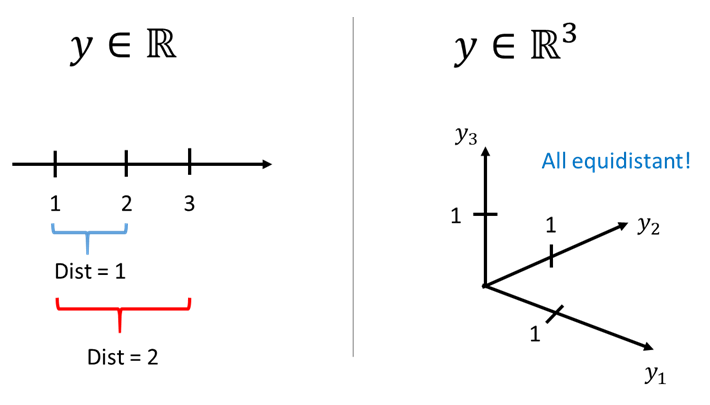
बाइनरी से मल्टी-क्लास में क्या बदलता है:
y
आउटपुट वैरिएबल y का शेप:
# Example: num_classes = 3
y[0] = [0, 1, 0]
y.shape = (N, num_classes)
आउटपुट लेयर में यूनिट्स की संख्या:
# Output layer
model.add(Dense(num_classes))
आउटपुट लेयर की एक्टिवेशन फंक्शन:
softmax
# Output layer
model.add(Dense(num_classes, activation="softmax"))
लॉस फंक्शन:
# Compile the model
model.compile(loss='categorical_crossentropy')
y = ["sports", "economy", "data_science", "sports", "finance"]
# Transform to pandas series object
y_series = pd.Series(y, dtype="category")

# Print the category codes
print(y_series.cat.codes)
y = ["sports", "economy", "data_science", "sports", "finance"] # Transform to pandas series object y_series = pd.Series(y, dtype="category")
# Print the category codes print(y_series.cat.codes)
0    3
1    1
2    0
3    3
4    2
from tensorflow.keras.utils import to_categorical

y = np.array([0, 1, 2])

# कैटेगोरिकल में बदलें
y_prep = to_categorical(y)
print(y_prep)
from tensorflow.keras.utils import to_categorical
y = np.array([0, 1, 2]) # कैटेगोरिकल में बदलें y_prep = to_categorical(y) print(y_prep)
[[1. 0. 0.]
 [0. 1. 0.]
 [0. 0. 1.]]