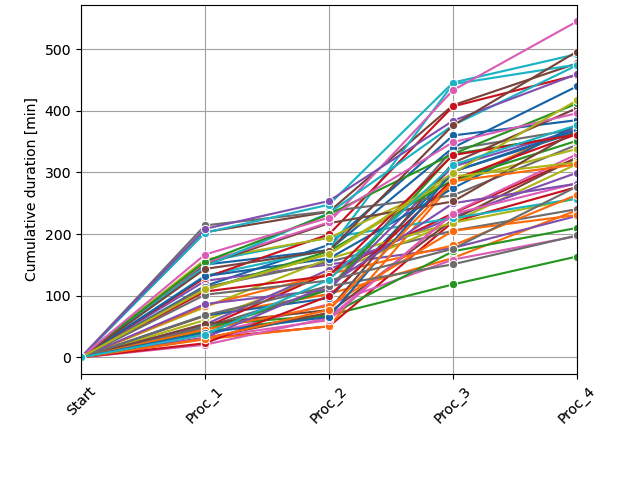
सिमुलेशन एंसेंबल: Monte-Carlo सैंपलिंग
Python में Discrete Event Simulation

Diogo Costa (PhD, MSc)
Adjunct Professor, University of Saskatchewan, Canada & CEO of ImpactBLUE-Scientific
Monte Carlo सैंपलिंग
- रिपीटेड रैंडम सैंपलिंग
- छोटे बदलावों के साथ सिस्टम को मॉडल करें
- बदलाव पर सिस्टम रिस्पॉन्स जाँचें
सैंपल बढ़ने पर पैरामीटर स्पेस
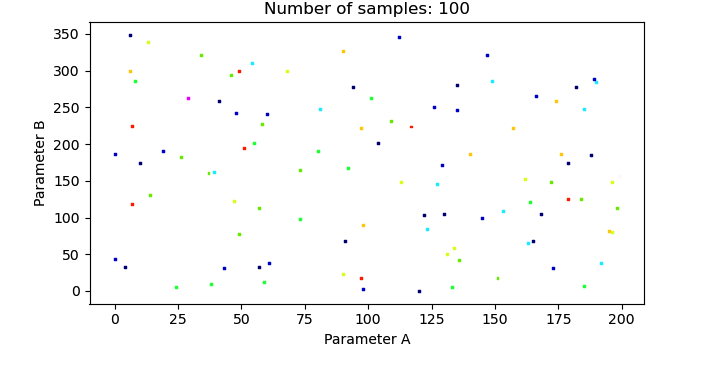
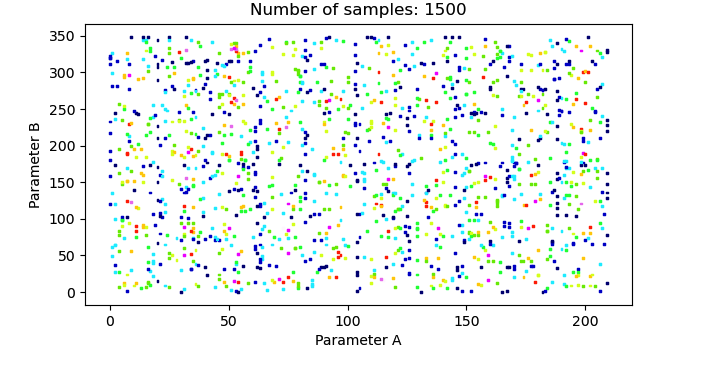
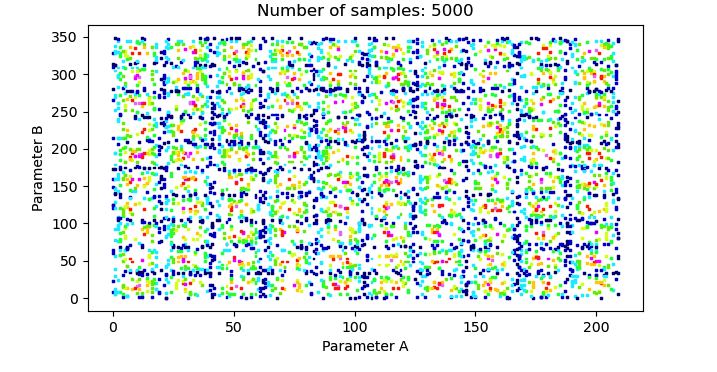
Monte Carlo सैंपलिंग: प्रोसेस जाँच
plt.xlabel("Duration [min]")
plt.ylabel("Monte Carlo Runs")
प्लॉट के परिणाम
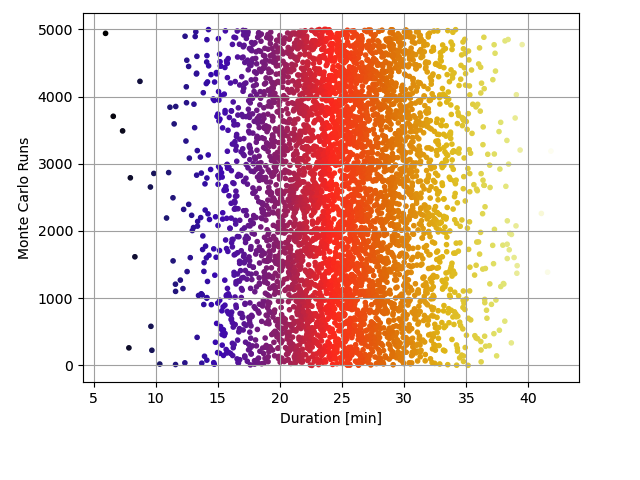
Monte Carlo सैंपलिंग: डिस्क्रीट-इवेंट मॉडल्स
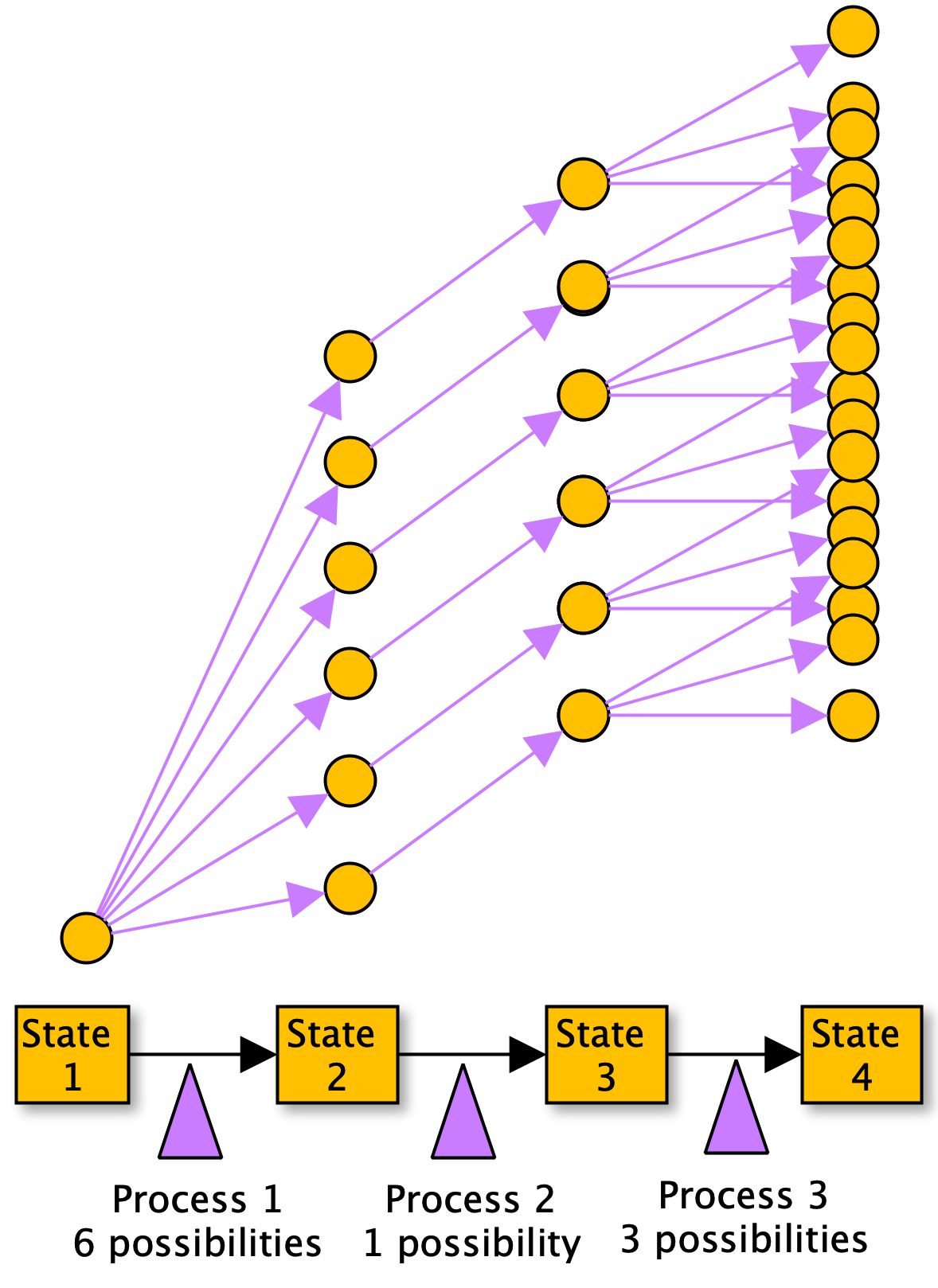
Monte Carlo सैंपलिंग: डिस्क्रीट-इवेंट मॉडल्स
process_2 = {"Name": "Unloading",
            "OperationTime": 15,
            "MaxDelayTimePercent": 5}