Markov chain डायग्नोस्टिक्स और reproducibility
RJAGS के साथ Bayesian Modeling

Alicia Johnson
Associate Professor, Macalester College
Markov chain आउटपुट
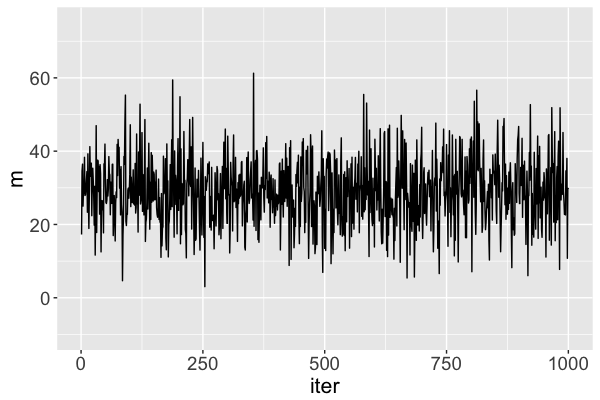
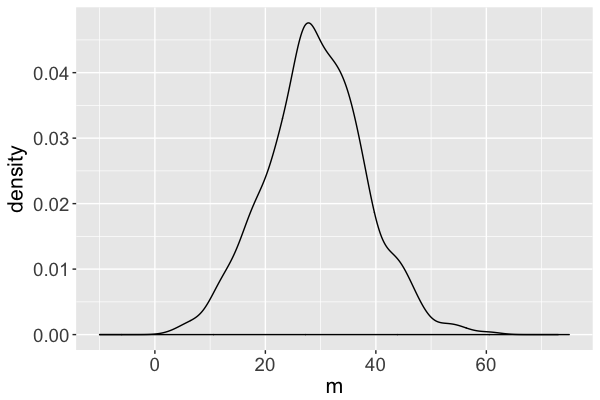
डायग्नोस्टिक: trace plots
डायग्नोस्टिक: trace plots
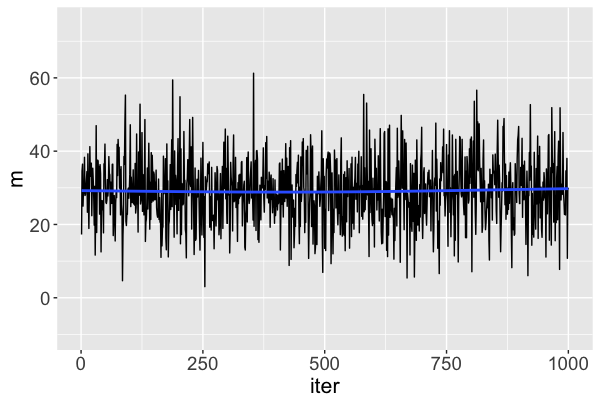
अच्छा: स्थिरता!
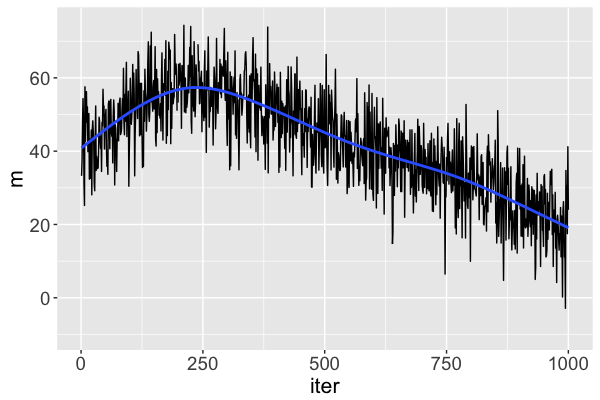
खराब: अस्थिरता
डायग्नोस्टिक: multiple chains
# COMPILE the model
sleep_jags <- jags.model(..., n.chains = 1)
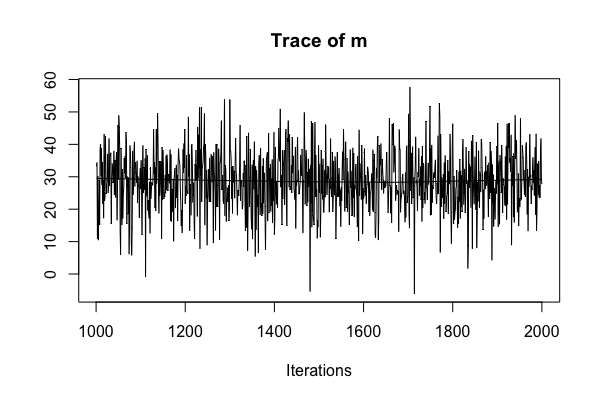
डायग्नोस्टिक: multiple chains
# COMPILE the model
sleep_jags <- jags.model(..., n.chains = 2)
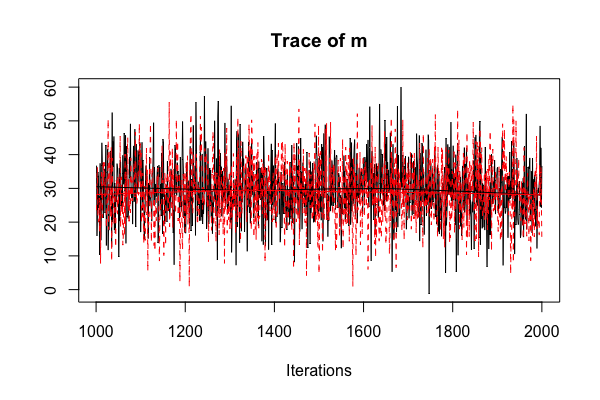
डायग्नोस्टिक: multiple chains
# COMPILE the model
sleep_jags <- jags.model(..., n.chains = 4)
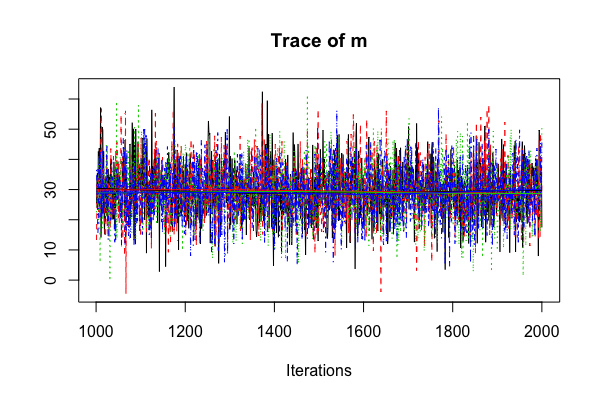
डायग्नोस्टिक: multiple chains
# COMPILE the model
sleep_jags <- jags.model(..., n.chains = 4)

डायग्नोस्टिक: standard error
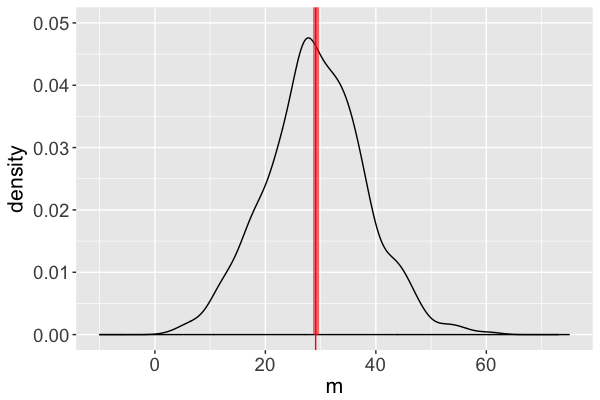
अनुमानित mean = 29.10 ms
(naive) standard error = 0.2836 ms
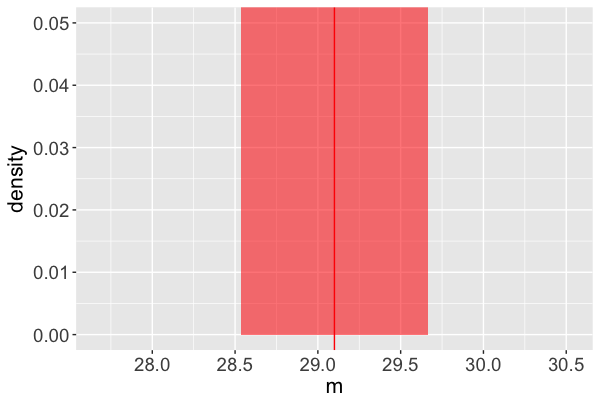
- $29.10 \pm 2*0.2836$

