CLI Interface
Python เบื้องต้นสำหรับการทดสอบโค้ด

Alexander Levin
Data Scientist
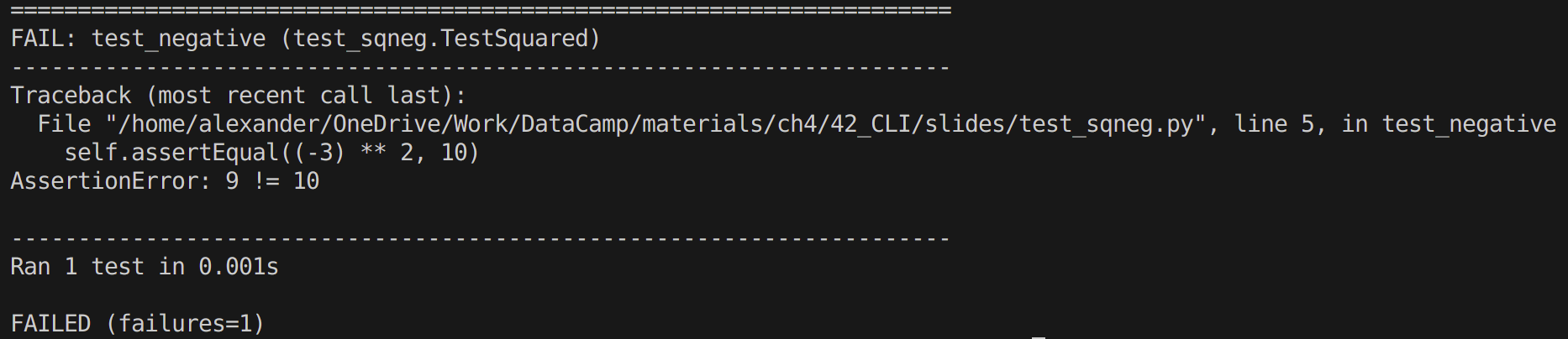
ตัวอย่าง: ผลลัพธ์
คำสั่ง:
python3 -m unittest test_sqneg.py
ผลลัพธ์ของการทดสอบ:

อาร์กิวเมนต์ keyword -k
unittest -k - รันเมธอดและคลาสทดสอบที่ตรงกับรูปแบบหรือ substring ที่ระบุ
คำสั่ง:
python3 -m unittest -k "SomeStringOrPattern" test_script.py
ตัวอย่าง:
python3 -m unittest -k "Squared" test_sqneg.py
ผลลัพธ์:

1 https://docs.python.org/3/library/unittest.html
แฟล็ก Fail Fast -f
unittest -f - หยุดการทดสอบทันทีเมื่อพบข้อผิดพลาดหรือความล้มเหลวครั้งแรก
คำสั่ง: python3 -m unittest -f test_script.py
ตัวอย่างการใช้งาน: เมื่อการทดสอบทุกรายการมีความสำคัญ เช่น การตรวจสอบระบบก่อนใช้งานจริง
1 https://docs.python.org/3/library/unittest.html
แฟล็ก Verbose -v
unittest -v - รันการทดสอบพร้อมแสดงรายละเอียดเพิ่มเติม
คำสั่ง: python3 -m unittest -v test_script.py
ตัวอย่างการใช้งาน: สำหรับการ debug
ตัวอย่างผลลัพธ์: 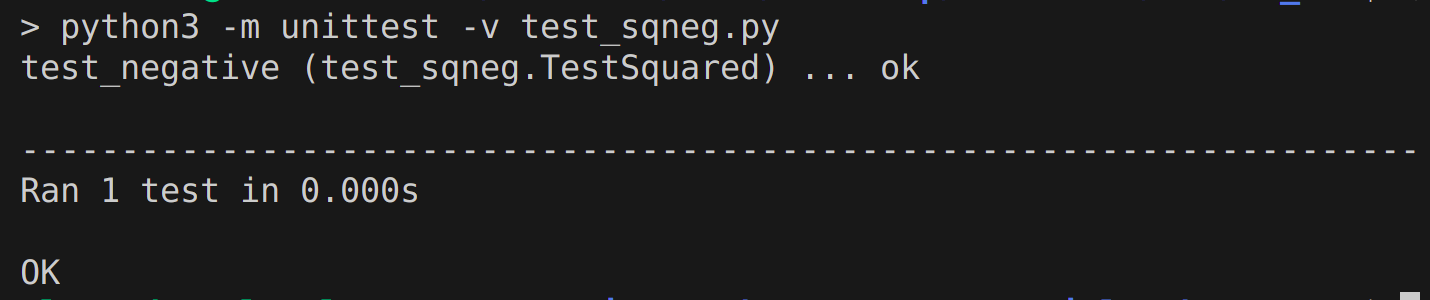
1 https://docs.python.org/3/library/unittest.html

