Sentiment Analysis ด้วย Python
Violeta Misheva
Data Scientist
อธิบายการปรากฏของคำในเอกสารหนึ่งหรือกลุ่มเอกสาร (corpus)
สร้างคลังคำศัพท์และวัดความถี่ของแต่ละคำ
This is the best book ever. I loved the book and highly recommend it!!!
{'This': 1, 'is': 1, 'the': 2 , 'best': 1 , 'book': 2,
'ever': 1, 'I':1 , 'loved':1 , 'and': 1  , 'highly': 1,
'recommend': 1 , 'it': 1 }
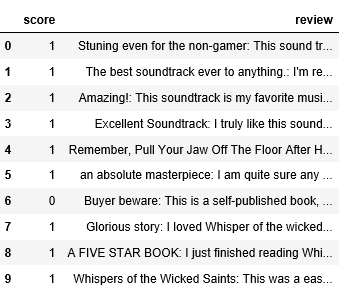
import pandas as pd
from sklearn.feature_extraction.text import CountVectorizer
vect = CountVectorizer(max_features=1000)
vect.fit(data.review)
X = vect.transform(data.review)
X
<10000x1000 sparse matrix of type '<class 'numpy.int64'>'
  with 406668 stored elements in Compressed Sparse Row format>
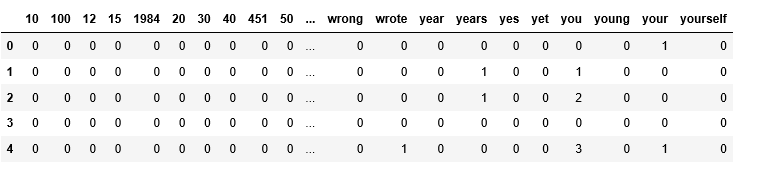
# Transform to an array
my_array = X.toarray()
# Transform back to a DataFrame, assign column names
X_df = pd.DataFrame(my_array, columns=vect.get_feature_names())