Maskininlärning med PySpark
Andrew Collier
Data Scientist, Fathom Data
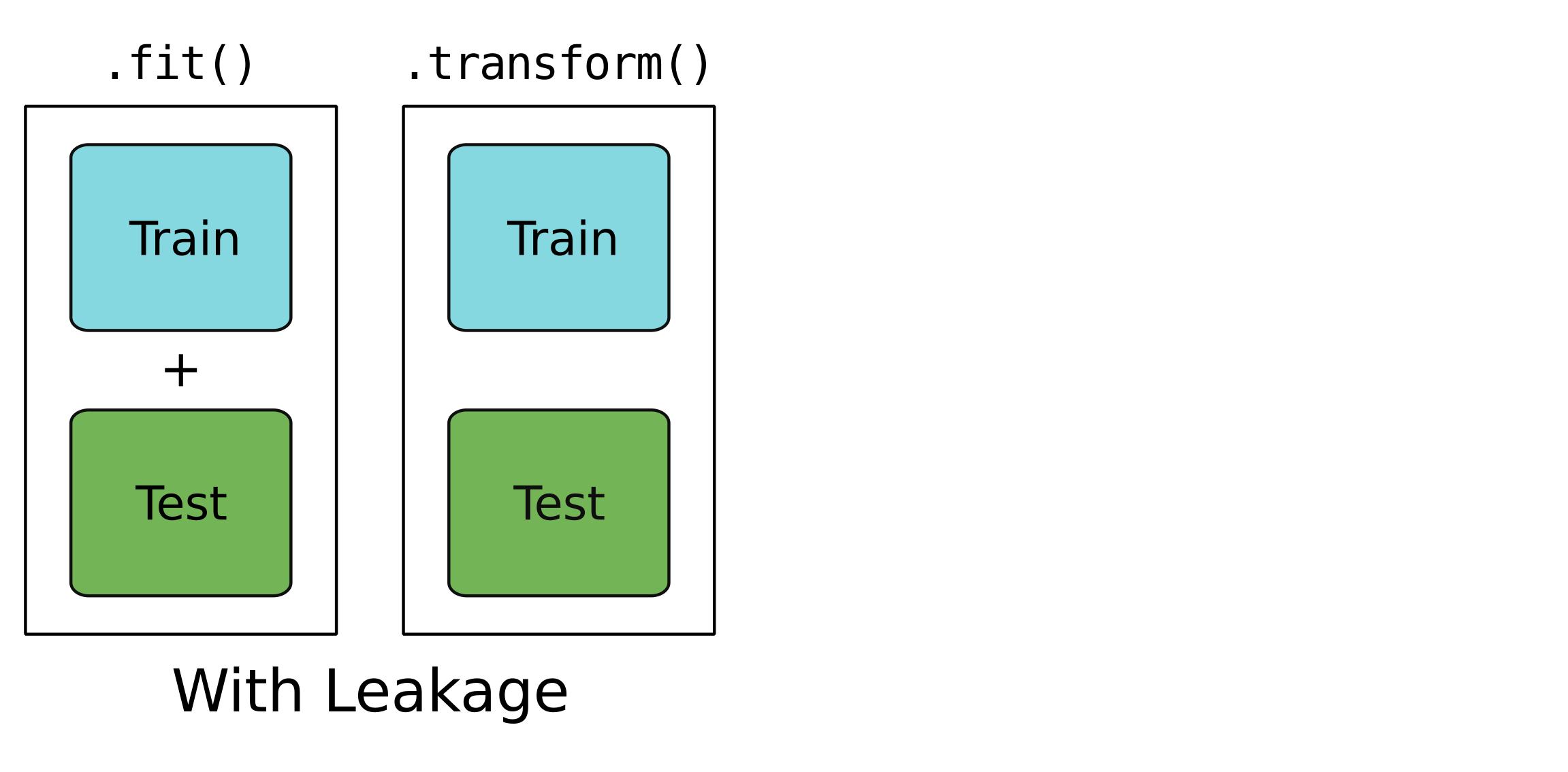
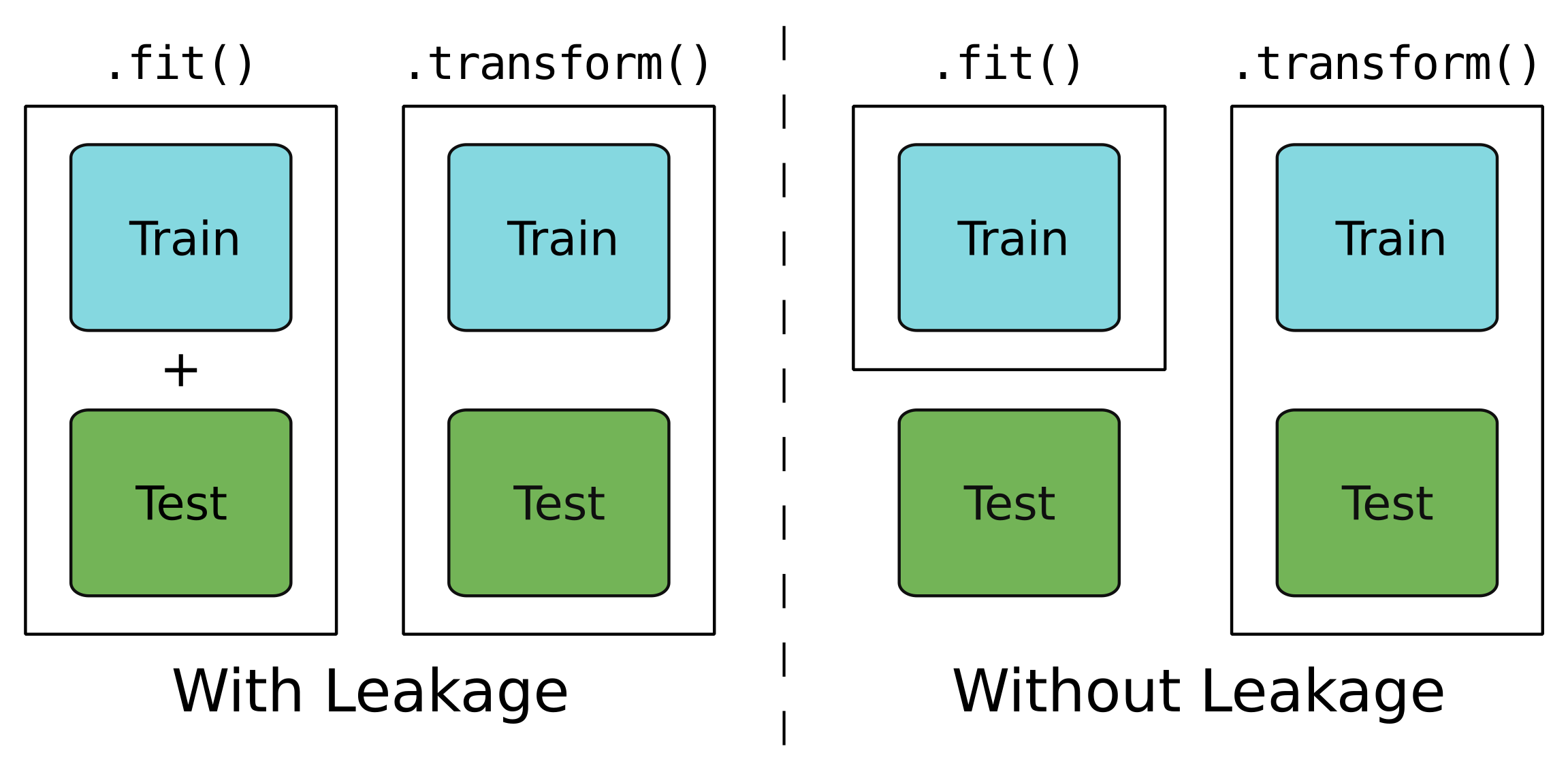
Enbart för träningsdata.
För test- och träningsdata.


En pipeline består av en serie operationer.
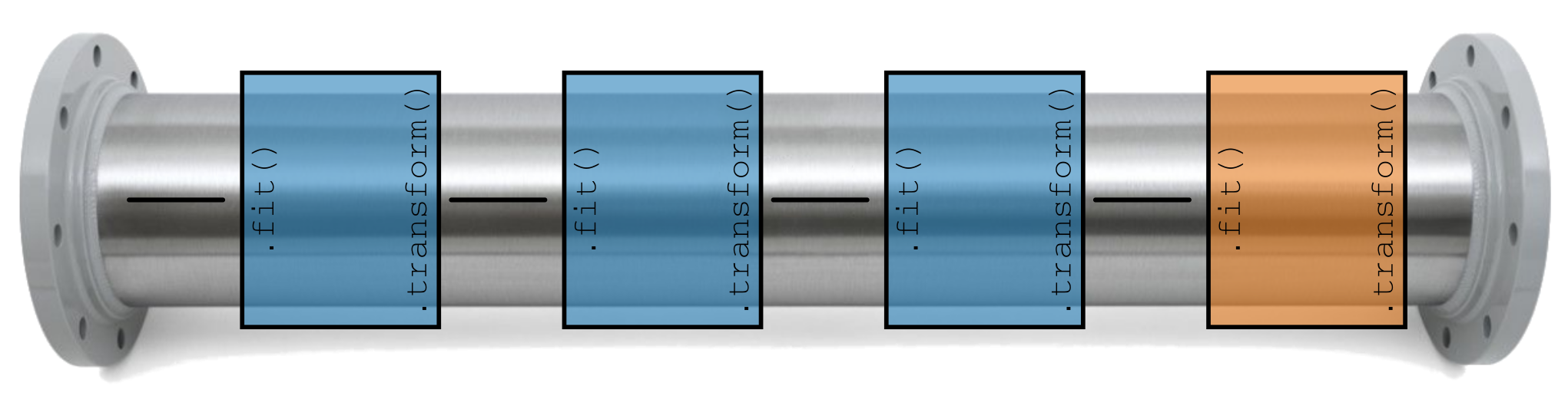
Du kan tillämpa varje operation separat... eller helt enkelt köra hela pipelinen!
indexer = StringIndexer(inputCol='type', outputCol='type_idx')onehot = OneHotEncoder(inputCols=['type_idx'], outputCols=['type_dummy'])assemble = VectorAssembler( inputCols=['mass', 'cyl', 'type_dummy'], outputCol='features' )regression = LinearRegression(labelCol='consumption')
indexer = indexer.fit(cars_train)
cars_train = indexer.transform(cars_train)
onehot = onehot.fit(cars_train)
cars_train = onehot.transform(cars_train)
cars_train = assemble.transform(cars_train)
# Fit model to training data
regression = regression.fit(cars_train)
cars_test = indexer.transform(cars_test)
cars_test = onehot.transform(cars_test)
cars_test = assemble.transform(cars_test)
# Make predictions on testing data
predictions = regression.transform(cars_test)
Kombinera stegen i en pipeline.
from pyspark.ml import Pipeline
pipeline = Pipeline(stages=[indexer, onehot, assemble, regression])
Träningsdata
pipeline = pipeline.fit(cars_train)
Testdata
predictions = pipeline.transform(cars_test)
Kom åt enskilda steg via attributet .stages.
# The LinearRegression object (fourth stage -> index 3) pipeline.stages[3]print(pipeline.stages[3].intercept)
4.19433571782916
print(pipeline.stages[3].coefficients)
DenseVector([0.0028, 0.2705, -1.1813, -1.3696, -1.1751, -1.1553, -1.8894])
Maskininlärning med PySpark