การวิเคราะห์ข้อความเบื้องต้นใน R
Maham Faisal Khan
Senior Data Science Content Developer
tidy_review <- review_data %>%
  mutate(id = row_number()) %>%
  unnest_tokens(word, review) %>%
  anti_join(stop_words)
tidy_review
# A tibble: 78,868 x 5
      id date     product                    stars word
   <int> <chr>    <chr>                      <dbl> <chr>
 1     2 1/12/15  iRobot Roomba 650 for Pets     4 walk
 2     2 1/12/15  iRobot Roomba 650 for Pets     4 rest
 3     3 12/26/13 iRobot Roomba 650 for Pets     5 roomba
 4     3 12/26/13 iRobot Roomba 650 for Pets     5 proof
 5     3 12/26/13 iRobot Roomba 650 for Pets     5 house
# … with 78,863 more rows
word_counts <- tidy_review %>%
  count(word) %>%
  arrange(desc(n))

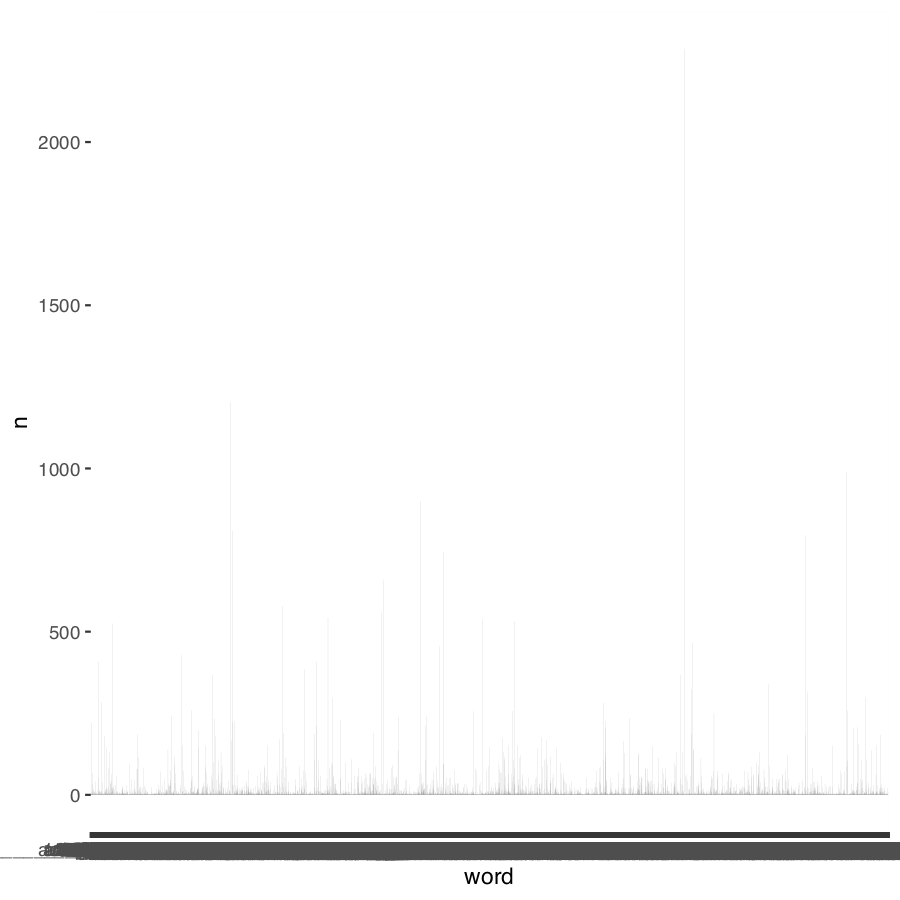
ggplot(
  word_counts, aes(x = word, y = n)
) +
  geom_col()
word_counts <- tidy_review %>% count(word) %>% arrange(desc(n))
ggplot( word_counts, aes(x = word, y = n) ) + geom_col()
word_counts2 <- tidy_review %>%
  count(word) %>%
  filter(n > 300) %>%
  arrange(desc(n))
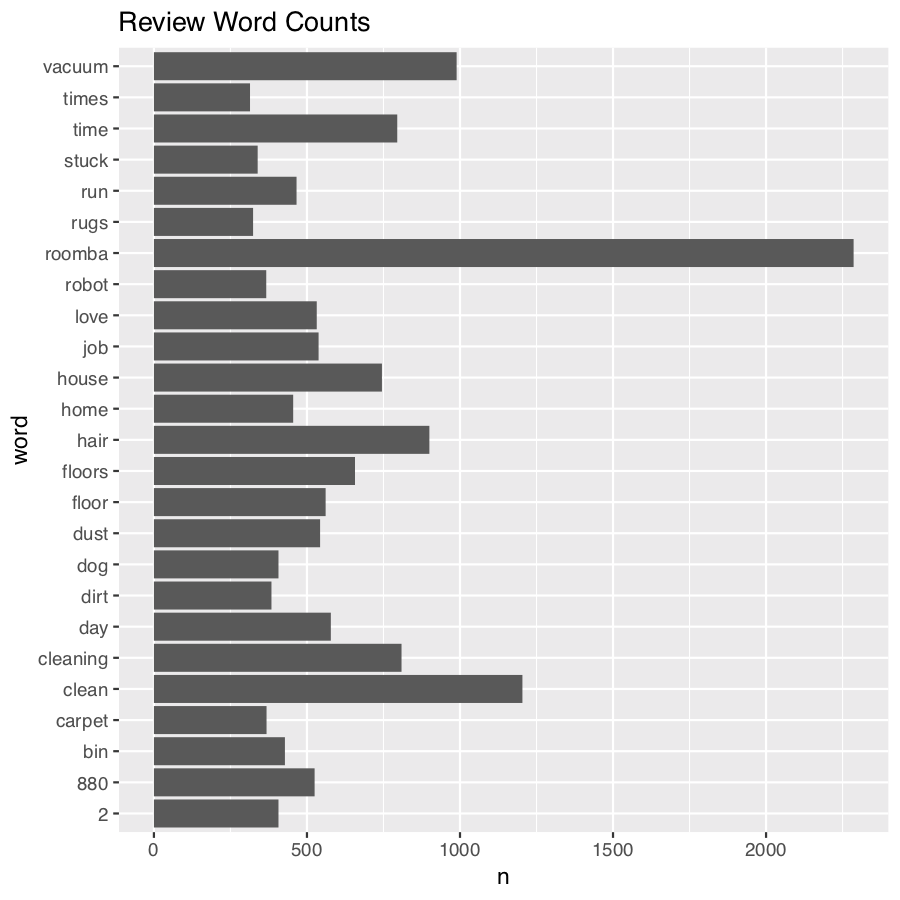
word_counts2
# A tibble: 25 x 2
   word         n
   <chr>    <int>
 1 roomba    2286
 2 clean     1204
 3 vacuum     989
 4 hair       900
 5 cleaning   809
# … with 15 more rows
ggplot(
  word_counts2, aes(x = word, y = n)
) +
  geom_col() +
  coord_flip() +
  ggtitle("Review Word Counts")