Applying the HR analytics process

HR Analytics: Exploring Employee Data in R

Ben Teusch

HR Analytics Consultant

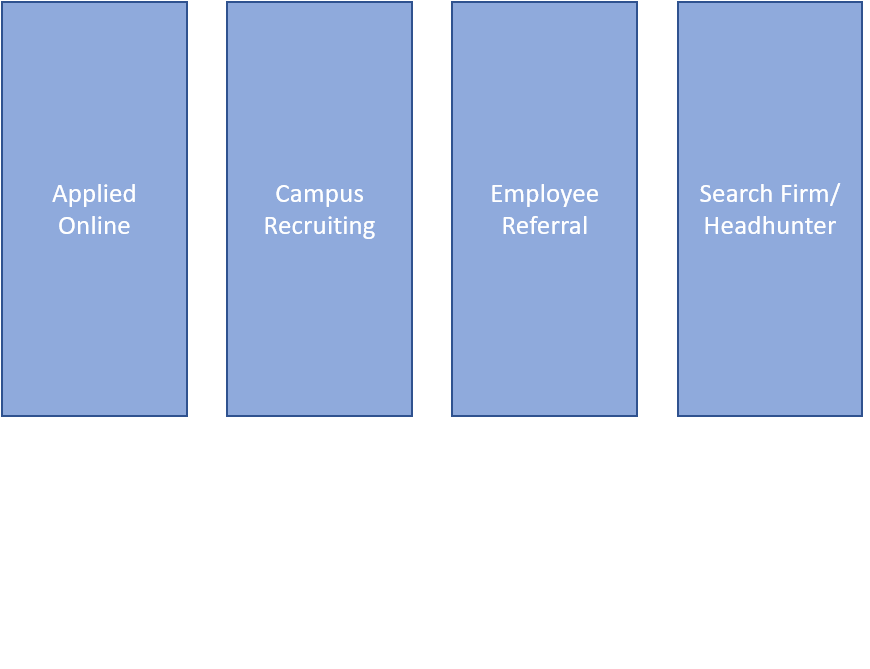
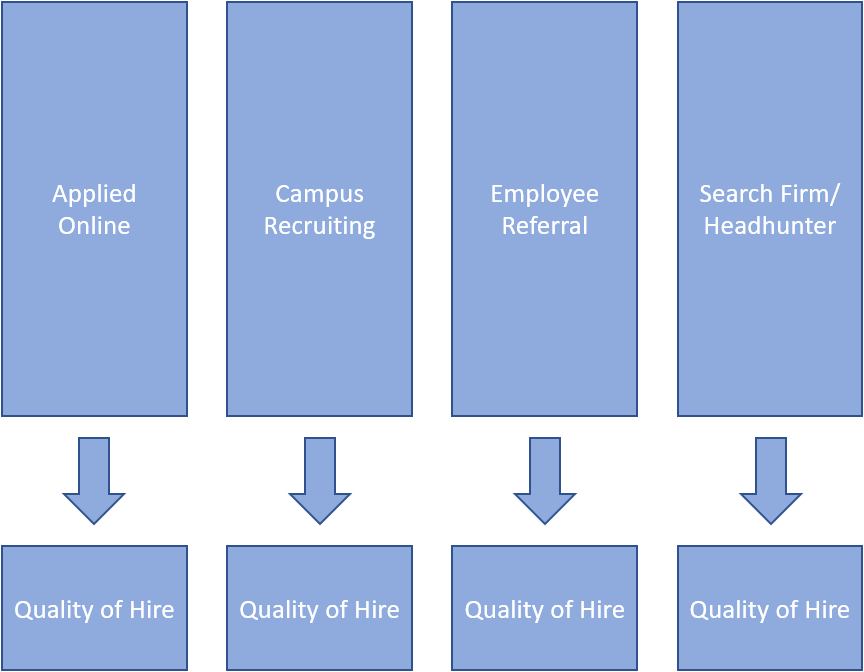
Applying the process to recruiting

HR Analytics: Exploring Employee Data in R

Applying the process to recruiting

HR Analytics: Exploring Employee Data in R

Quality of hire

  • What makes one hire better than another?
    • retention, or how long the employee stays
    • their manager's satisfaction with the hire
    • job performance
    • the amount of time it takes to become fully productive
names(recruitment)
"attrition"  "performance_rating" "sales_quota_pct"    
"recruiting_source"
HR Analytics: Exploring Employee Data in R

Calculating the attrition rate

$$\text{attrition rate} = \frac{\text{attrition}}{\text{headcount}}$$

If $\text{attrition} = 1$ when the employee left, this can be rewritten as:

$$\text{attrition rate} = mean(\text{attrition})$$

HR Analytics: Exploring Employee Data in R

Review of tools from dplyr

library(dplyr)

recruitment %>%
  group_by(recruiting_source) %>% 
  summarize(highest_performance = max(performance_rating)) %>%
  arrange(highest_performance)
# A tibble: 5 × 2
  recruiting_source highest_performance
  <chr>                           <dbl>
1 Search Firm                         3
2 Referral                            4
3 Applied Online                      5
4 Campus                              5
5 <NA>                                5
HR Analytics: Exploring Employee Data in R

New tools

recruitment %>% 
  count(recruiting_source)
# A tibble: 5 × 2
  recruiting_source     n
  <chr>             <int>
1 Applied Online      130
2 Campus               56
3 Referral             45
4 Search Firm          10
5 <NA>                205
HR Analytics: Exploring Employee Data in R

Let's practice!

HR Analytics: Exploring Employee Data in R

Preparing Video For Download...