Обчислення фінансових коефіцієнтів у pandas
Аналіз фінансової звітності в Python

Rohan Chatterjee
Risk Modeler
Структура даних балансу
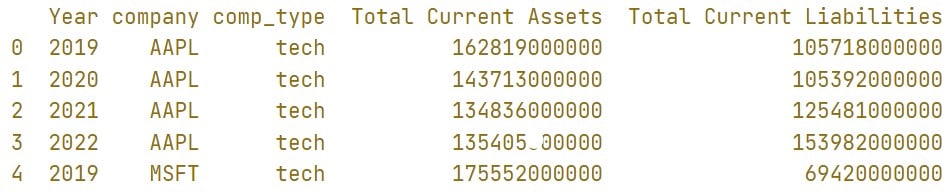
- Дані балансу завантажено в датафрейм
pandasпід назвоюbalance_sheet.
----CODE_GLUE----
```print(balance_sheet.head())
----CODE_GLUE----
`
Обчислення current ratio
balance_sheet["current_ratio"] = balance_sheet["Total Current Assets"] /
                                 balance_sheet["Total Current Liabilities"]
print(balance_sheet.head())

Використання .groupby() для результатів за групами
- Щоб отримати середній current ratio за галузями:
balance_sheet.groupby("comp_type")["current_ratio"].mean()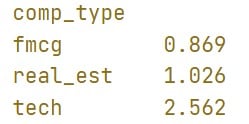
Використання .groupby() для результатів за групами
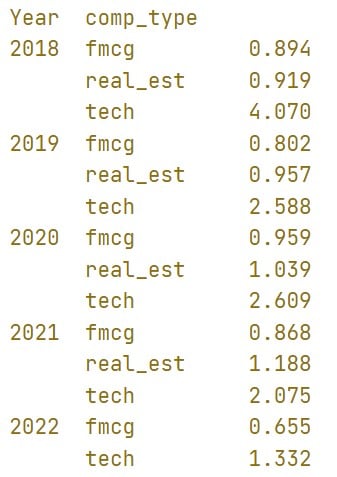
balance_sheet.groupby(["Year","comp_type"])["current_ratio"].mean()
Використання groupby().transform()
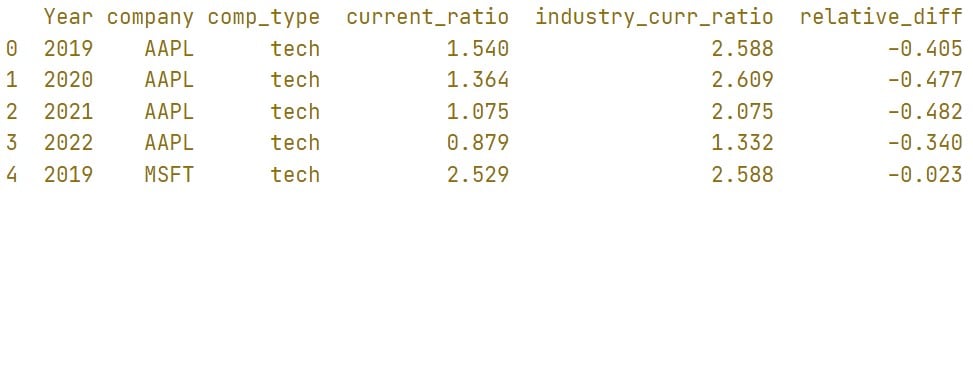
.transform()можна застосувати після.groupby(), щоб додати результат до кожного рядка згідно з групою, до якої він належить.balance_sheet["industry_curr_ratio"] = balance_sheet.groupby([ "Year","comp_type"])["current_ratio"].transform("mean") print(balance_sheet.head())

Використання .groupby().transform()
balance_sheet["relative_diff"] =
                            (balance_sheet["current_ratio"] /
                             balance_sheet["industry_curr_ratio"]) - 1