การกำหนดโมเดลด้วย LightningModule
AI Models แบบ Scalable ด้วย PyTorch Lightning

Sergiy Tkachuk
Director, GenAI Productivity
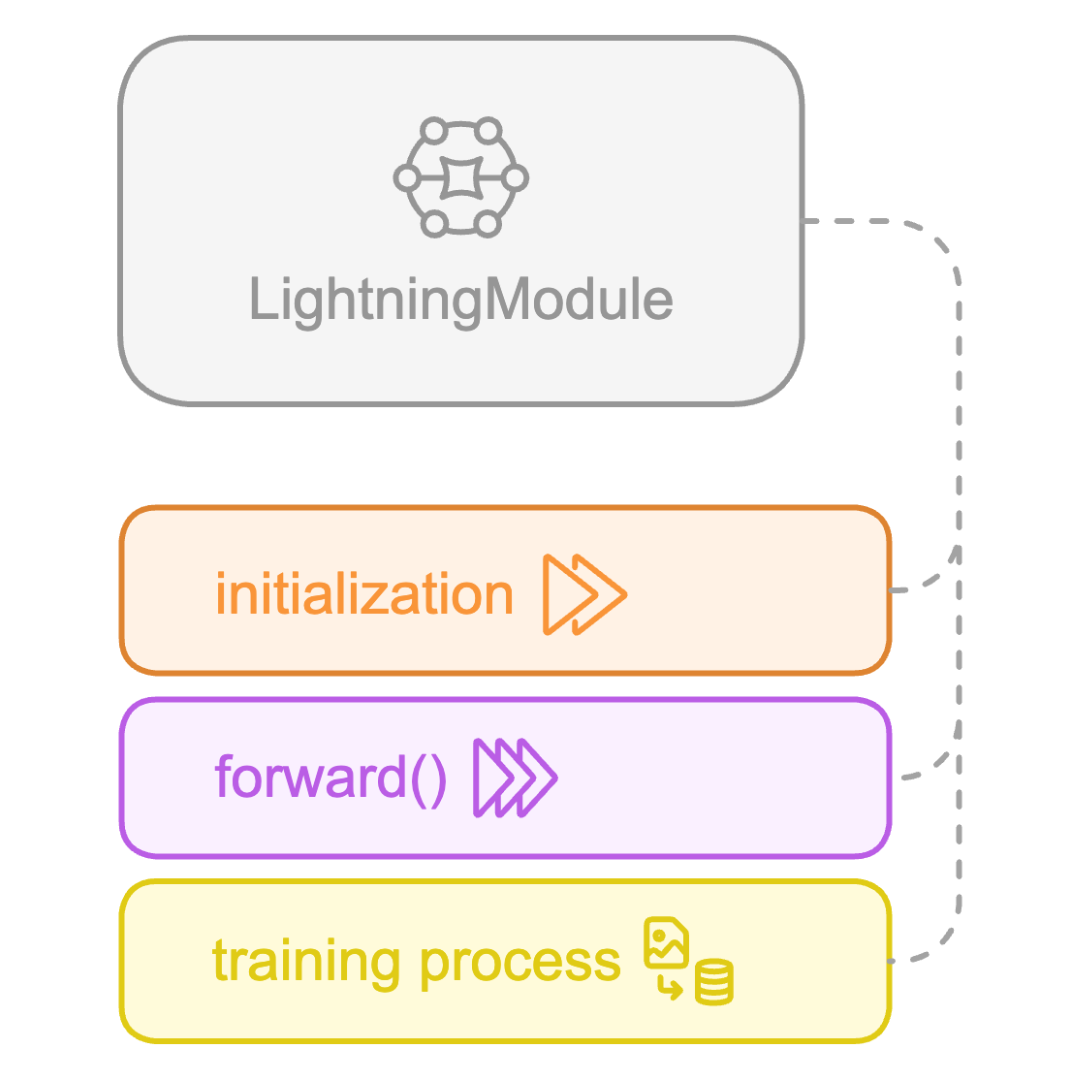
มองโฟกัสที่ LightningModule
- ครอบคลุมสถาปัตยกรรมโมเดล
- จัดระเบียบตรรกะการฝึกในหน่วยเดียวที่จัดการได้ง่าย
- พิมพ์เขียวที่นำความเป็นระเบียบและความชัดเจนมาสู่โปรเจกต์ deep learning
การกำหนด method `__init__`
งานหลัก:
- การกำหนดค่าเริ่มต้นของโมเดล
super():- จัดการ training loop อัตโนมัติ
- การบันทึก log
- การบันทึก checkpoint
- กำหนด layer ของโมเดลหลังการ initialize
- เป็นโมดูลและดูแลรักษาง่าย
import lightning.pytorch as pl import torch.nn as nn class ClassificationModel(pl.LightningModule): def __init__(self, input_dim, hidden_dim, num_class): # Initialize parent class super().__init__()# First layer self.layer1 = nn.Linear(input_dim, hidden_dim) # Activation function self.relu = nn.ReLU() # Output layer self.layer2 = nn.Linear(hidden_dim, num_class)
การสร้าง method `forward`
ขั้นตอนหลัก:
- กำหนดการไหลของข้อมูลผ่านเครือข่าย
- ประมวลผล input ผ่านแต่ละ layer ตามลำดับ
- การแปลงเชิงเส้น
- Activation
- Layer สุดท้ายและ output
import lightning.pytorch as pl import torch.nn as nn class ClassificationModel(pl.LightningModule): def __init__(self, input_dim, hidden_dim, num_class): ...def forward(self, x):x = self.layer1(x) # Pass inputx = nn.ReLU(x) # Apply activationx = self.layer2(x) # Compute outputreturn x # Return result
ตัวอย่าง: จำแนกตัวเลขลายมือ
import lightning.pytorch as pl from torch.utils.data import DataLoader from torchvision.datasets import MNIST from torchvision import transformstransform = transforms.ToTensor() train_ds = MNIST(root='.', train=True, download=True, transform=transform) test_ds = MNIST(root='.', train=False, download=True, transform=transform) train_loader = DataLoader(train_ds, batch_size=64, shuffle=True) test_loader = DataLoader(test_ds, batch_size=64)model = ClassificationModel(input_dim=28*28, hidden_dim=128, num_class=10)trainer = pl.Trainer(max_epochs=3, accelerator='auto') trainer.fit(model, train_loader, test_loader)
การนำโมเดลไปใช้กับงานจำแนกประเภท
$$
- เน้น use case การจำแนกประเภท
- ขั้นตอนทั้งหมดอยู่ใน LightningModule
- ส่งออก raw output สำหรับ softmax activation
- ทำงานร่วมกับ Lightning Trainer
class ClassificationModel(pl.LightningModule): def __init__(self, input_dim, hidden_dim, output_dim): super().__init__()self.hid = nn.Linear(input_dim, hidden_dim) self.out = nn.Linear(hidden_dim, output_dim)def forward(self, x):x = self.hidden(x) x = nn.ReLU(x) x = self.output(x)return x
มาฝึกกันเถอะ!
AI Models แบบ Scalable ด้วย PyTorch Lightning

