การวินิจฉัยและการทำซ้ำของ Markov chain
การสร้างแบบจำลอง Bayesian ด้วย RJAGS

Alicia Johnson
Associate Professor, Macalester College
ผลลัพธ์ของ Markov chain
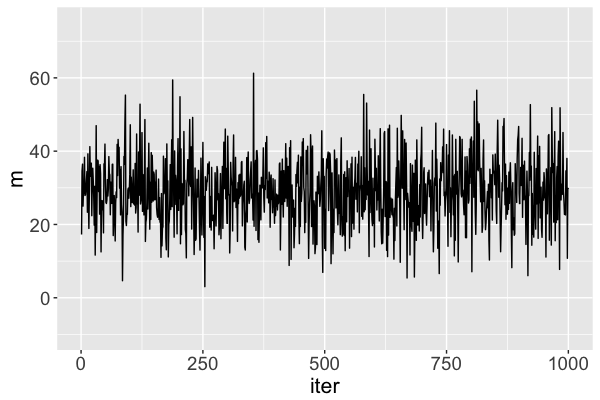
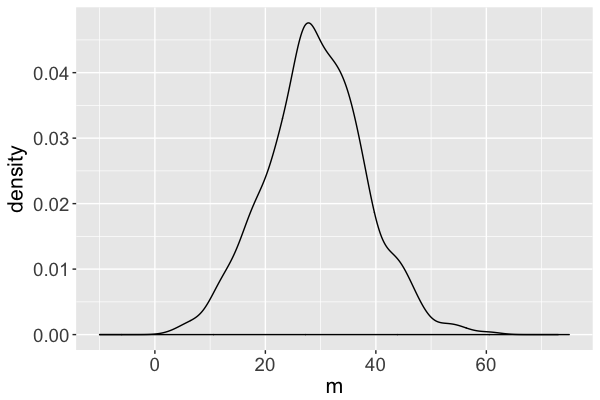
การวินิจฉัย: trace plot
การวินิจฉัย: trace plot
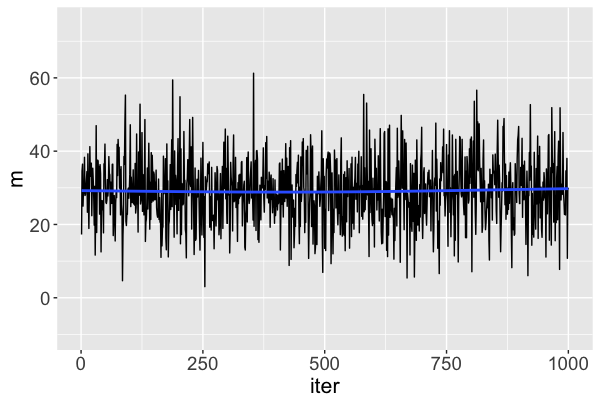
ดี: มีเสถียรภาพ!
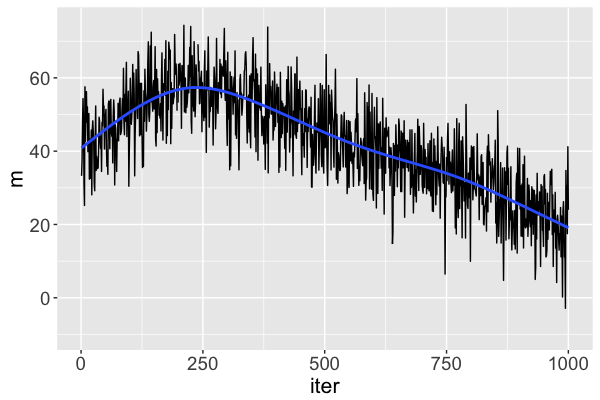
ไม่ดี: ไม่มีเสถียรภาพ
การวินิจฉัย: หลาย chain
# COMPILE the model
sleep_jags <- jags.model(..., n.chains = 1)
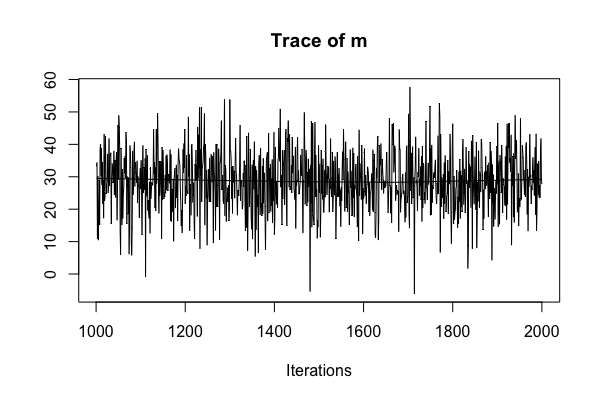
การวินิจฉัย: หลาย chain
# COMPILE the model
sleep_jags <- jags.model(..., n.chains = 2)
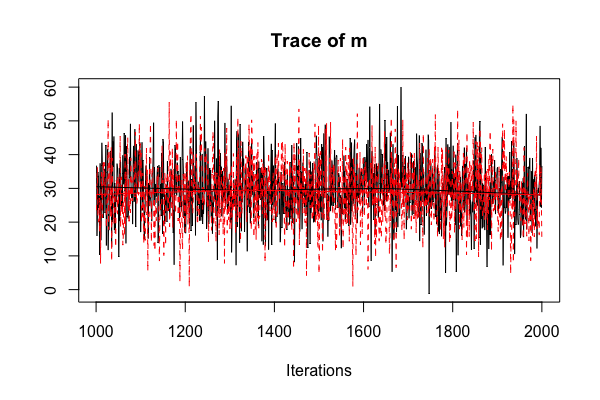
การวินิจฉัย: หลาย chain
# COMPILE the model
sleep_jags <- jags.model(..., n.chains = 4)
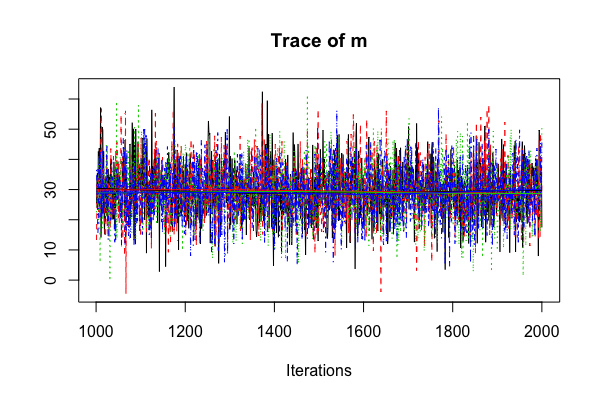
การวินิจฉัย: หลาย chain
# COMPILE the model
sleep_jags <- jags.model(..., n.chains = 4)

การวินิจฉัย: standard error
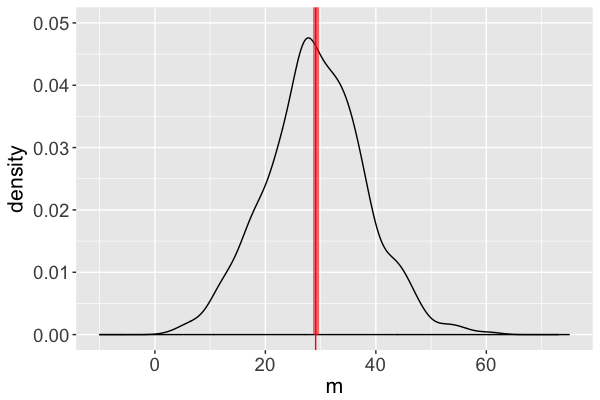
ค่าเฉลี่ย ที่ประมาณได้ = 29.10 ms
(Naive) standard error = 0.2836 ms
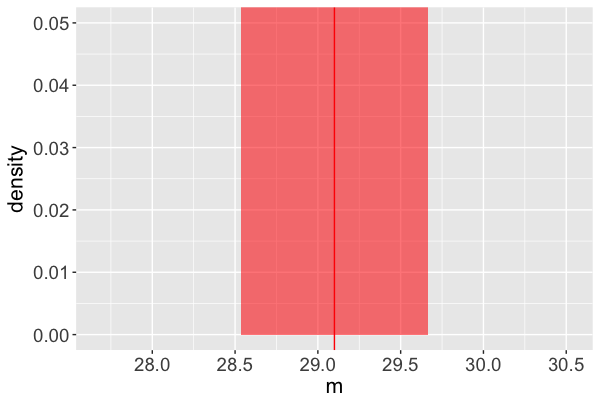
- $29.10 \pm 2*0.2836$

