สรุปและบทสรุปขั้นสุดท้าย
Machine Translation ด้วย Keras
Thushan Ganegedara
Data Scientist and Author
สิ่งที่ได้เรียนมาแล้ว
บทที่ 1
แนะนำสถาปัตยกรรม encoder-decoder
ทำความเข้าใจ GRU layer
บทที่ 2
สร้าง encoder
สร้าง decoder
สร้าง decoder prediction layer
สิ่งที่ได้เรียนมาแล้ว
บทที่ 3
การเตรียมข้อมูล
การฝึกโมเดลแปลภาษา
การสร้างคำแปล
บทที่ 4
แนะนำ teacher forcing
การฝึกโมเดลด้วย teacher forcing
การสร้างคำแปล
การใช้ word embedding สำหรับการแปลภาษา
โมเดลแปลภาษาด้วยเครื่อง
โมเดลที่ 1
encoder รับคำภาษาอังกฤษ (แบบ onehot encoded) และส่งออก context vector
decoder รับ context vector และส่งออกคำแปล
โมเดลที่ 2
encoder รับคำภาษาอังกฤษ (แบบ onehot encoded) และส่งออก context vector
decoder รับคำในคำแปล (แบบ onehot encoded) แล้วทำนายคำถัดไป
โมเดลที่ 3
ใช้ word vector แทน onehot encoding
word vector จับความสัมพันธ์เชิงความหมายระหว่างคำ
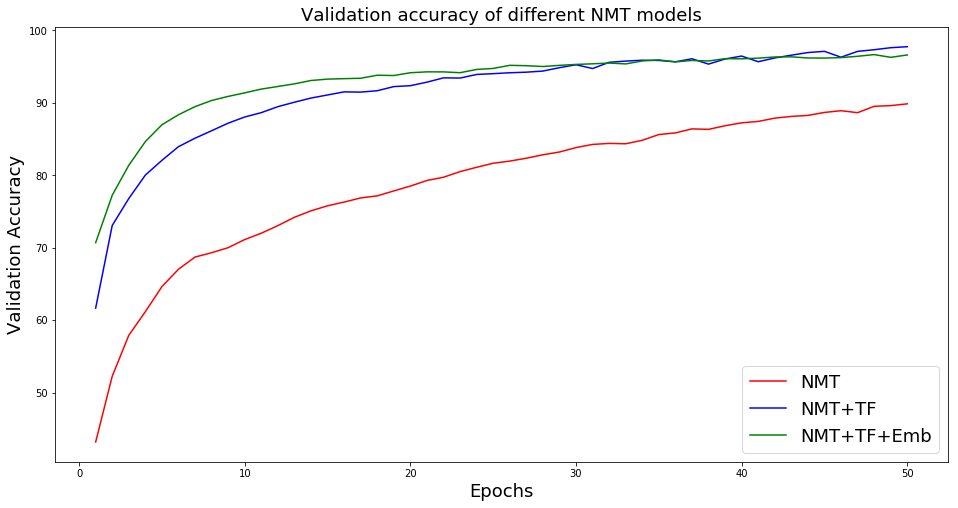
ประสิทธิภาพของโมเดลแต่ละแบบ
ความก้าวหน้าล่าสุดและแหล่งอ่านเพิ่มเติม
การประเมินโมเดลแปลภาษา
BLEU score (
Papineni et al., BLEU: a Method for Automatic Evaluation of Machine Translation.
)
Word piece model
ช่วยให้โมเดลหลีกเลี่ยงคำที่ไม่มีในพจนานุกรม (
Sennrich et al., Neural Machine Translation of Rare Words with Subword Units.
)
Transformer model (
Vaswani et al., Attention Is All You Need
)
ให้ประสิทธิภาพระดับแนวหน้าในงาน NLP หลายประเภท รวมถึงการแปลภาษา
มีสถาปัตยกรรม encoder-decoder แต่ไม่ใช้โมเดลแบบลำดับ
Google Translate รุ่นล่าสุดเป็น Transformer model
ขอให้โชคดี!
Machine Translation ด้วย Keras
Preparing Video For Download...