使用堆疊

Data Structures and Algorithms in Python

Miriam Antona

Software Engineer

堆疊(Stacks)
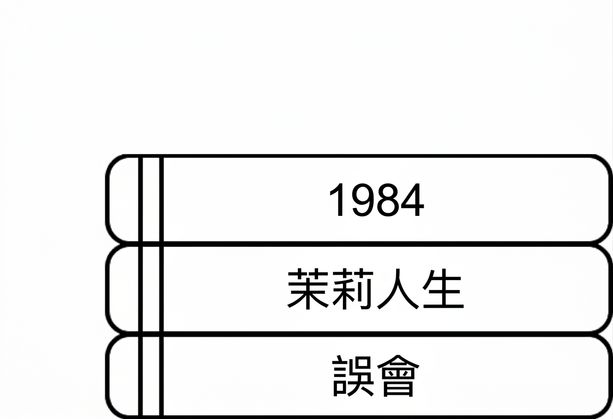
  • LIFO: Last-In First-Out(後進先出)
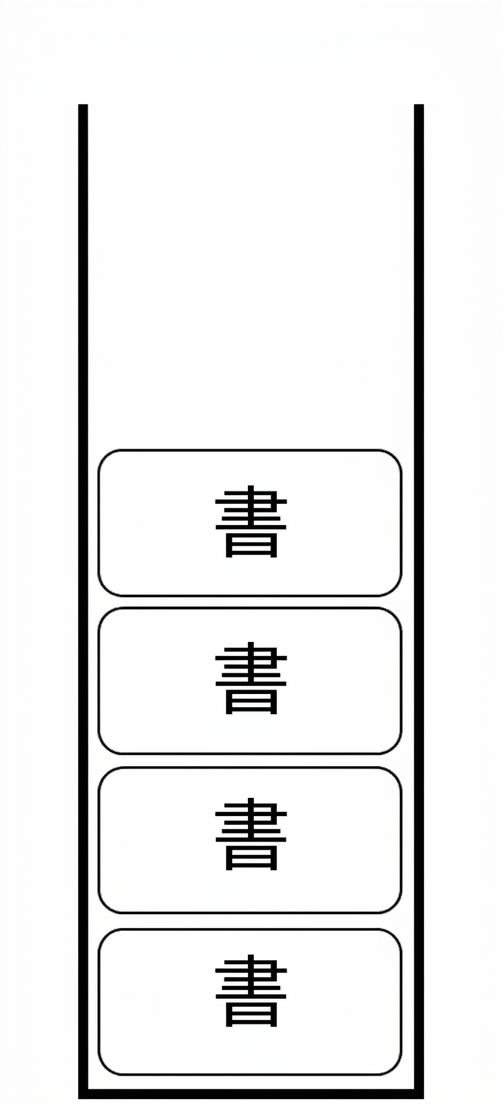
    • 最後插入的項目會最先被移除

一疊書的圖片。

Data Structures and Algorithms in Python

堆疊(Stacks)

  • LIFO: Last-In First-Out(後進先出)
    • 最後插入的項目一定最先被移除
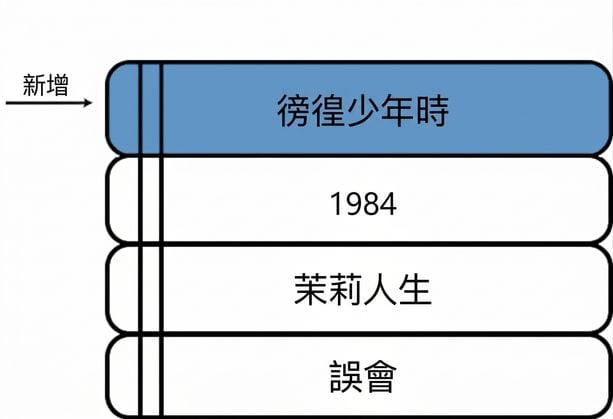
  • 只能在頂端新增
    • 將元素「推入」堆疊(push)

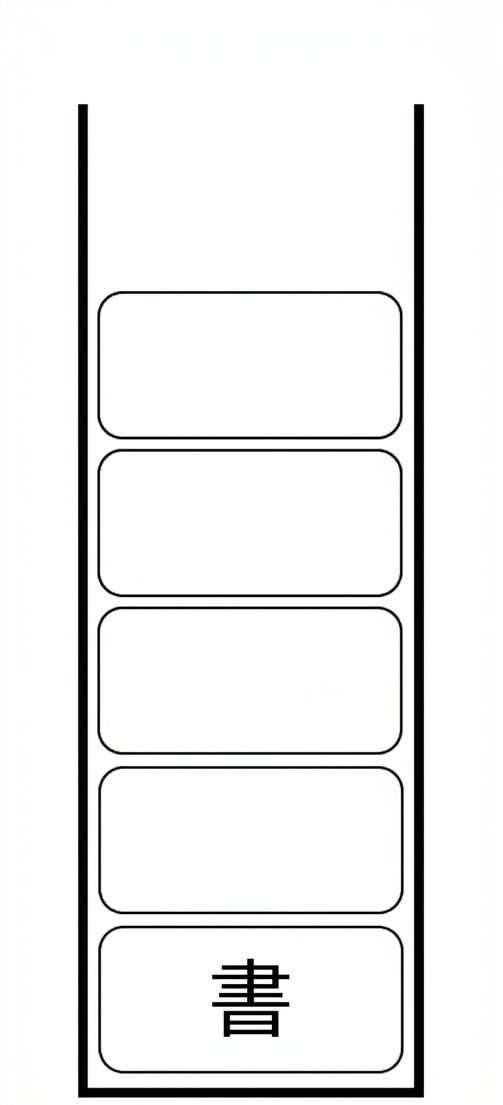
在堆疊頂端新增一本書的圖片。

Data Structures and Algorithms in Python

堆疊(Stacks)

  • LIFO: Last-In First-Out(後進先出)
    • 最後插入的項目一定最先被移除
  • 只能在頂端新增
    • 將元素「推入」堆疊(push)
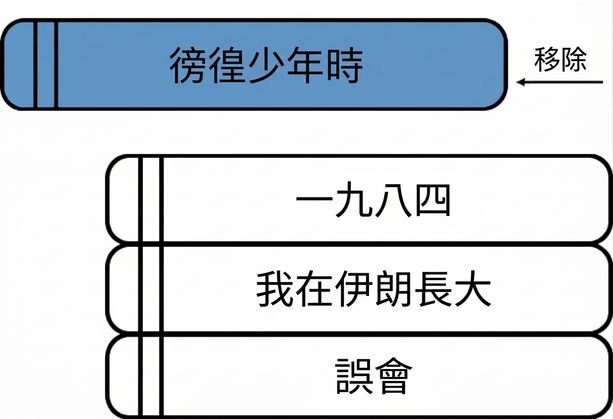
  • 只能從頂端取出
    • 從堆疊「彈出」(pop)

從堆疊頂端取走一本書的圖片。

Data Structures and Algorithms in Python

堆疊(Stacks)

  • LIFO: Last-In First-Out(後進先出)
    • 最後插入的項目一定最先被移除
  • 只能在頂端新增
    • 將元素「推入」堆疊(push)
  • 只能從頂端移除
    • 從堆疊「彈出」(pop)
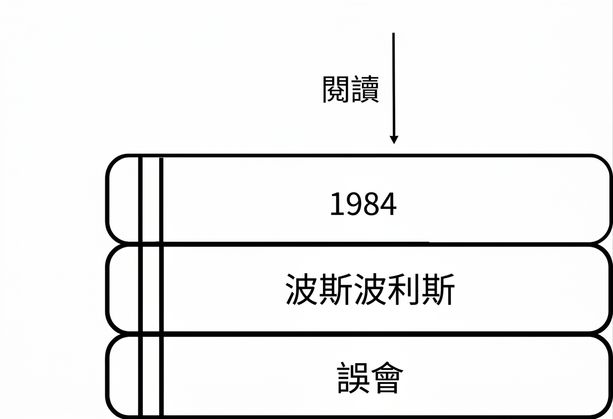
  • 只能讀取最後一個元素
    • 從堆疊「偷看」(peek)

一疊書,箭頭指向最上面那本書的封面。

Data Structures and Algorithms in Python

堆疊:實際用途

  • 復原(Undo)功能

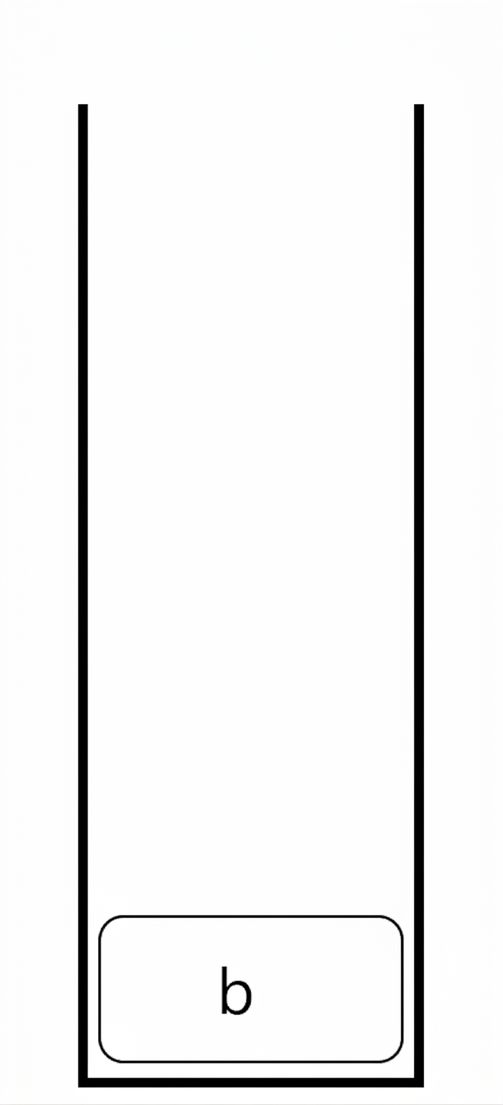
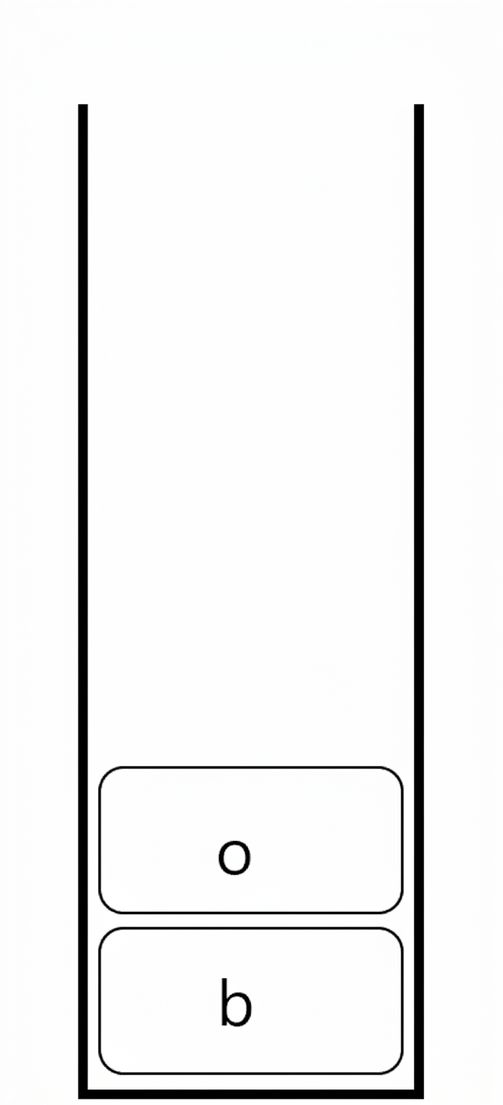
只含一個元素的堆疊。

Data Structures and Algorithms in Python

堆疊:實際用途

  • 復原(Undo)功能
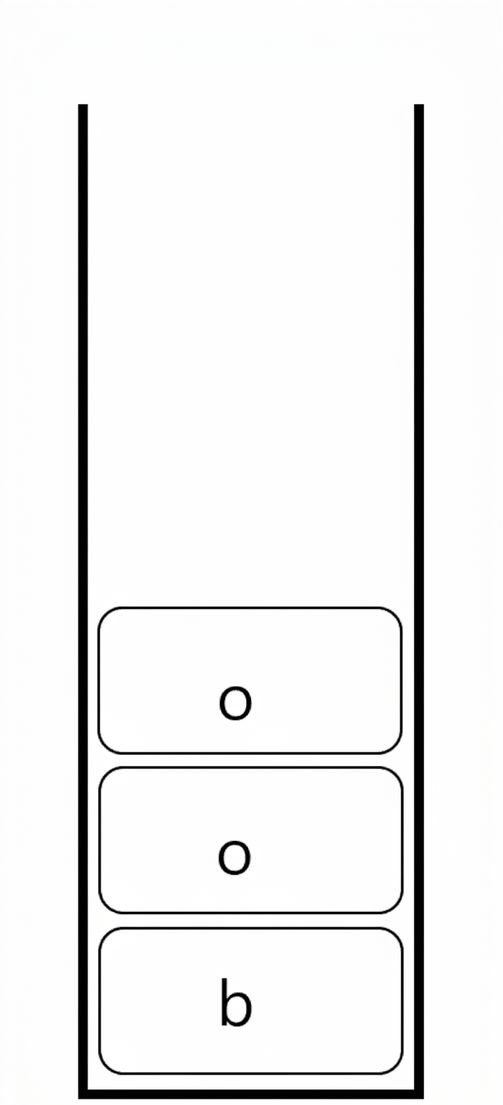
    • 每次按鍵皆「push」

在堆疊頂端新增一個元素。

Data Structures and Algorithms in Python

堆疊:實際用途

  • 復原(Undo)功能
    • 每次按鍵皆「push」

在堆疊頂端新增一個元素。

Data Structures and Algorithms in Python

堆疊:實際用途

  • 復原(Undo)功能
    • 每次按鍵皆「push」

在堆疊頂端新增一個元素。

Data Structures and Algorithms in Python

堆疊:實際用途

  • 復原(Undo)功能
    • 每次按鍵皆「push」

在堆疊頂端新增一個元素。

Data Structures and Algorithms in Python

堆疊:實際用途

  • 復原(Undo)功能
    • 每次按鍵皆「push」
    • 將最後一次按鍵「pop」

自堆疊頂端移除一個元素。

Data Structures and Algorithms in Python

堆疊:實際用途

  • 符號檢查器: ( [ { } ] )
    • 將開啟符號「push」

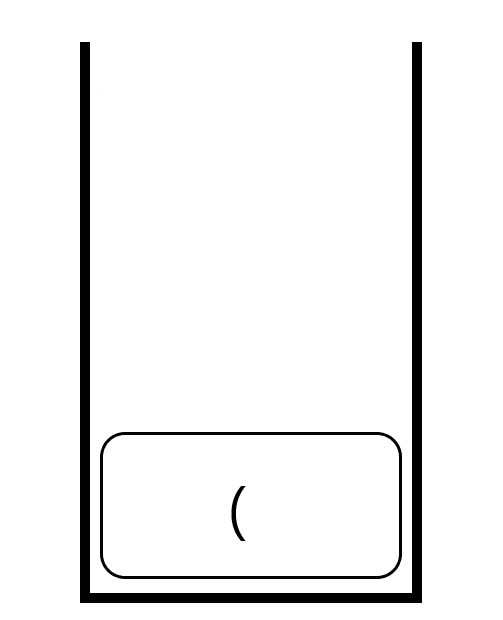
含有一個開啟符號的堆疊。

Data Structures and Algorithms in Python

堆疊:實際用途

  • 符號檢查器: ( [ { } ] )
    • 將開啟符號「push」

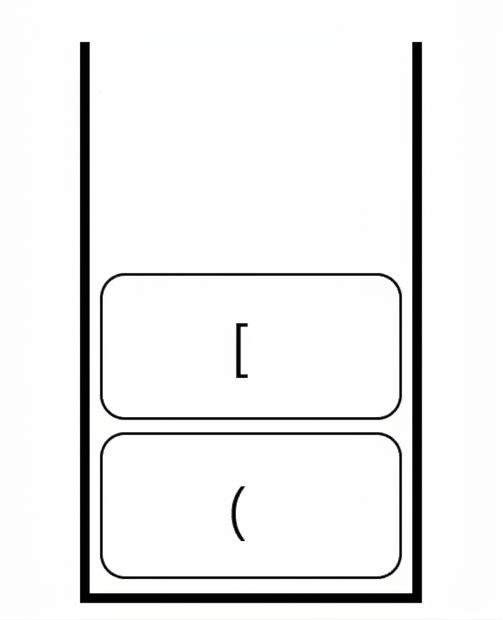
在堆疊頂端新增一個開啟符號。

Data Structures and Algorithms in Python

堆疊:實際用途

  • 符號檢查器: ( [ { } ] )
    • 將開啟符號「push」

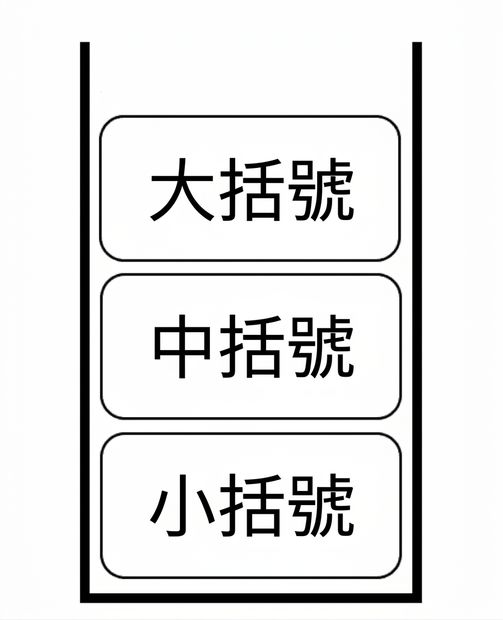
在堆疊頂端新增一個開啟符號。

Data Structures and Algorithms in Python

堆疊:實際用途

  • 符號檢查器: ( [ { } ] )
    • 將開啟符號「push」
    • 檢查關閉符號

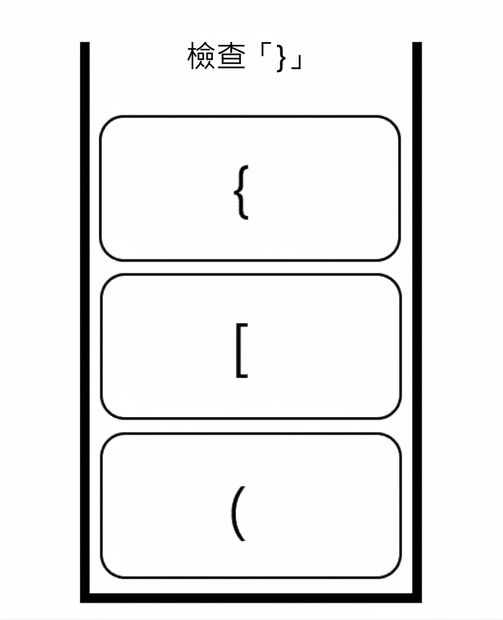
含有開啟符號且標示「check "}"」的堆疊。

Data Structures and Algorithms in Python

堆疊:實際用途

  • 符號檢查器: ( [ { } ] )
    • 將開啟符號「push」
    • 檢查關閉符號
    • 將相符的開啟符號「pop」

自堆疊頂端移除一個開啟符號。

Data Structures and Algorithms in Python

堆疊:實際用途

  • 函式呼叫
    • 將記憶體區塊「push」
    • 執行結束後「pop」
Data Structures and Algorithms in Python

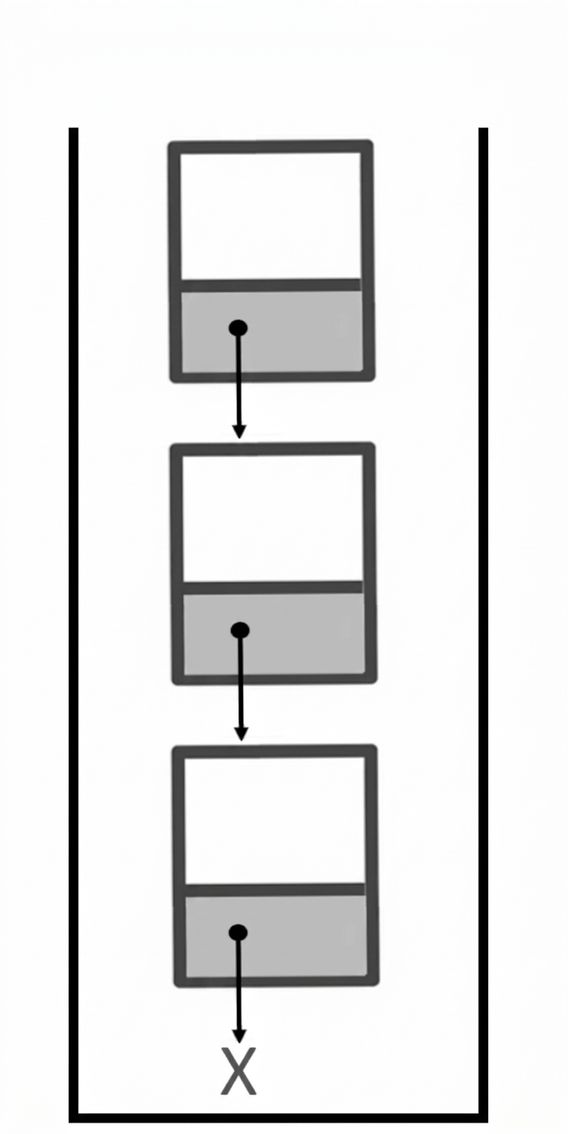
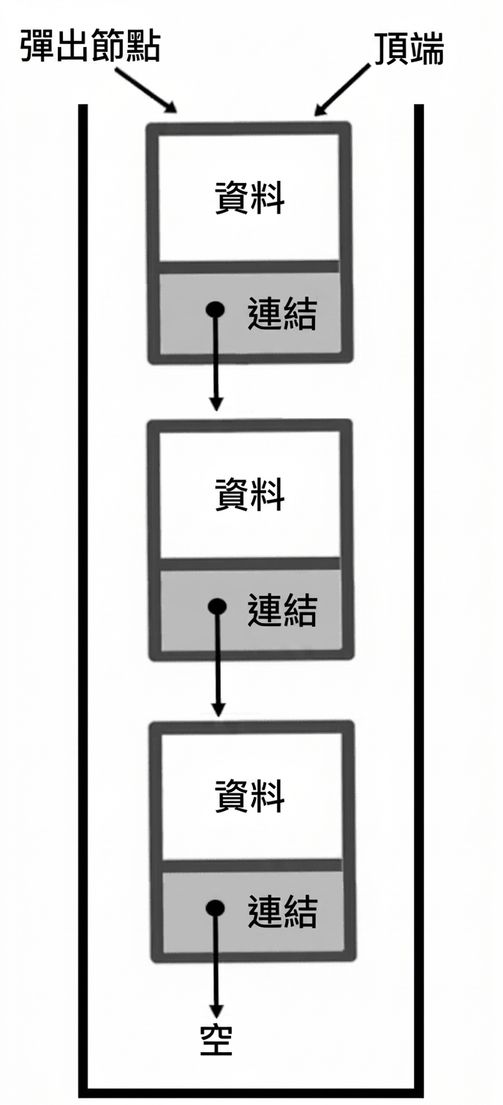
堆疊:以單向連結串列實作

以連結串列表示的堆疊。

class Node:
  def __init__(self,data):
    self.data = data
    self.next = None
Data Structures and Algorithms in Python

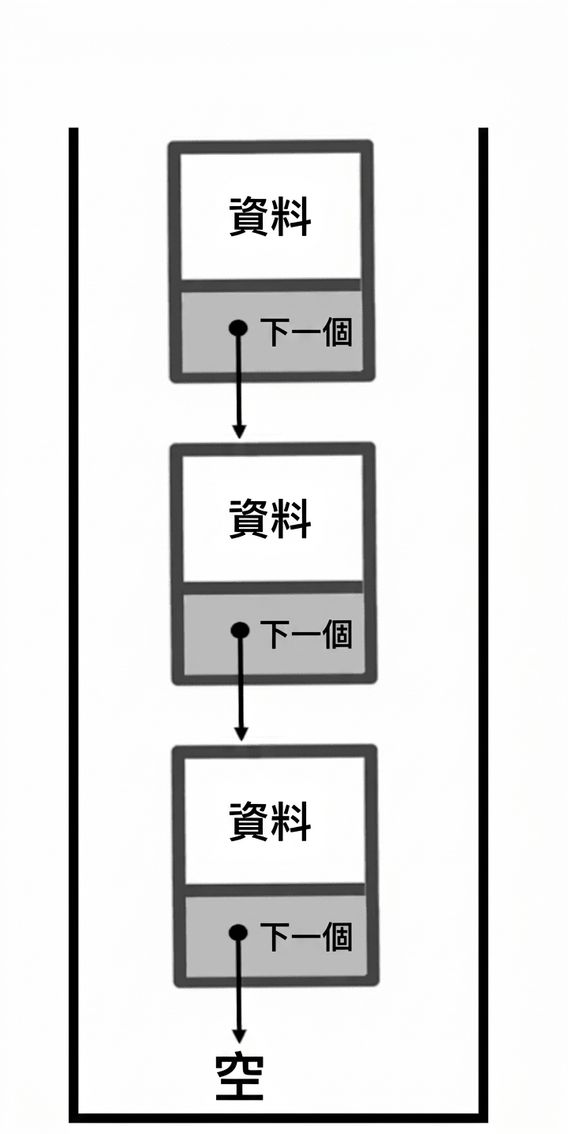
堆疊:以單向連結串列實作

標示節點各部分名稱的連結串列堆疊。

class Node:
  def __init__(self,data):
    self.data = data
    self.next = None
class Stack:
  def __init__(self):
    self.top = None
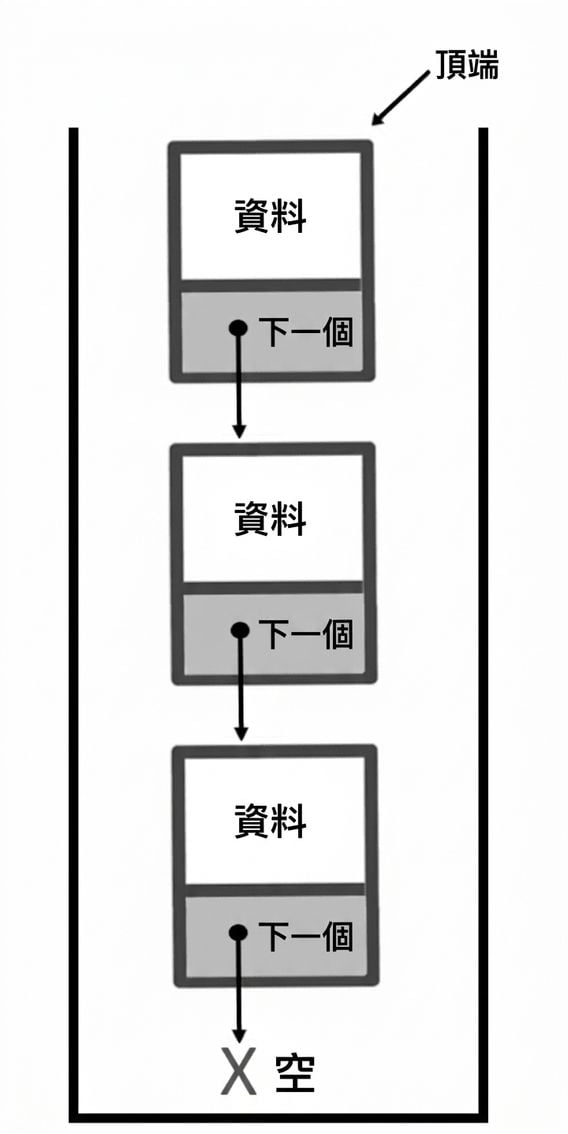
Data Structures and Algorithms in Python

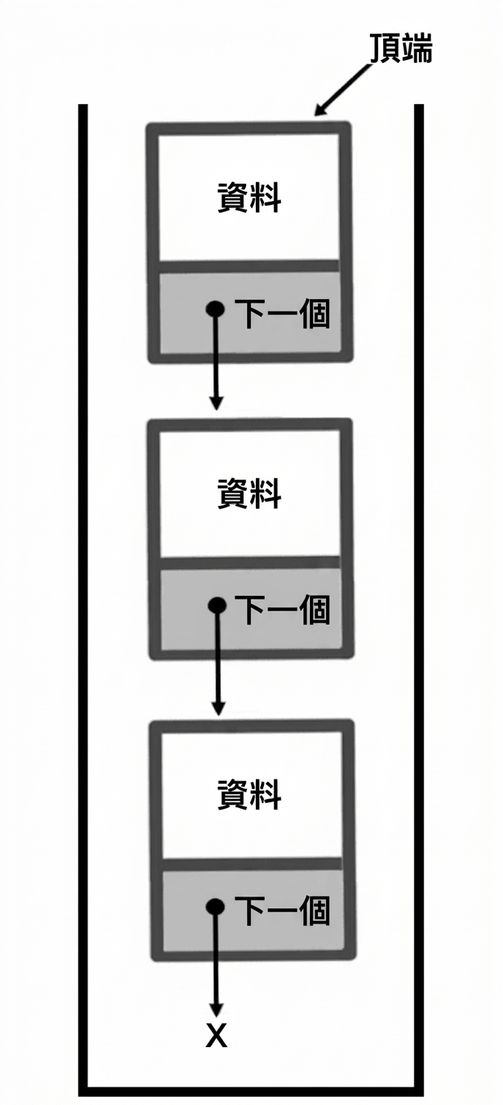
堆疊:以單向連結串列實作

以「TOP」指向堆疊頂端的連結串列堆疊。

class Node:
  def __init__(self,data):
    self.data = data
    self.next = None
class Stack:
  def __init__(self):
    self.top = None
Data Structures and Algorithms in Python

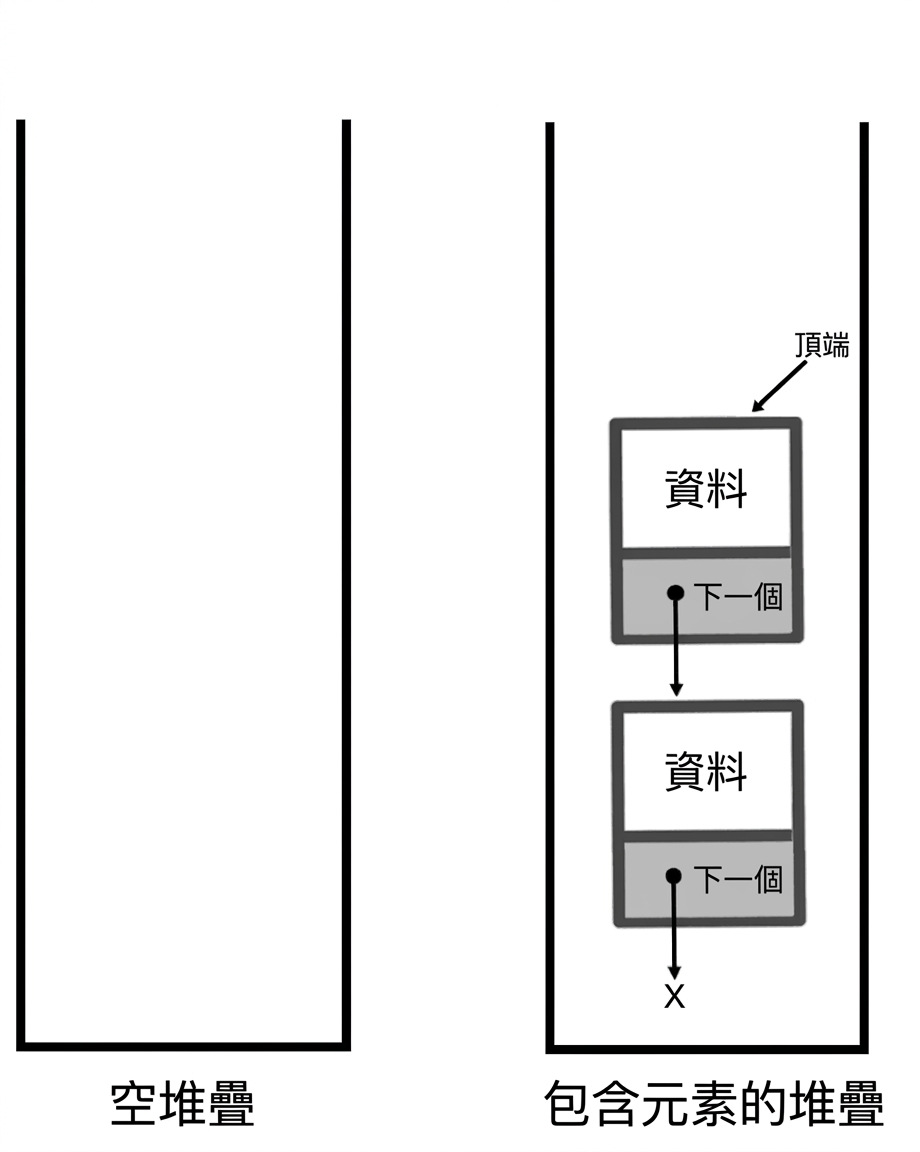
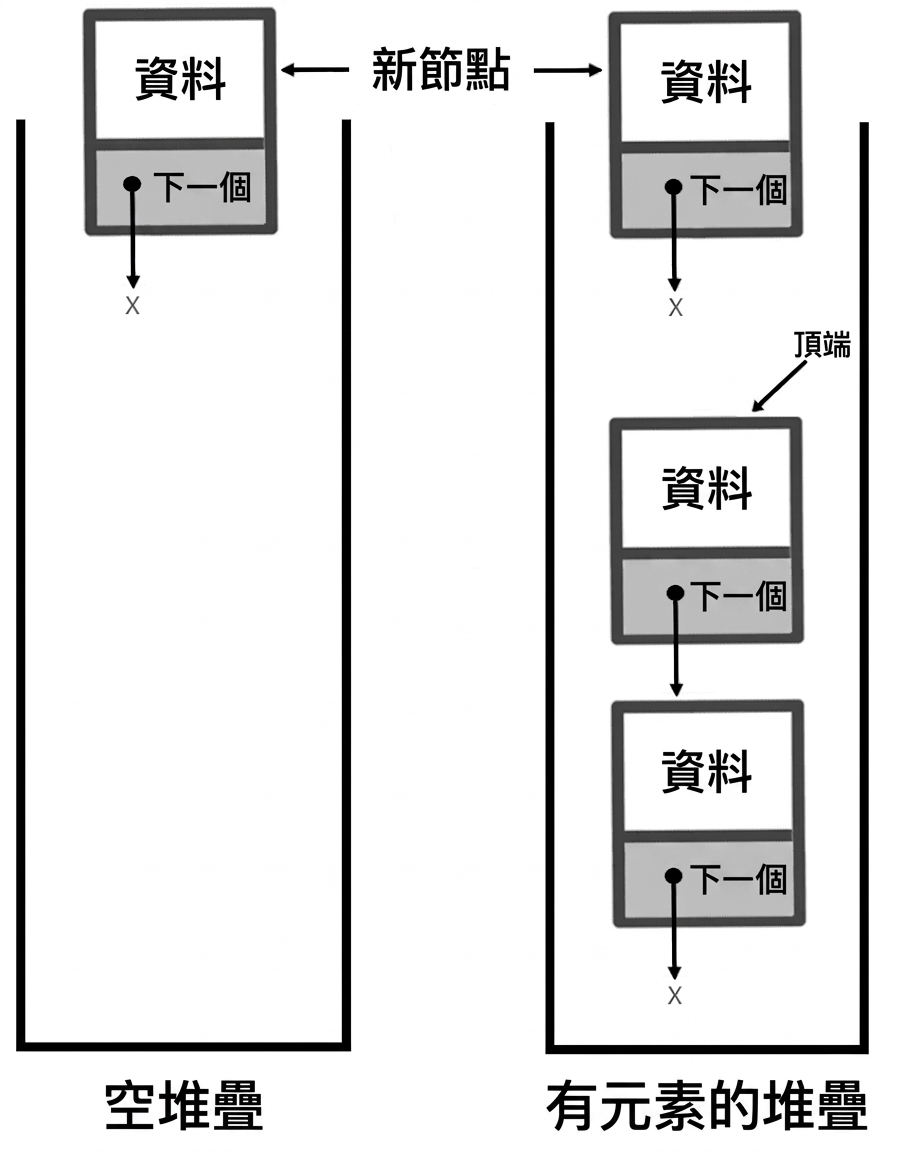
堆疊:push

空堆疊與含元素堆疊的示意圖。

def push(self, data):


Data Structures and Algorithms in Python

堆疊:push

空堆疊與含元素堆疊,準備插入新節點。

def push(self, data): 
  new_node = Node(data)

if self.top:
Data Structures and Algorithms in Python

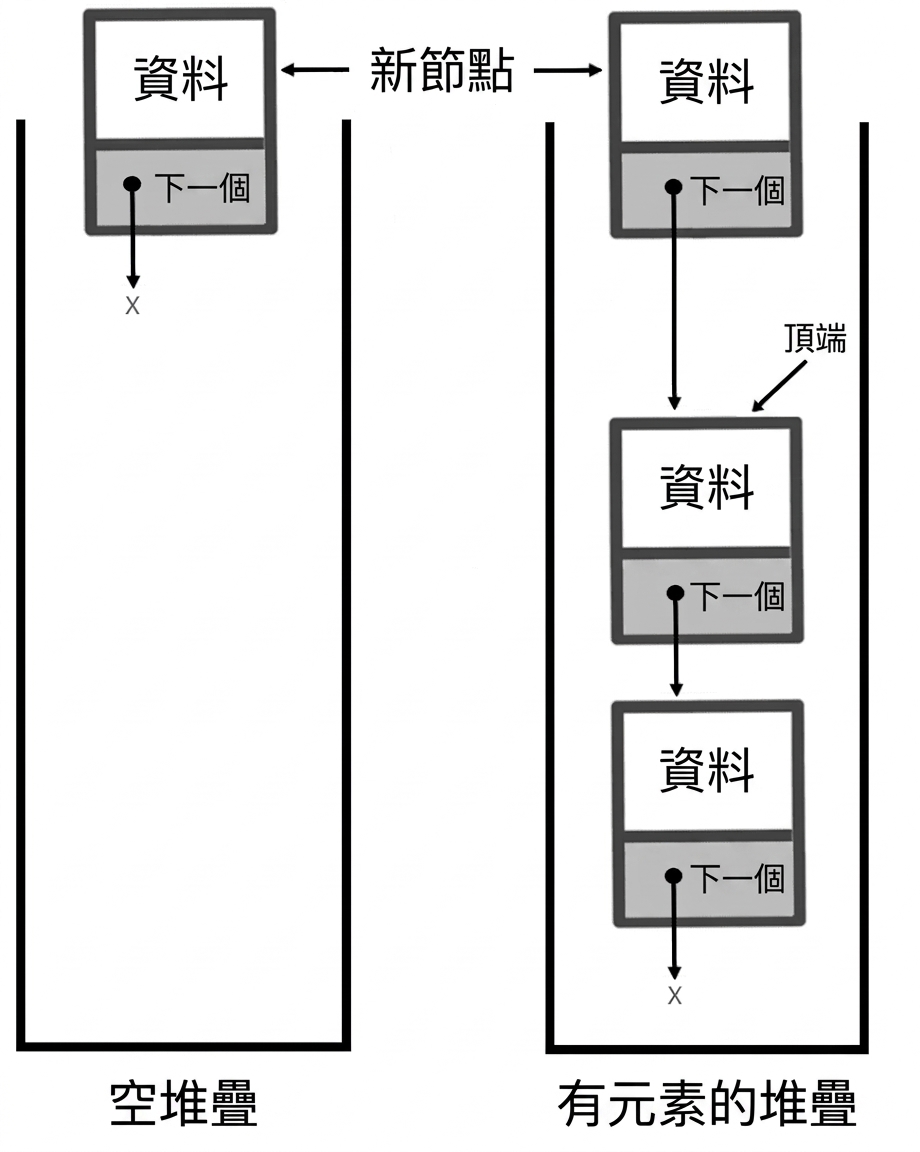
堆疊:push

空堆疊與含元素堆疊,新節點連到頂端元素。

def push(self, data): 
  new_node = Node(data)
  if self.top:

new_node.next = self.top
Data Structures and Algorithms in Python

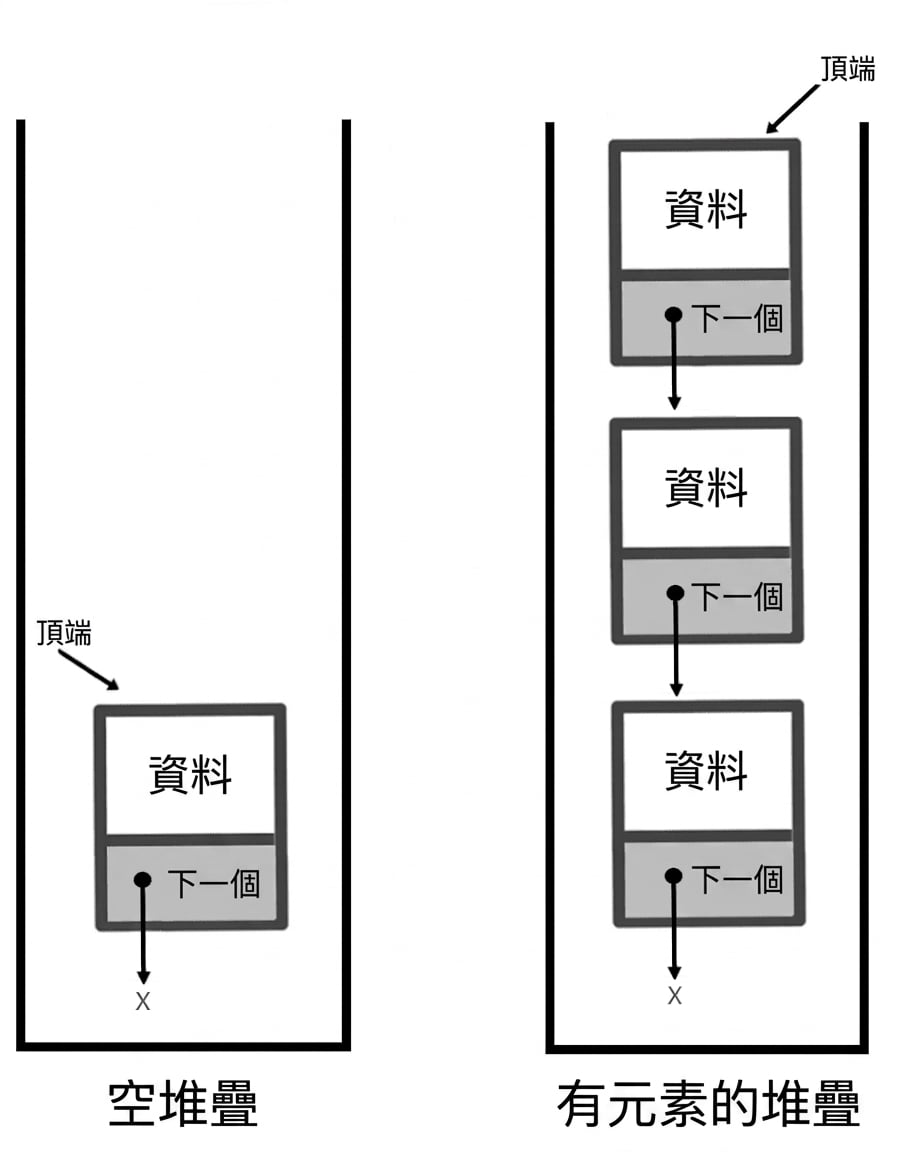
堆疊:push

空堆疊與含元素堆疊,已插入新節點。

def push(self, data): 
  new_node = Node(data)
  if self.top:
    new_node.next = self.top
  self.top = new_node
Data Structures and Algorithms in Python

堆疊:pop

def pop(self):

if self.top is None:
return None
else:

堆疊示意圖,文字「TOP」指向頂端節點。

Data Structures and Algorithms in Python

堆疊:pop

def pop(self):
  if self.top is None:
    return None
  else:
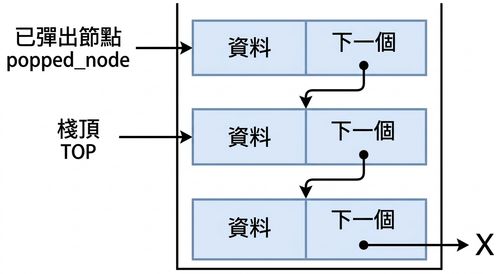
    popped_node = self.top


堆疊示意圖,「popped_node」指向頂端節點。

Data Structures and Algorithms in Python

堆疊:pop

def pop(self):
  if self.top is None:
    return None
  else:
    popped_node = self.top
    self.top = self.top.next


堆疊示意圖,「popped_node」指向頂端節點,「TOP」指向第二個節點。

Data Structures and Algorithms in Python

堆疊:pop

def pop(self):
  if self.top is None:
    return None
  else:
    popped_node = self.top
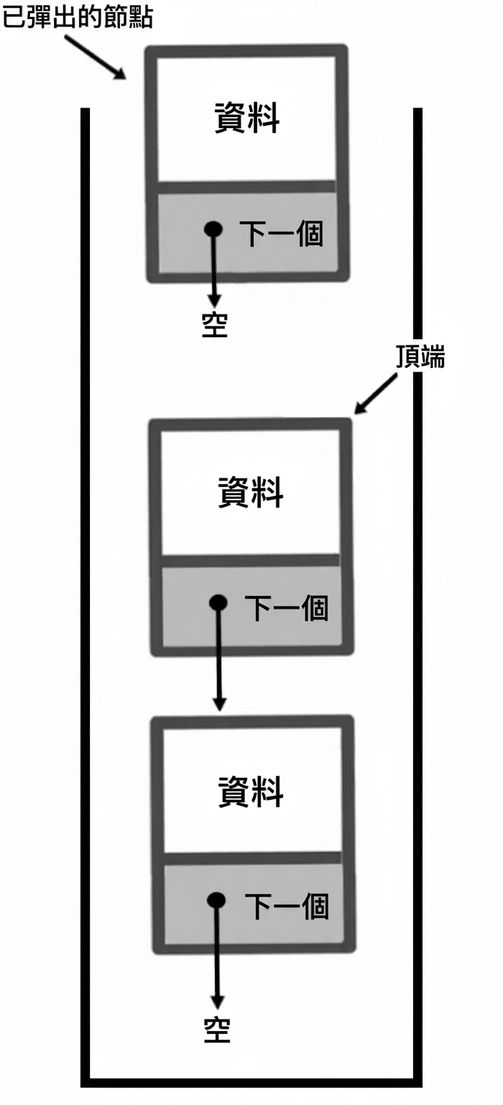
    self.top = self.top.next
    popped_node.next = None

堆疊示意圖,「popped_node」指向已與堆疊斷開的節點,「TOP」指向頂端節點。

Data Structures and Algorithms in Python

堆疊:pop

def pop(self):
  if self.top is None:
    return None
  else:
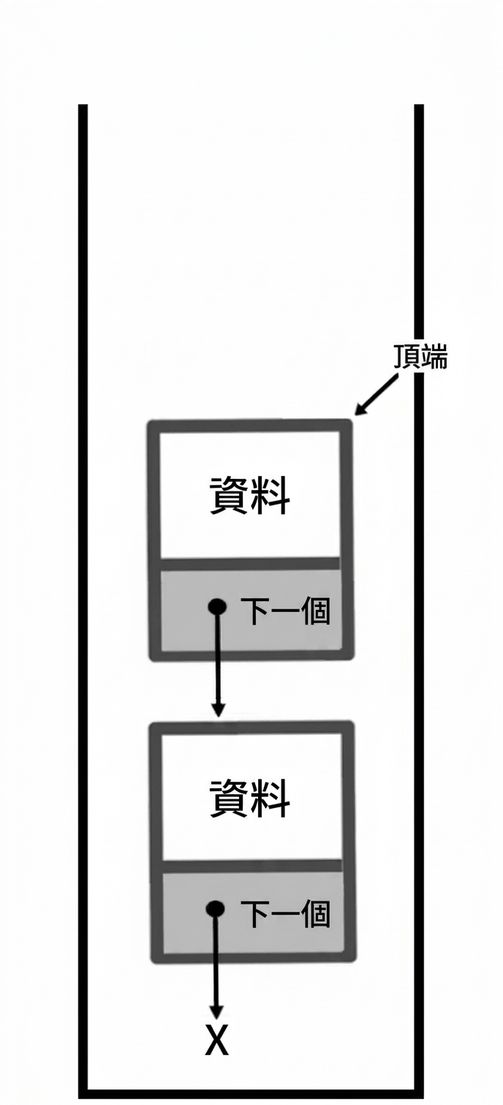
    popped_node = self.top
    self.top = self.top.next
    popped_node.next = None
    return popped_node.data 

堆疊示意圖,「TOP」指向頂端節點。

Data Structures and Algorithms in Python

堆疊:peek

def peek(self):

if self.top:
return self.top.data
else:
return None
Data Structures and Algorithms in Python

Python 的 LifoQueue

  • LifoQueue
    • Python 的 queue 模組
    • 行為如同堆疊
import queue


my_book_stack = queue.LifoQueue(maxsize=0)
my_book_stack.put("The misunderstanding") my_book_stack.put("Persepolis") my_book_stack.put("1984")
print("The size is: ", my_book_stack.qsize())
The size is: 3
print(my_book_stack.get())
1984
Persepolis
The misunderstanding
print("Empty stack: ", my_book_stack.empty())
Empty stack: True
Data Structures and Algorithms in Python

一起來練習吧!

Data Structures and Algorithms in Python

Preparing Video For Download...