撰寫高效的 Python 程式碼
Logan Thomas
Scientific Software Technical Trainer, Enthought
line_profilerpip install line_profiler
heroes = ['Batman', 'Superman', 'Wonder Woman']
hts = np.array([188.0, 191.0, 183.0])
wts = np.array([ 95.0, 101.0, 74.0])
def convert_units(heroes, heights, weights):
new_hts = [ht * 0.39370 for ht in heights]
new_wts = [wt * 2.20462 for wt in weights]
hero_data = {}
for i,hero in enumerate(heroes):
hero_data[hero] = (new_hts[i], new_wts[i])
return hero_data
convert_units(heroes, hts, wts)
{'Batman': (74.0156, 209.4389),
'Superman': (75.1967, 222.6666),
'Wonder Woman': (72.0471, 163.1419)}
%timeit convert_units(heroes, hts, wts)
3 µs ± 32 ns 每回合(7 次執行的平均值 ± 標準差,每次 100000 回合)
%timeit new_hts = [ht * 0.39370 for ht in hts]
1.09 µs ± 11 ns 每回合(7 次執行的平均值 ± 標準差,每次 1000000 回合)
%timeit new_wts = [wt * 2.20462 for wt in wts]
1.08 µs ± 6.42 ns 每回合(7 次執行的平均值 ± 標準差,每次 1000000 回合)
%%timeit
hero_data = {}
for i,hero in enumerate(heroes):
hero_data[hero] = (new_hts[i], new_wts[i])
634 ns ± 9.29 ns 每回合(7 次執行的平均值 ± 標準差,每次 1000000 回合)
使用 line_profiler 套件
%load_ext line_profiler
逐行計時的魔術命令
%lprun -f
使用 line_profiler 套件
%load_ext line_profiler
逐行計時的魔術命令
%lprun -f convert_units
使用 line_profiler 套件
%load_ext line_profiler
逐行計時的魔術命令
%lprun -f convert_units convert_units(heroes, hts, wts)
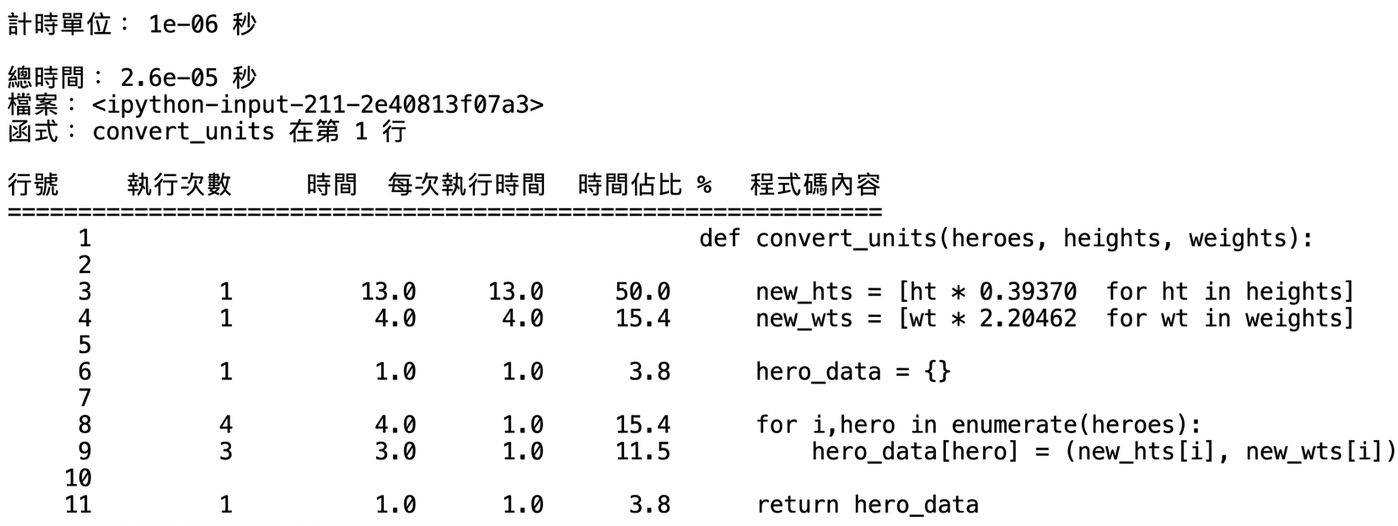
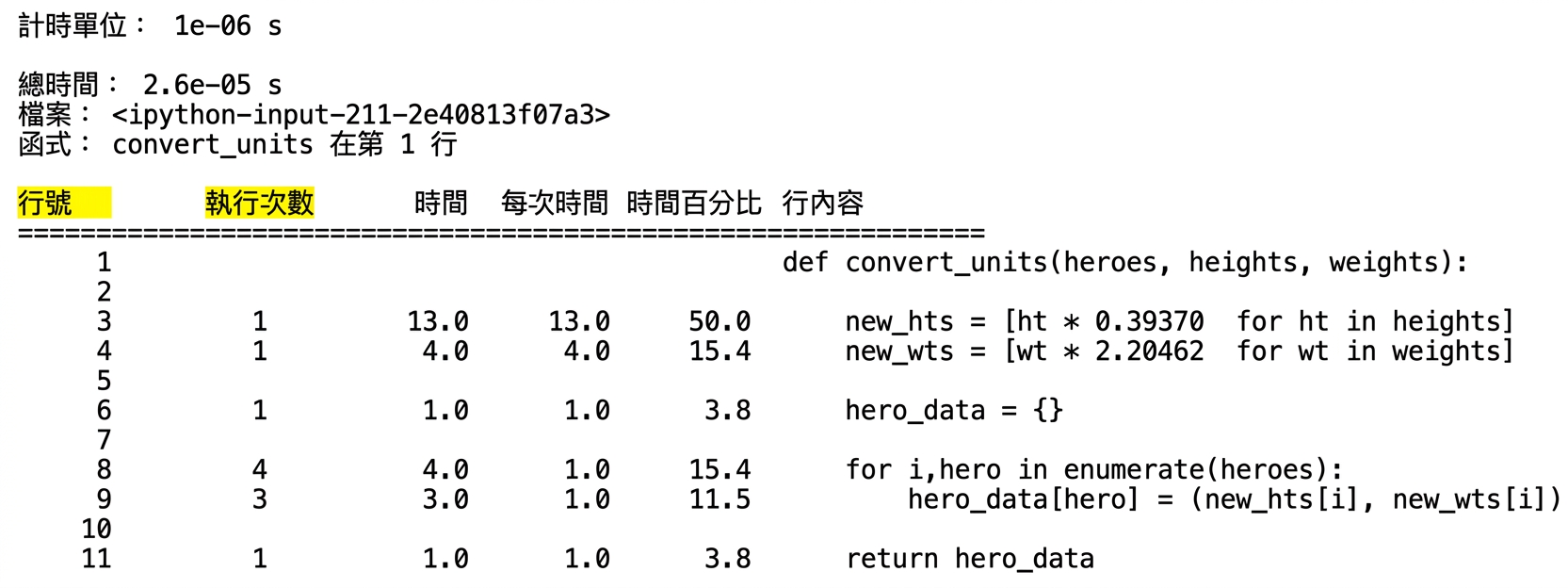
%lprun -f convert_units convert_units(heroes, hts, wts)

%lprun -f convert_units convert_units(heroes, hts, wts)
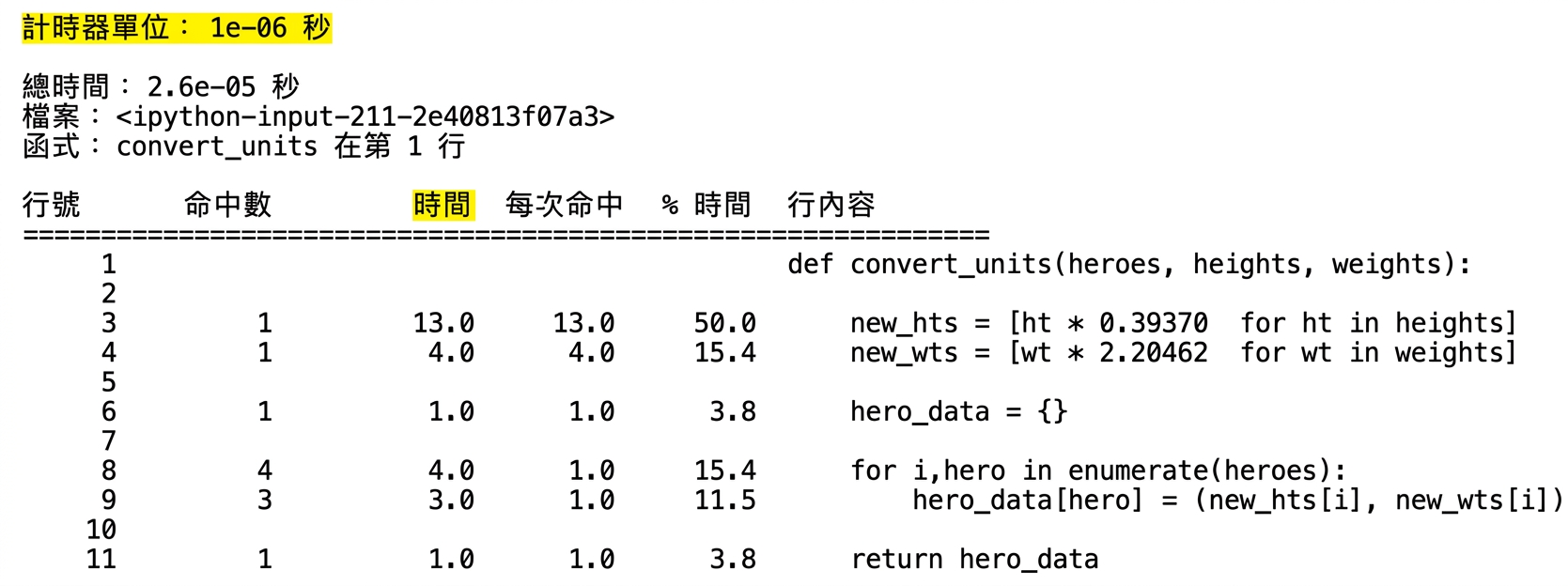
%lprun -f convert_units convert_units(heroes, hts, wts)

%lprun -f convert_units convert_units(heroes, hts, wts)
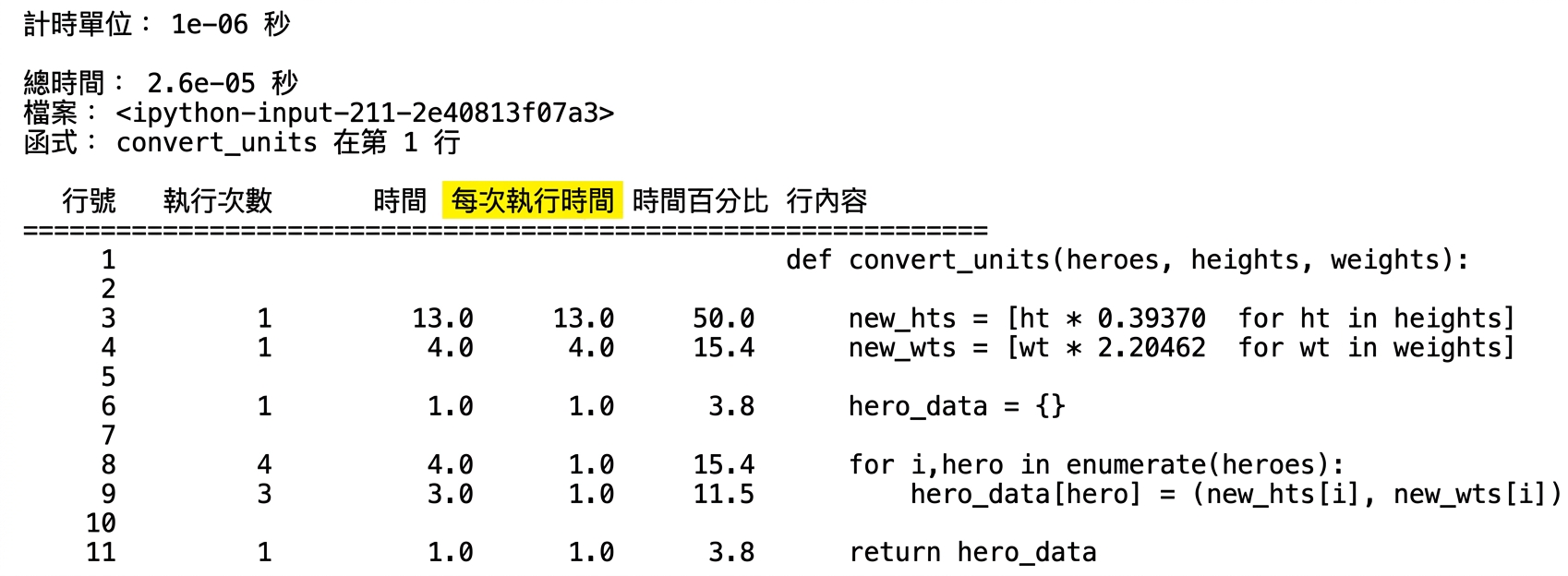
%lprun -f convert_units convert_units(heroes, hts, wts)
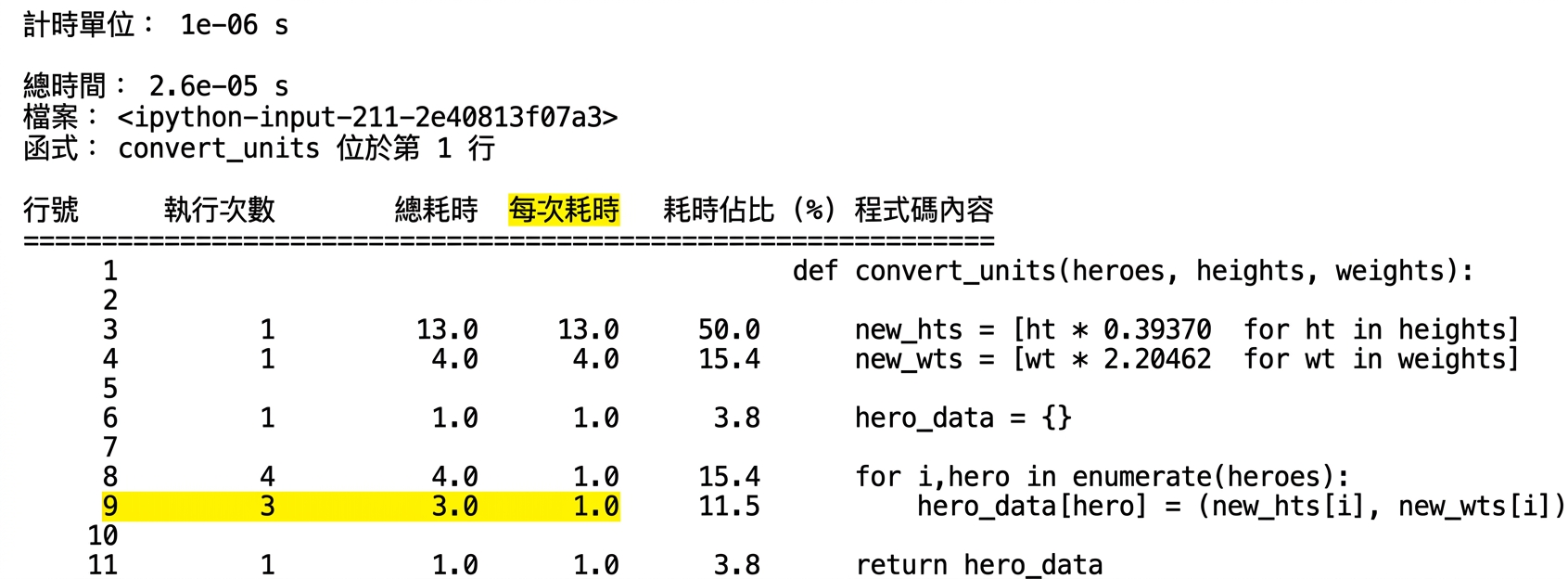
%lprun -f convert_units convert_units(heroes, hts, wts)
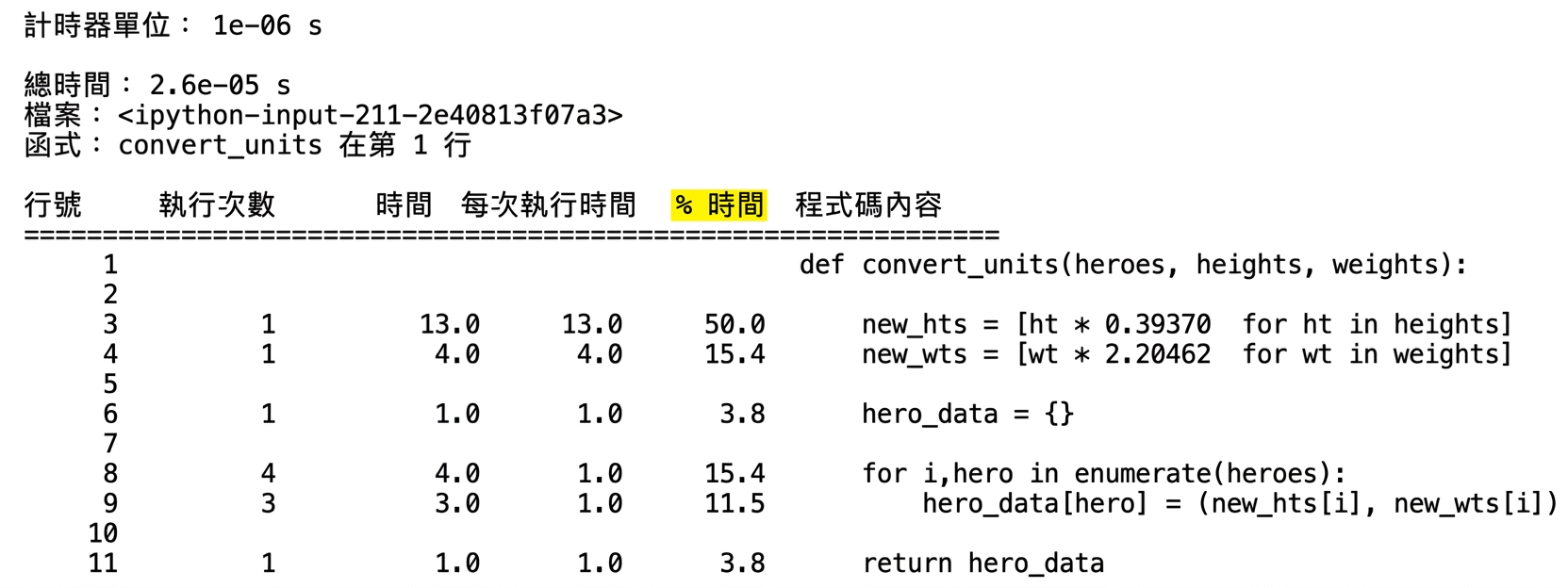
%lprun -f convert_units convert_units(heroes, hts, wts)
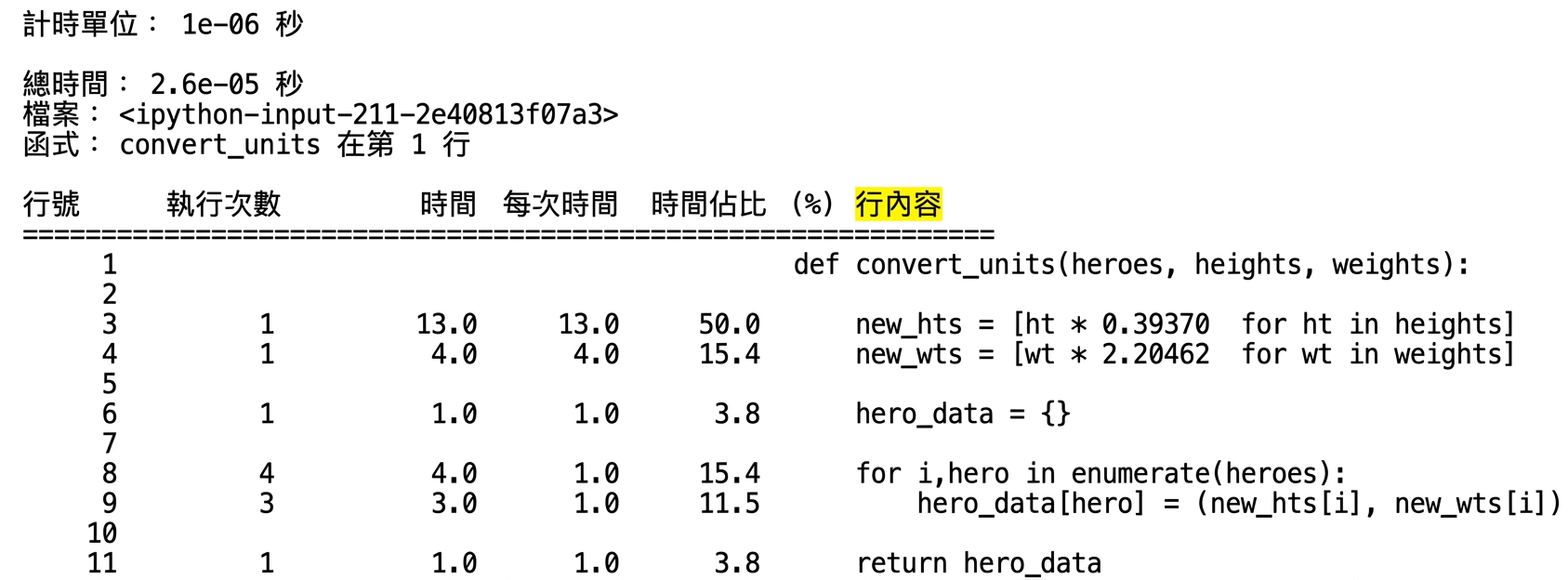
%lprun -f convert_units convert_units(heroes, hts, wts)

%timeit convert_units convert_units(heroes, hts, wts)
3 µs ± 32 ns 每回合(7 次執行的平均值 ± 標準差,每次 100000 回合)
%lprun -f convert_units convert_units(heroes, hts, wts)
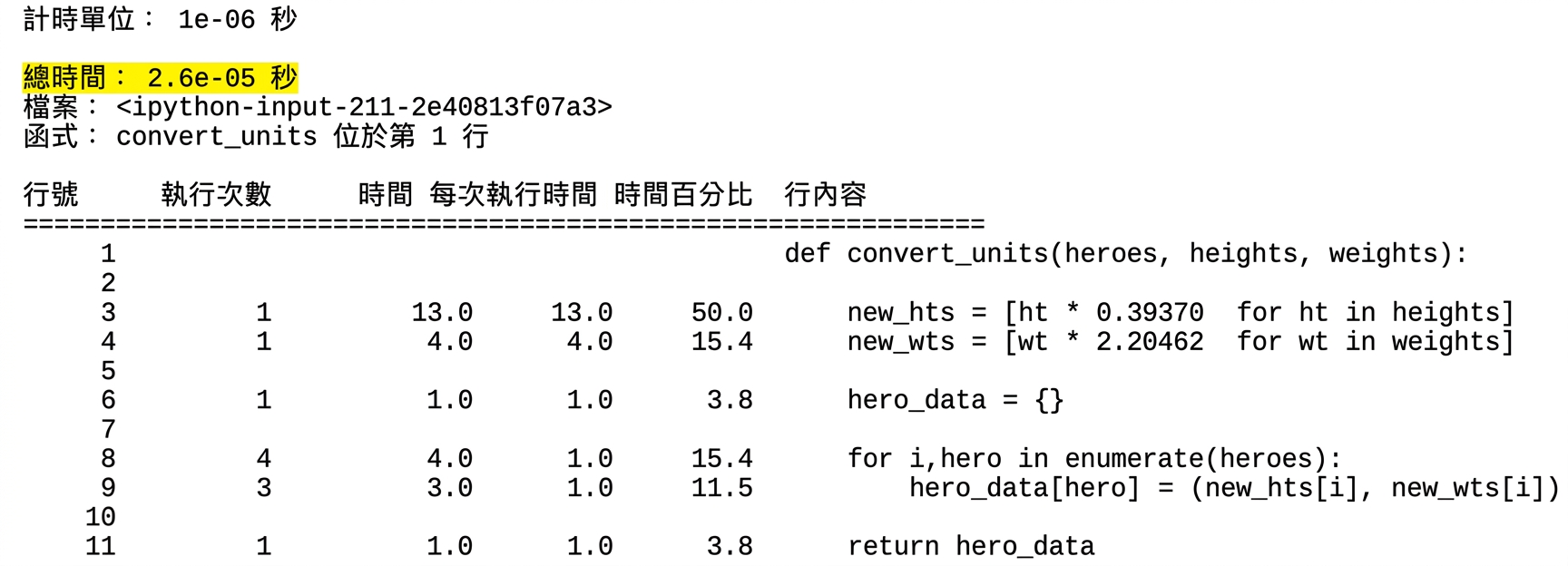
撰寫高效的 Python 程式碼