詞袋(Bag-of-Words)表示法

Python 的 Natural Language Processing(NLP)

Fouad Trad

Machine Learning Engineer

NLP 工作流程回顧
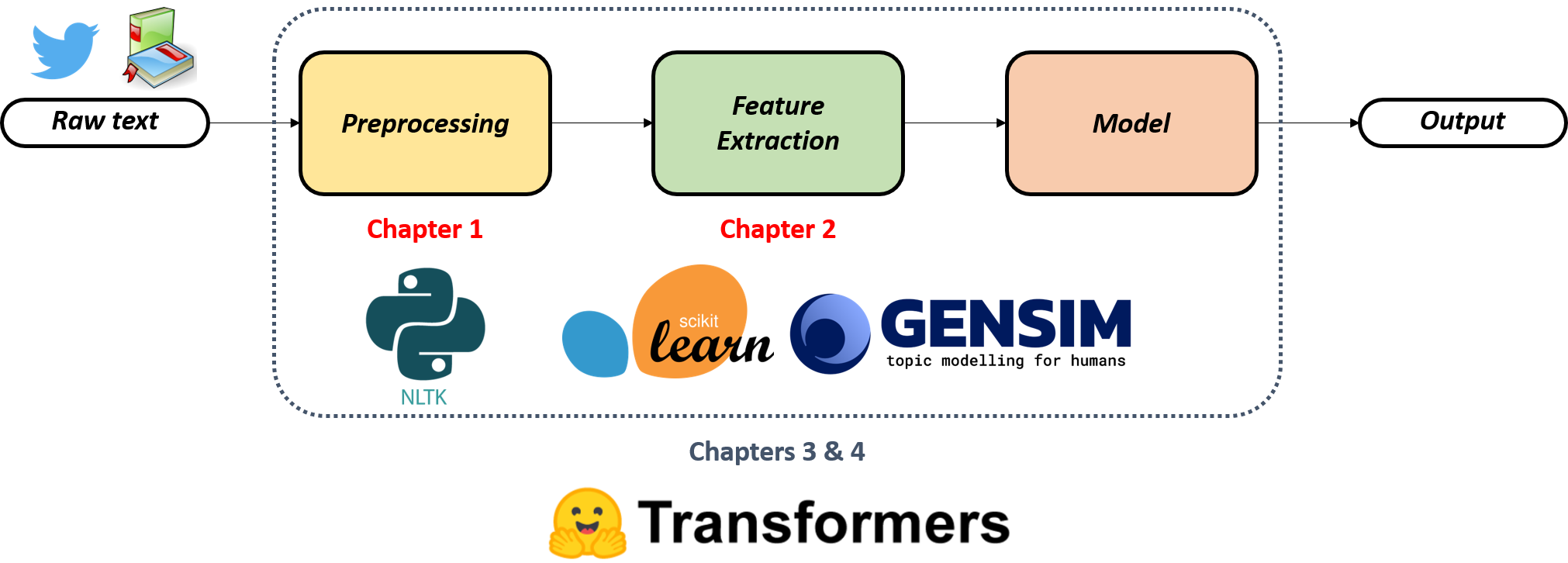
完整工作流程圖,並註明第 3、4 章聚焦 transformers 函式庫。

Python 的 Natural Language Processing(NLP)

詞袋模型(BoW)

  • 將文字轉成數字的基礎方法
  • 以每個詞出現的次數來表示文字
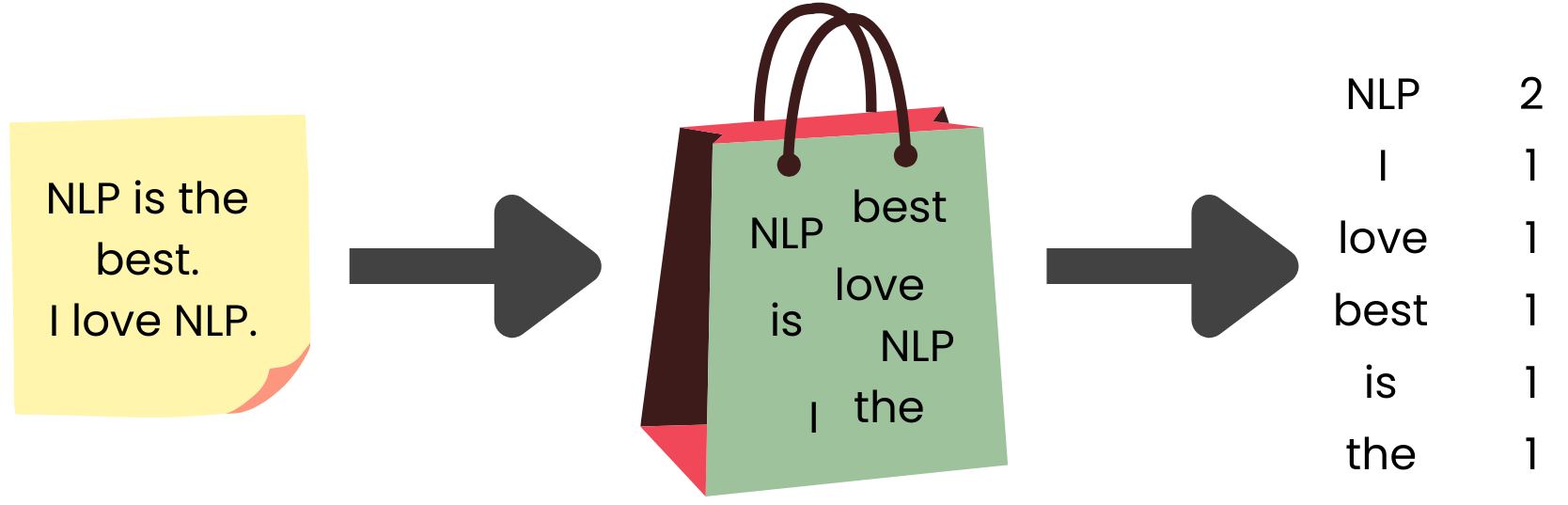
  • 把詞丟進「袋子」裡並計數
  • 忽略文法與順序

圖示:把文本的詞丟進袋子,再統計各詞出現次數。

Python 的 Natural Language Processing(NLP)

BoW 範例

顯示兩個句子:'I love NLP' 與 'I love machine learning.'

Python 的 Natural Language Processing(NLP)

BoW 範例

字彙來自句子的圖:I、love、NLP、machine、learning。

  • 建立所有不重複詞的字彙表
Python 的 Natural Language Processing(NLP)

BoW 範例

依字彙表計數後為每個句子產生特徵向量的圖示。

  • 建立所有不重複詞的字彙表
  • 計算字彙表中每個詞出現的次數
Python 的 Natural Language Processing(NLP)

用程式實作 BoW

reviews = ["I loved the movie. It was amazing!",
           "The movie was okay.",
           "I hated the movie. It was boring."]

def preprocess(text):
text = text.lower()
tokens = word_tokenize(text)
tokens = [word for word in tokens if word not in string.punctuation]
return " ".join(tokens)
cleaned_reviews = [preprocess(review) for review in reviews]
print(cleaned_reviews)
['i loved the movie it was amazing', 
 'the movie was okay', 
 'i hated the movie it was boring']
Python 的 Natural Language Processing(NLP)

用程式實作 BoW

from sklearn.feature_extraction.text import CountVectorizer


vectorizer = CountVectorizer()
vectorizer.fit(cleaned_reviews)
print(vectorizer.get_feature_names_out())
['amazing' 'boring' 'hated' 'it' 'loved' 'movie' 'okay' 'the' 'was']
Python 的 Natural Language Processing(NLP)

BoW 輸出

X = vectorizer.transform(cleaned_reviews)

# OR X = vectorizer.fit_transform(cleaned_reviews)
print(X)
<Compressed Sparse Row sparse matrix of dtype 'int64'
    with 16 stored elements and shape (3, 9)>

稀疏矩陣:大多數元素為 0 的表格

Python 的 Natural Language Processing(NLP)

BoW 輸出

print(X.toarray())
[[1 0 0 1 1 1 0 1 1]
 [0 0 0 0 0 1 1 1 1]
 [0 1 1 1 0 1 0 1 1]]
print(vectorizer.get_feature_names_out())
['amazing' 'boring' 'hated' 'it' 'loved' 'movie' 'okay' 'the' 'was']
Python 的 Natural Language Processing(NLP)

詞頻

import numpy as np

word_counts = np.sum(X.toarray(), axis=0)
words = vectorizer.get_feature_names_out()
import matplotlib.pyplot as plt

plt.bar(words, word_counts)
plt.title("Word Frequencies in Movie Reviews")
plt.xlabel("Words") plt.ylabel("Frequency") plt.show()

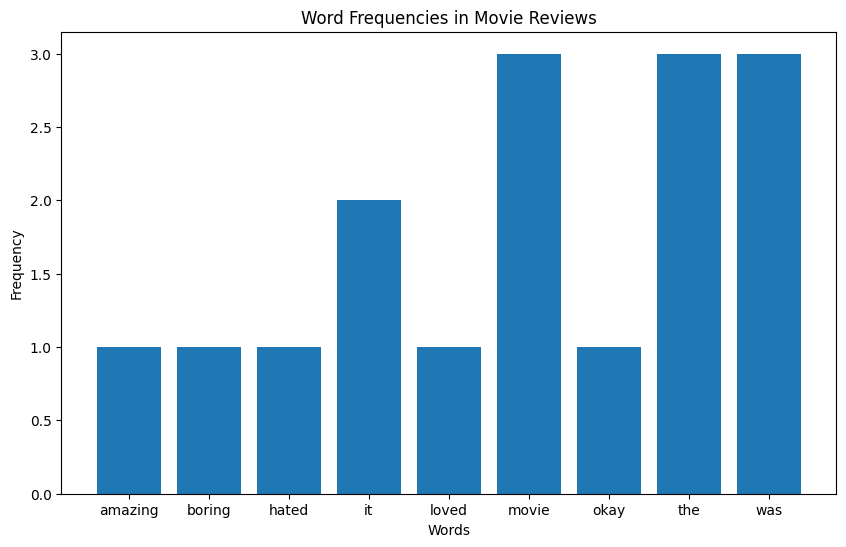
長條圖顯示詞與其頻率,停用詞最高。

Python 的 Natural Language Processing(NLP)

一起來練習吧!

Python 的 Natural Language Processing(NLP)

Preparing Video For Download...