使用 Python 的 Gymnasium 進行強化學習
Fouad Trad
Machine Learning Engineer
env = gym.make('FrozenLake', is_slippery=True)

action_size = env.action_space.n
state_size = env.observation_space.n
Q = np.zeros((state_size, action_size))


alpha = 0.1
gamma = 0.99
total_episodes = 10000
env = gym.make('FrozenLake', is_slippery=True) action_size = env.action_space.n state_size = env.observation_space.n Q = np.zeros((state_size, action_size))
alpha = 0.1 gamma = 0.99 total_episodes = 10000
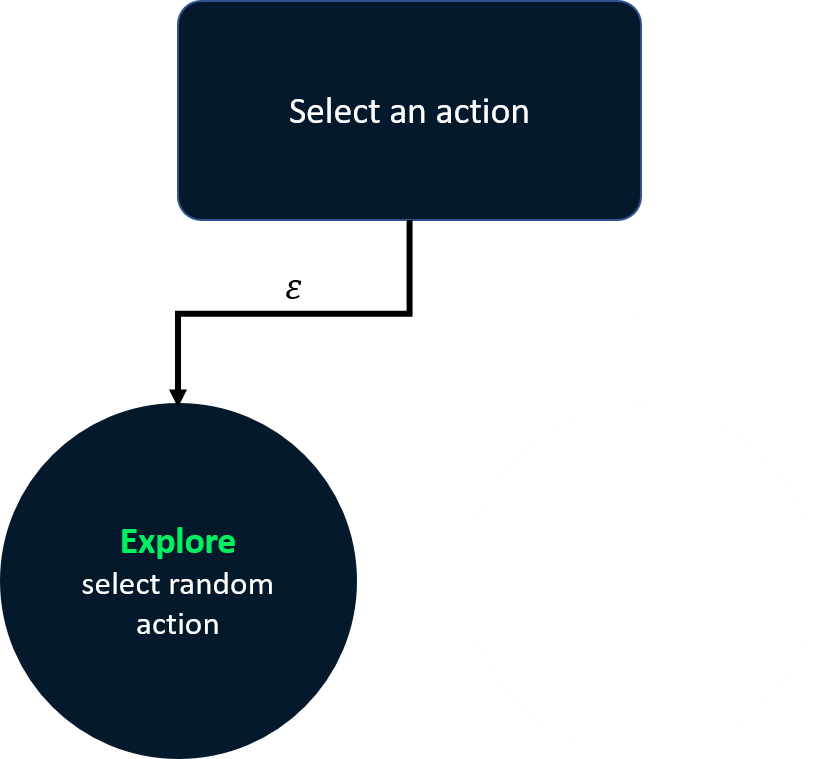
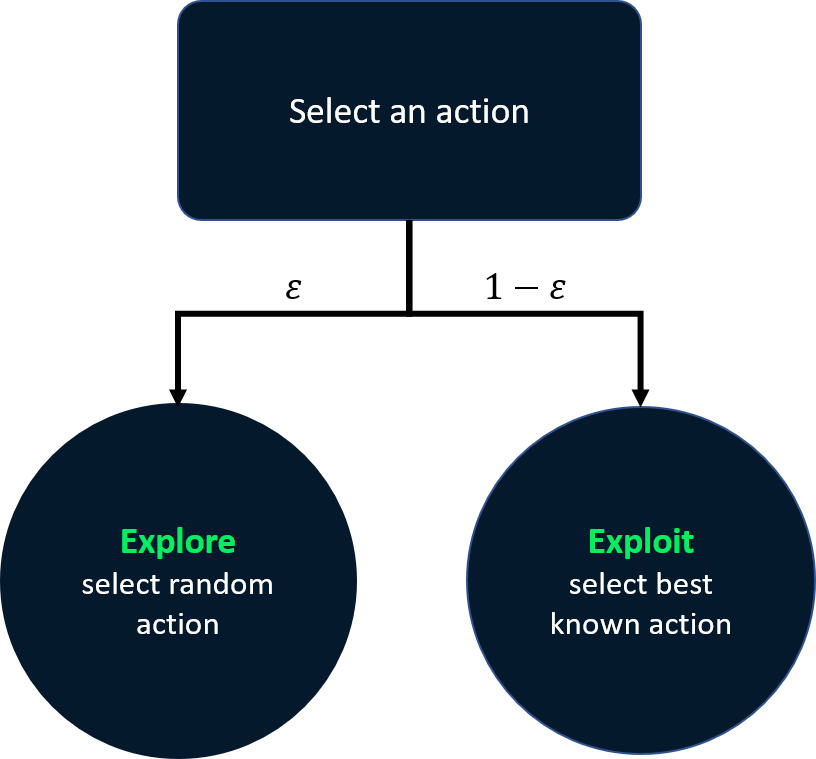
def epsilon_greedy(state):

    if np.random.rand() < epsilon:
        action = env.action_space.sample()  # Explore

    else:
        action = np.argmax(Q[state, :])  # Exploit
    return action
def epsilon_greedy(state):
if np.random.rand() < epsilon: action = env.action_space.sample() # Explore
else: action = np.argmax(Q[state, :]) # Exploit return action
epsilon = 0.9   # Exploration rate

rewards_eps_greedy = []
epsilon = 0.9 # Exploration rate
rewards_eps_greedy = []
for episode in range(total_episodes):
    state, info = env.reset()
    terminated = False
    episode_reward = 0
    while not terminated:
        action = epsilon_greedy(state)
        new_state, reward, terminated, truncated, info = env.step(action)
        Q[state, action] = update_q_table(state, action, new_state)
        state = new_state

        episode_reward += reward
    rewards_eps_greedy.append(episode_reward)
for episode in range(total_episodes): state, info = env.reset() terminated = False episode_reward = 0 while not terminated: action = epsilon_greedy(state) new_state, reward, terminated, truncated, info = env.step(action) Q[state, action] = update_q_table(state, action, new_state) state = new_state
episode_reward += reward rewards_eps_greedy.append(episode_reward)
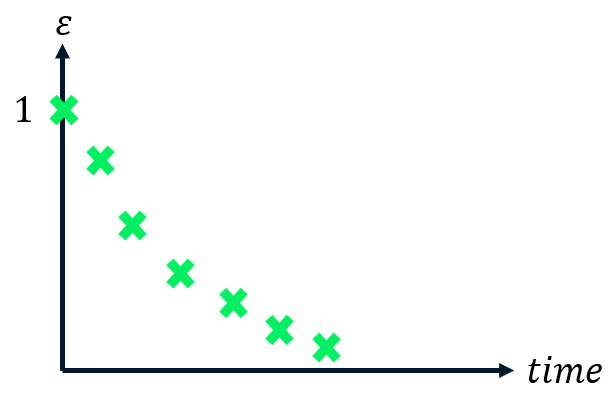
epsilon = 1.0   # Exploration rate
epsilon_decay = 0.999
min_epsilon = 0.01

rewards_decay_eps_greedy = []
for episode in range(total_episodes):
    state, info = env.reset()
    terminated = False
    episode_reward = 0
    while not terminated:
        action = epsilon_greedy(state)
        new_state, reward, terminated, truncated, info = env.step(action)
        episode_reward += reward
        Q[state, action] = update_q_table(state, action, new_state)
        state = new_state
    rewards_decay_eps_greedy.append(episode_reward)

    epsilon = max(min_epsilon, epsilon * epsilon_decay)
epsilon = 1.0 # Exploration rate epsilon_decay = 0.999 min_epsilon = 0.01
rewards_decay_eps_greedy = [] for episode in range(total_episodes): state, info = env.reset() terminated = False episode_reward = 0 while not terminated: action = epsilon_greedy(state) new_state, reward, terminated, truncated, info = env.step(action) episode_reward += reward Q[state, action] = update_q_table(state, action, new_state) state = new_state rewards_decay_eps_greedy.append(episode_reward)
epsilon = max(min_epsilon, epsilon * epsilon_decay)
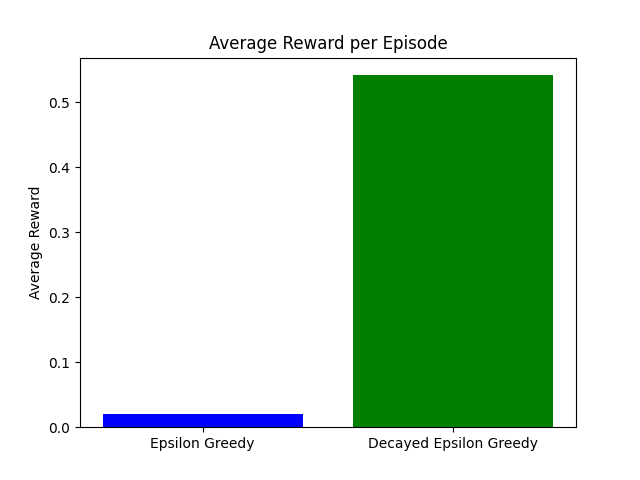
avg_eps_greedy= np.mean(rewards_eps_greedy)
avg_decay = np.mean(rewards_decay_eps_greedy)
plt.bar(['Epsilon Greedy', 'Decayed Epsilon Greedy'],
        [avg_eps_greedy, avg_decay],
        color=['blue', 'green'])
plt.title('Average Reward per Episode')
plt.ylabel('Average Reward')
plt.show()