常態分佈導論

Statistical Thinking in Python (Part 1)

Justin Bois

Teaching Professor at the California Institute of Technology

常態分佈
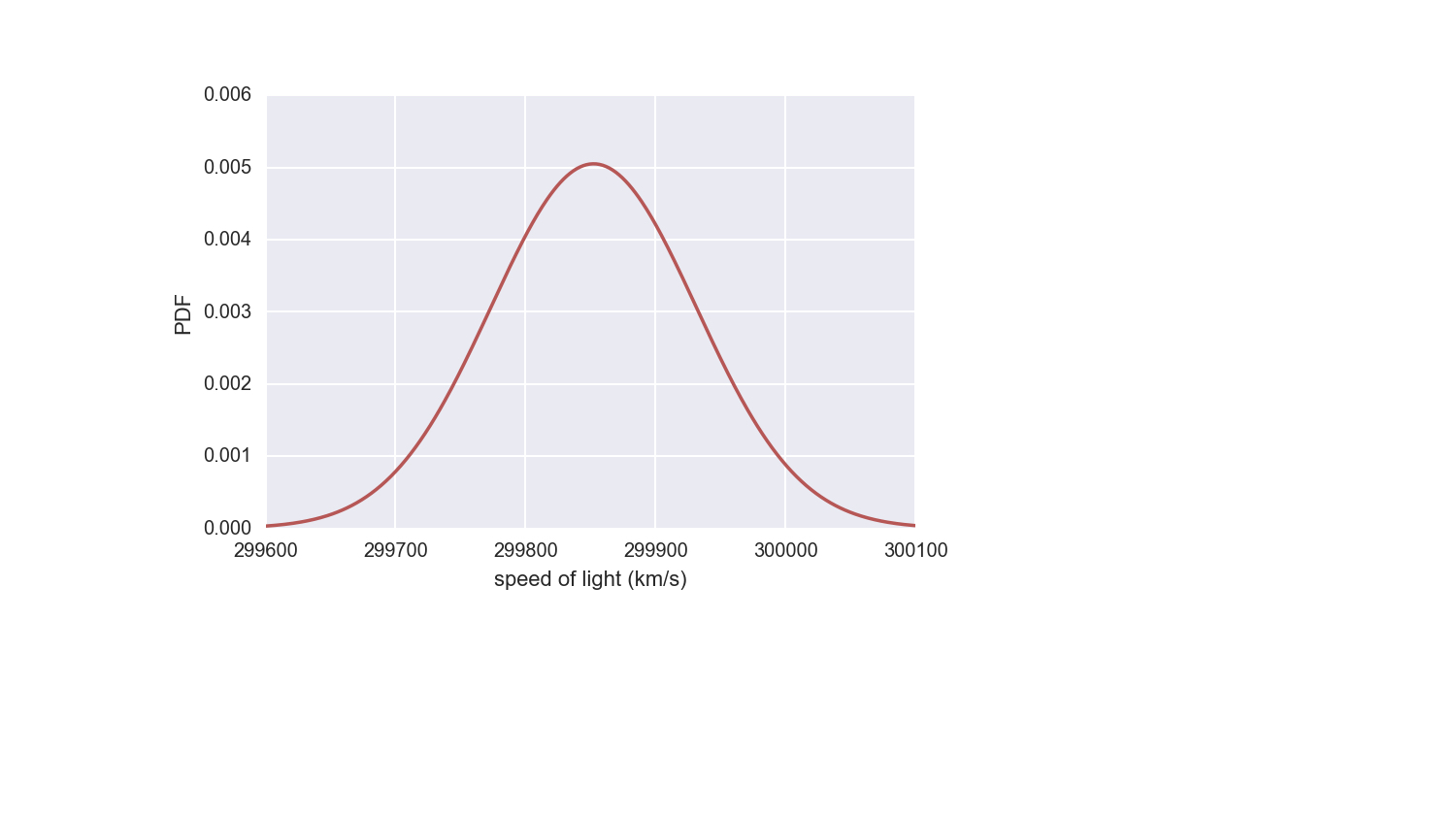
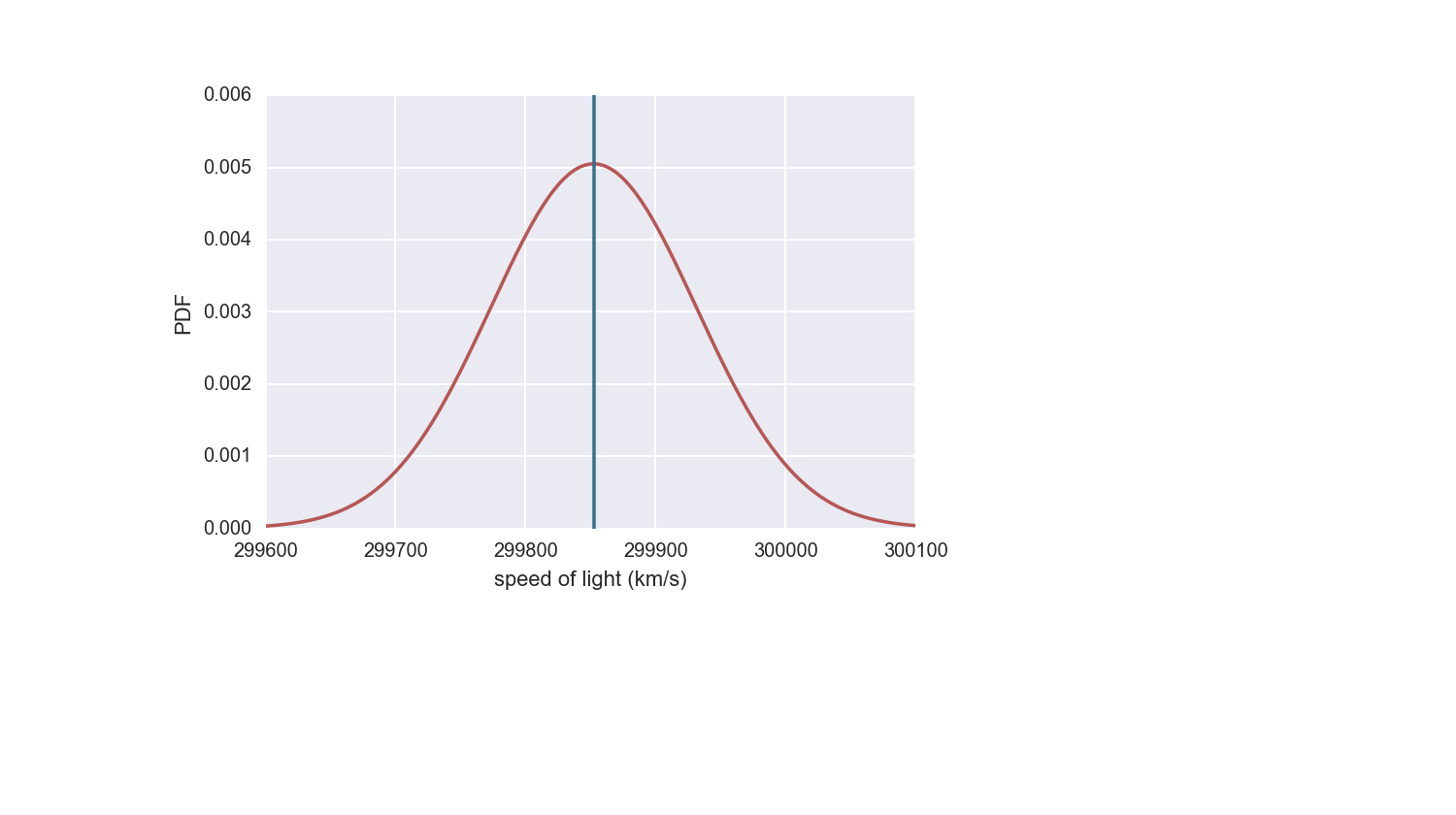
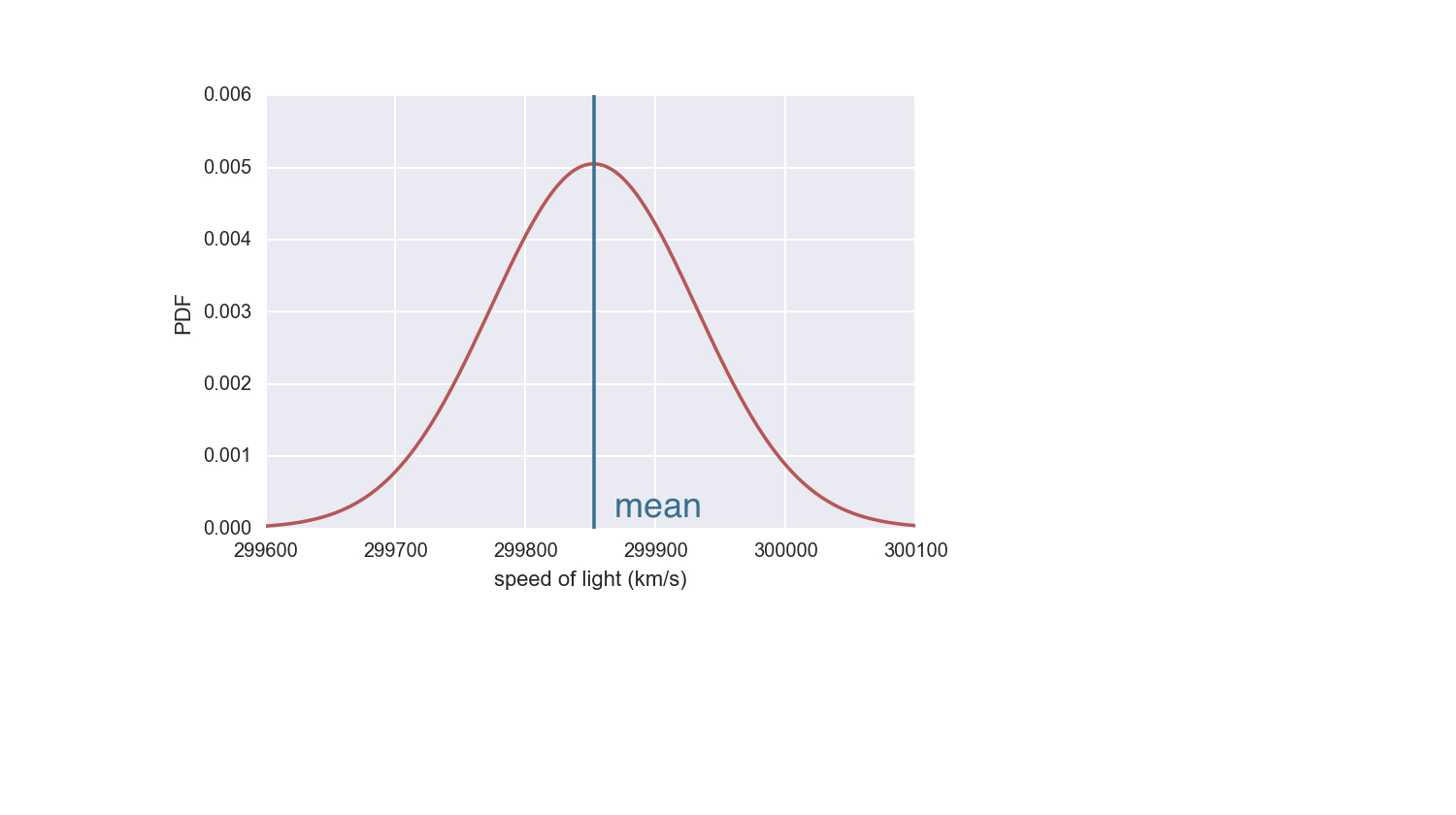
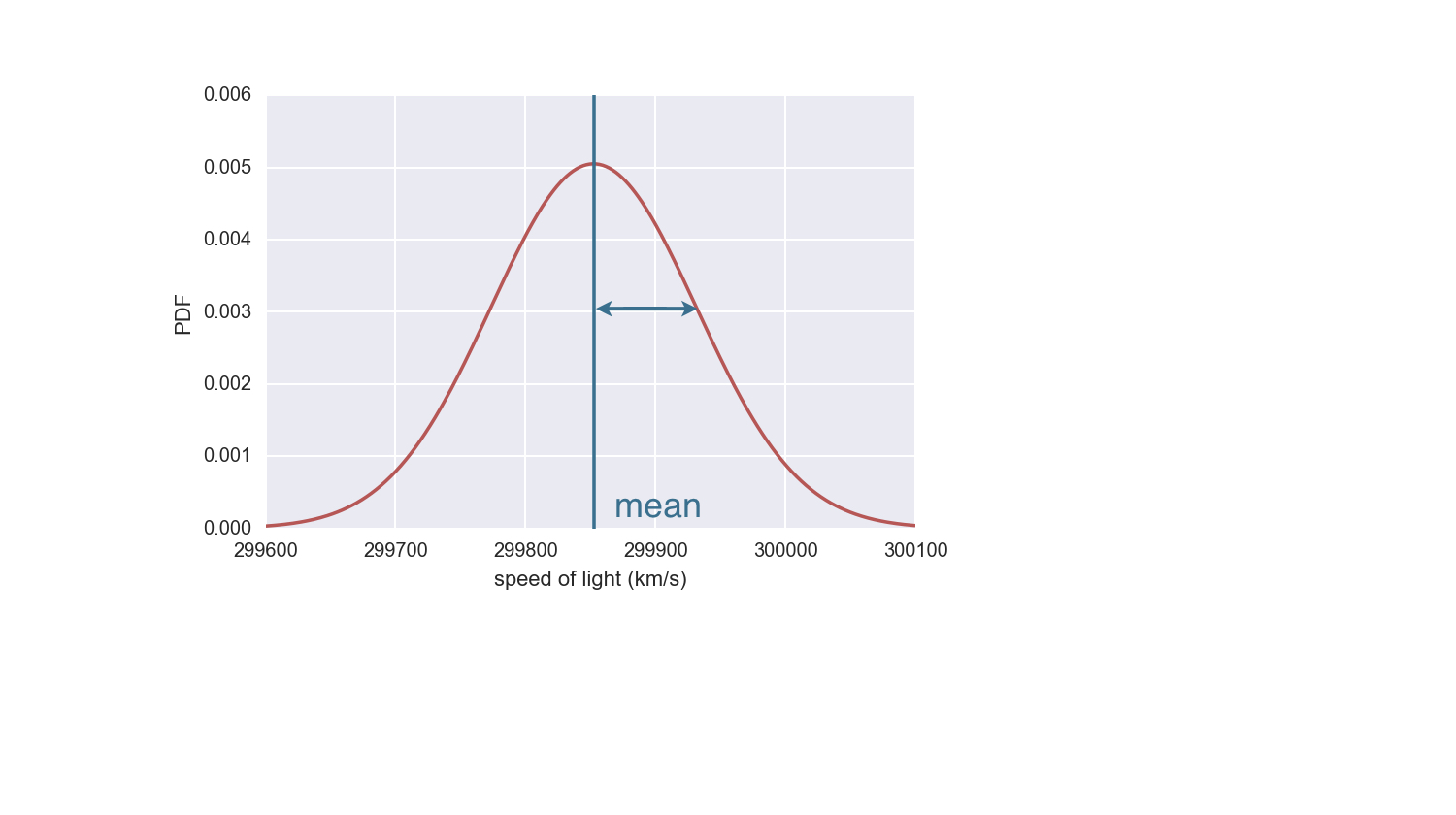
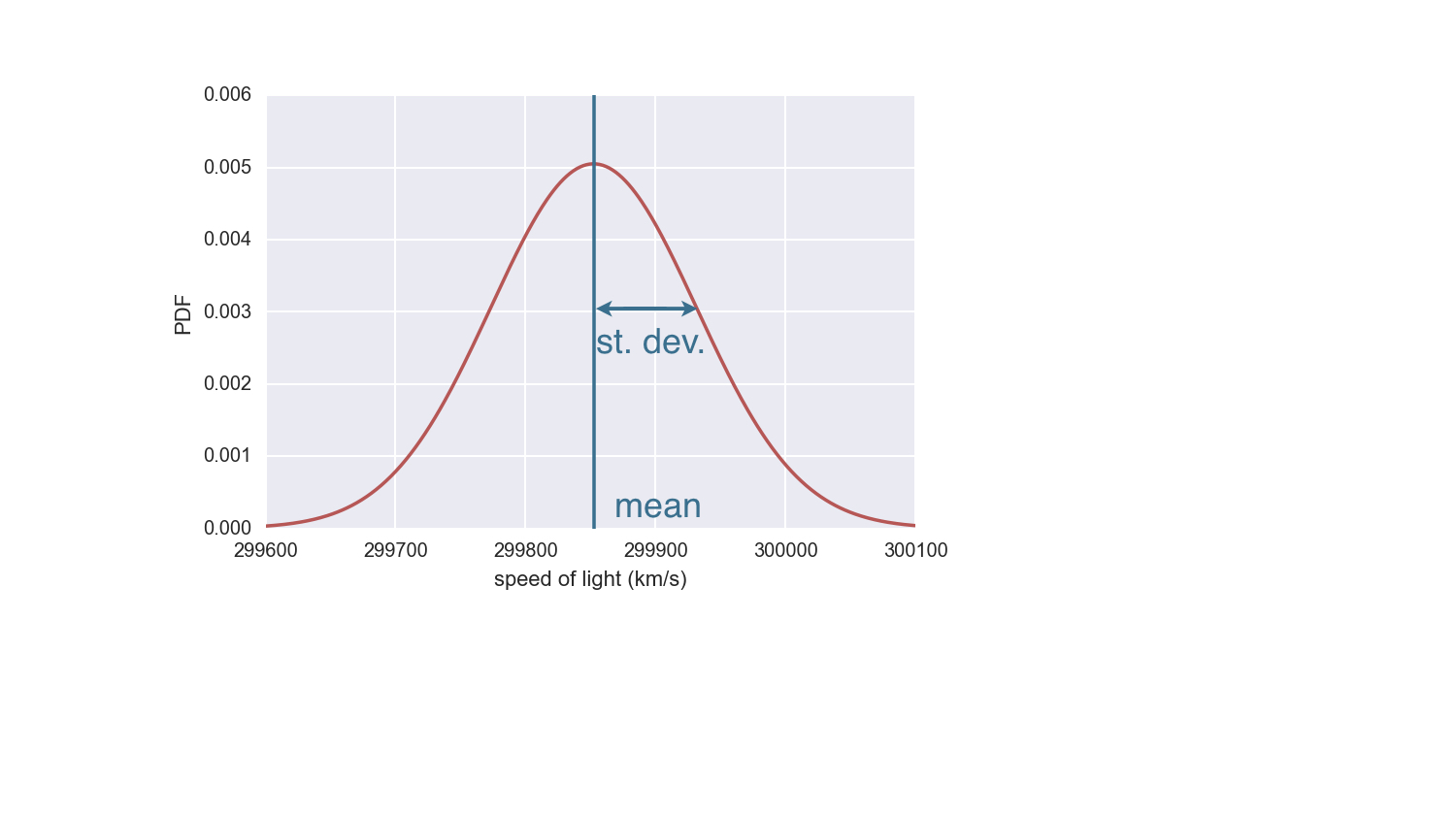
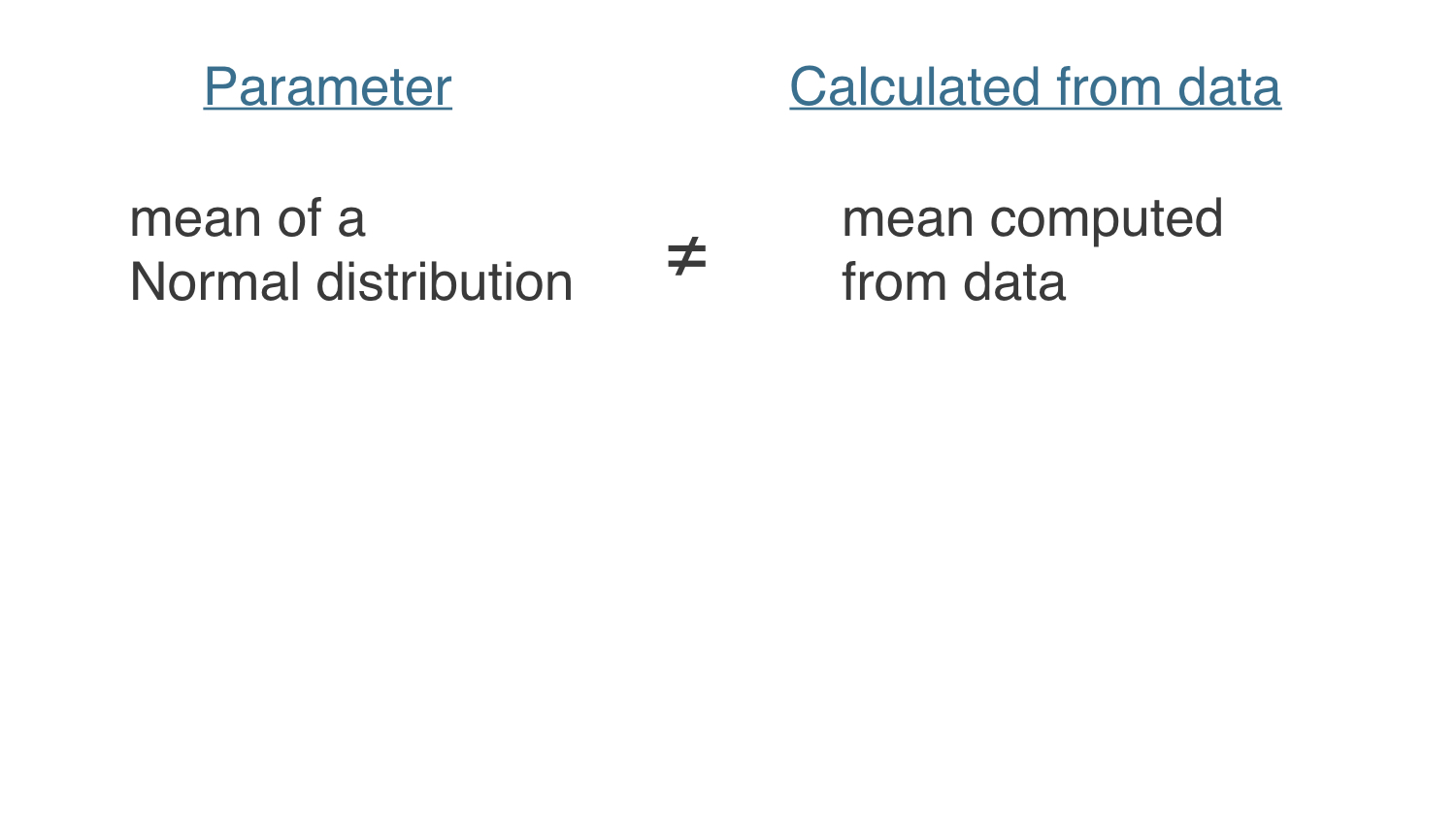
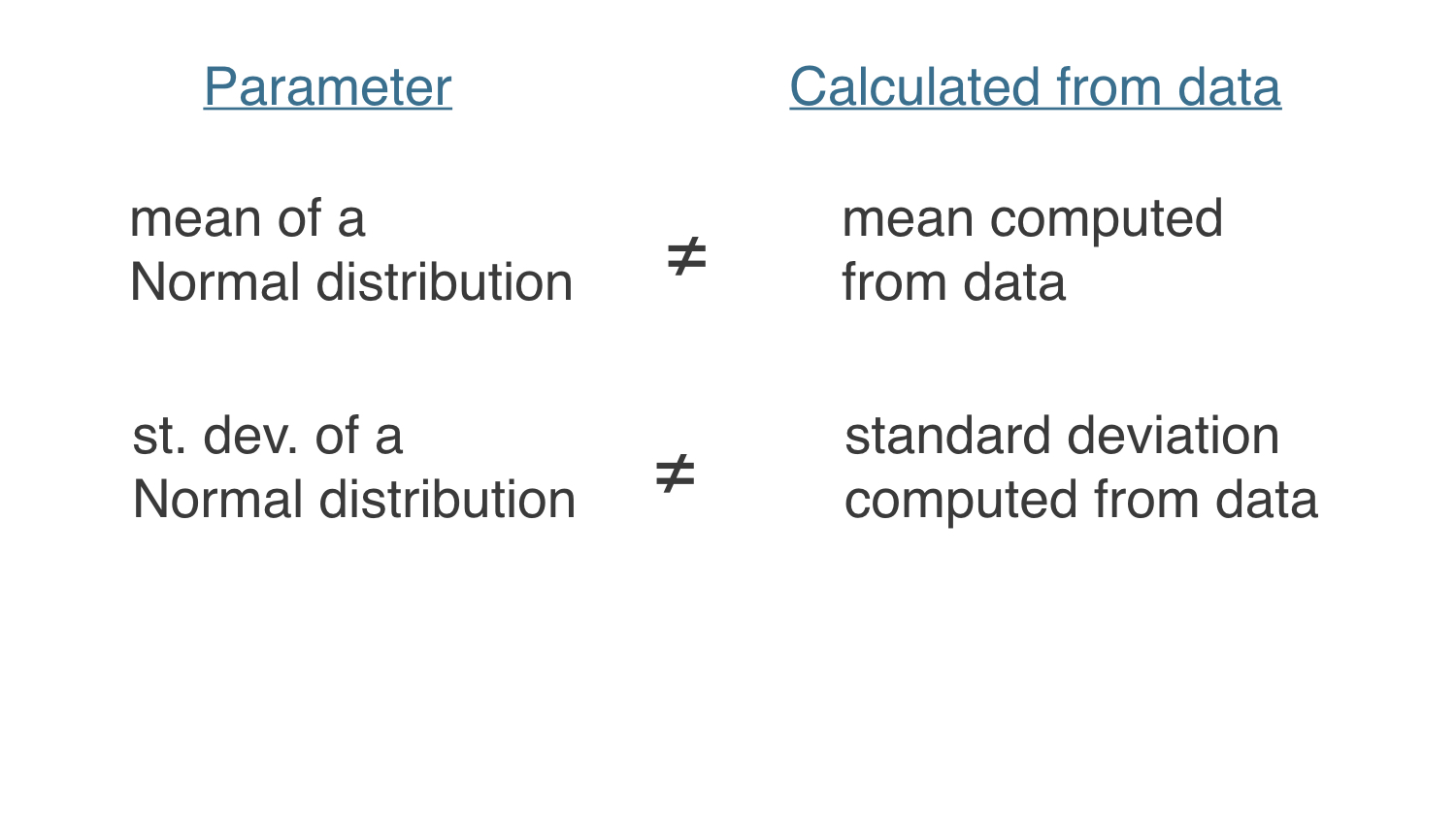
  • 描述連續變數,PDF 為單一對稱峰。
Statistical Thinking in Python (Part 1)

常態分佈

ch4-2.004.png

Statistical Thinking in Python (Part 1)

常態分佈

ch4-2.005.png

Statistical Thinking in Python (Part 1)

常態分佈

ch4-2.006.png

Statistical Thinking in Python (Part 1)

常態分佈

ch4-2.007.png

Statistical Thinking in Python (Part 1)

常態分佈

ch4-2.008.png

Statistical Thinking in Python (Part 1)

ch4-2.009.png

Statistical Thinking in Python (Part 1)

ch4-2.010.png

Statistical Thinking in Python (Part 1)

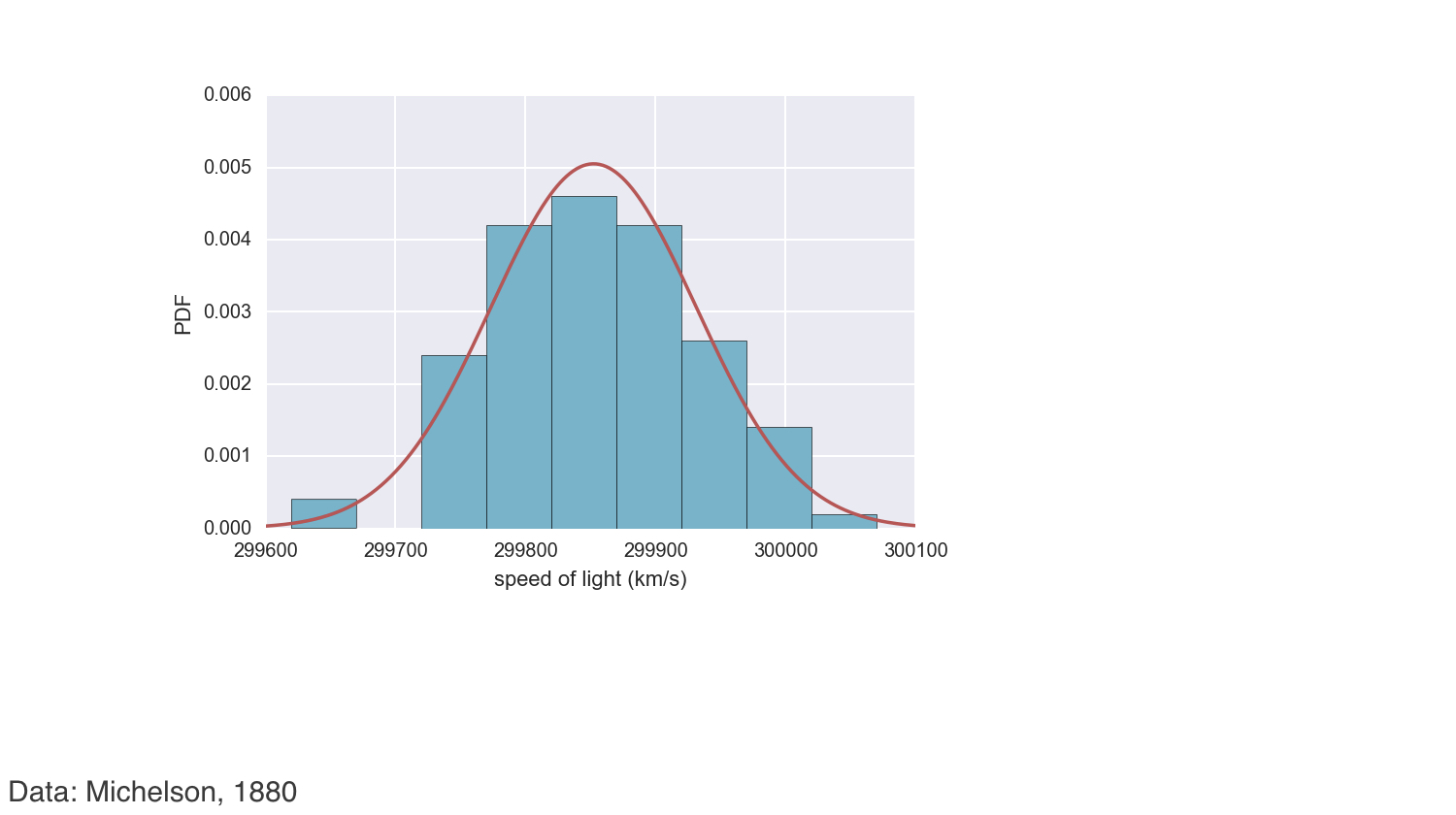
比較資料與常態 PDF

ch4-2.012.png

Statistical Thinking in Python (Part 1)

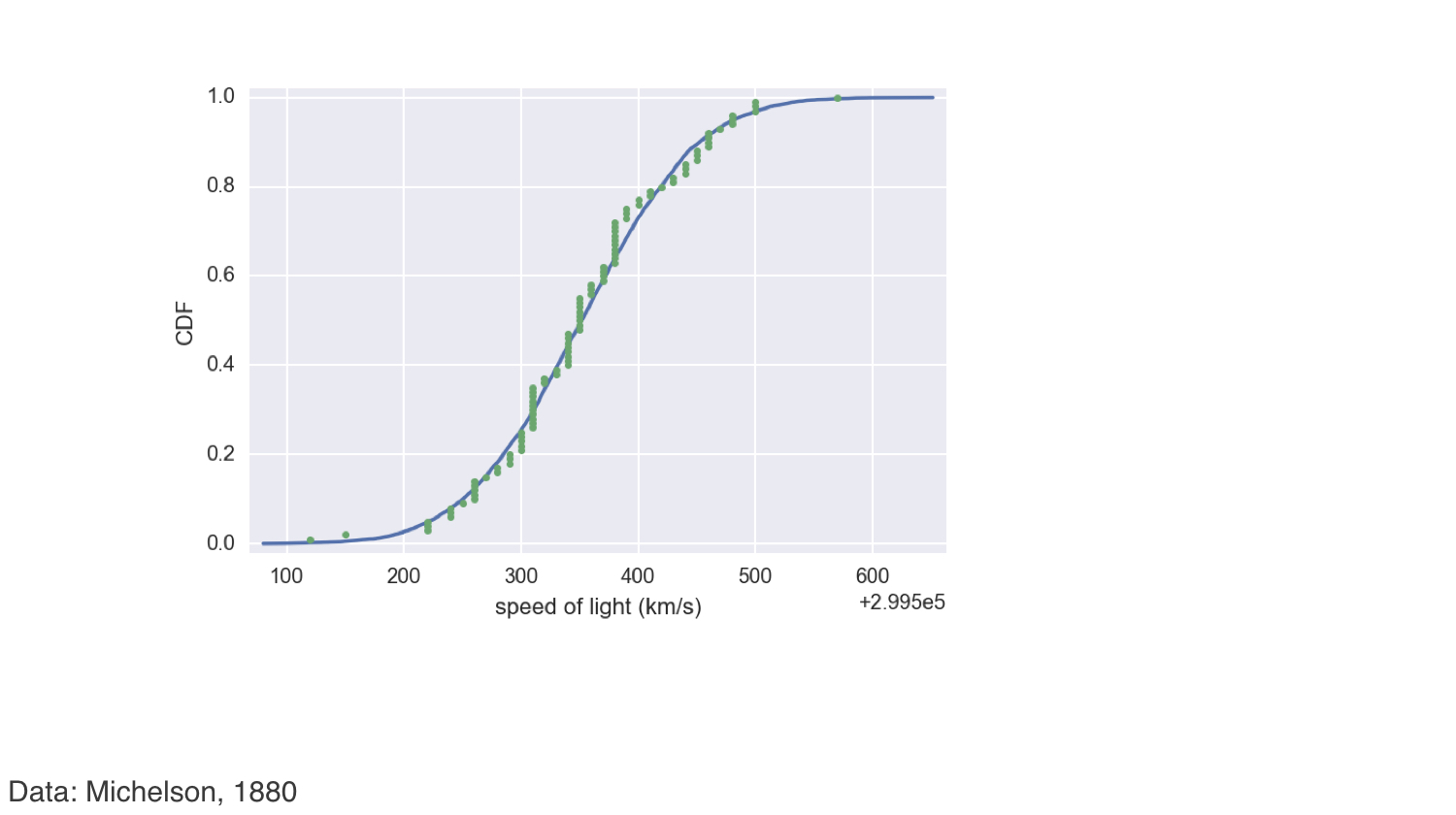
檢查 Michelson 資料的常態性

import numpy as np
rng = np.random.default_rng()
mean = np.mean(michelson_speed_of_light)
std = np.std(michelson_speed_of_light)
samples = rng.normal(mean, std, size=10000)
x, y = ecdf(michelson_speed_of_light)
x_theor, y_theor = ecdf(samples)
Statistical Thinking in Python (Part 1)

檢查 Michelson 資料的常態性

import matplotlib.pyplot as plt
import seaborn as sns
sns.set()
_ = plt.plot(x_theor, y_theor)
_ = plt.plot(x, y, marker='.', linestyle='none')
_ = plt.xlabel('speed of light (km/s)')
_ = plt.ylabel('CDF')
plt.show()
Statistical Thinking in Python (Part 1)

檢查 Michelson 資料的常態性

ch4-2.029.png

Statistical Thinking in Python (Part 1)

一起來練習吧!

Statistical Thinking in Python (Part 1)

Preparing Video For Download...