Python 中的 GARCH 模型
Chelsea Yang
Data Science Instructor
若兩個資產報酬的相關係數為 $\rho$,且波動度隨時間變動,分別為 $\sigma_1$ 與 $\sigma_2$:
$Covariance = \rho \cdot \sigma_1 \cdot \sigma_2$
covariance = correlation * garch_vol1 * garch_vol2
步驟 1:擬合 GARCH 模型,取得各報酬序列的波動度
# gm_eur, gm_cad are fitted GARCH models
vol_eur = gm_eur.conditional_volatility
vol_cad = gm_cad.conditional_volatility
步驟 2:由已擬合的 GARCH 模型計算標準化殘差
resid_eur = gm_eur.resid/vol_eur
resid_cad = gm_cad.resid/vol_cad
步驟 3:以標準化殘差的簡單相關作為 $\rho$
corr = np.corrcoef(resid_eur, resid_cad)[0,1]
步驟 4:以相關係數乘上波動度,得到 GARCH 共變異數。
covariance = corr * vol_eur * vol_cad
_W1$*$ Variance1 + W2$*$ Variance2 + 2$*$W1$*$W2$*$Covariance _
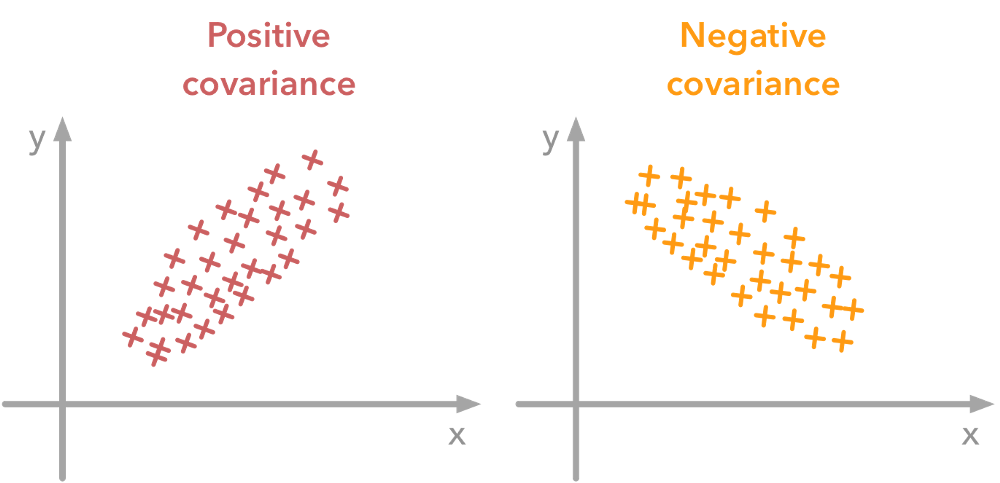
將共變異數為負的資產放在同一組合中,可降低風險。