總結與最終對決
使用 Keras 進行機器翻譯
Thushan Ganegedara
Data Scientist and Author
到目前為止你完成了什麼
第 1 章
編碼器—解碼器架構導論
認識 GRU 層
第 2 章
實作編碼器
實作解碼器
實作解碼器預測層
到目前為止你完成了什麼
第 3 章
前處理資料
訓練機器翻譯模型
產生翻譯
第 4 章
Teacher forcing 導論
以 teacher forcing 訓練模型
產生翻譯
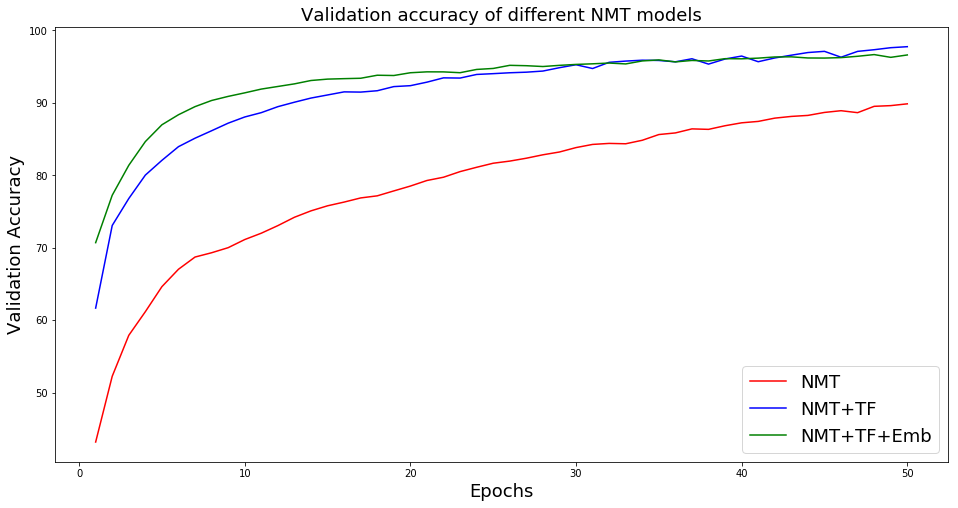
使用詞向量做機器翻譯
機器翻譯模型
模型 1
編碼器讀入英文單字(onehot 編碼),輸出情境向量
解碼器讀入情境向量並輸出翻譯
模型 2
編碼器讀入英文單字(onehot 編碼),輸出情境向量
解碼器讀入翻譯中的指定單字(onehot 編碼),預測下一個單字
模型 3
不用 onehot,改用詞向量
詞向量能捕捉單字間的語意關係
不同模型的效能
最新進展與延伸閱讀
評估機器翻譯模型
BLEU 分數(
Papineni et al., BLEU: a Method for Automatic Evaluation of Machine Translation.
)
Word piece 模型
讓模型避免超出字彙表的單字(
Sennrich et al., Neural Machine Translation of Rare Words with Subword Units.
)
Transformer 模型(
Vaswani et al., Attention Is All You Need
)
在多項 NLP 任務(含機器翻譯)達到 SOTA 表現
採編碼器—解碼器架構,但不使用序列模型
最新的 Google 翻譯器使用 Transformer 模型
祝一切順利!
使用 Keras 進行機器翻譯
Preparing Video For Download...