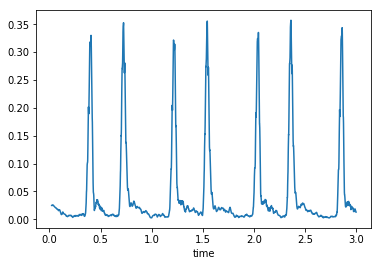
Improving the features we use for classification

Pythonで学ぶMachine Learningによる時系列データ解析

Chris Holdgraf

Fellow, Berkeley Institute for Data Science

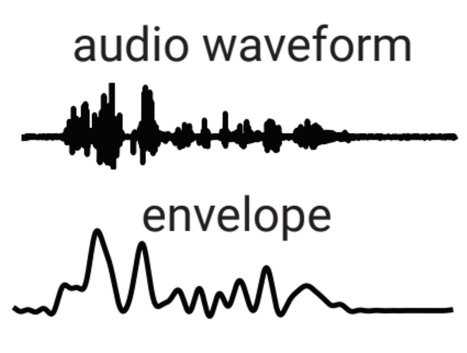
The auditory envelope

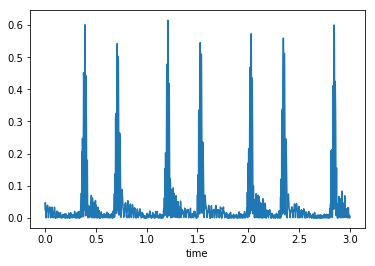
  • Smooth the data to calculate the auditory envelope
  • Related to the total amount of audio energy present at each moment of time
Pythonで学ぶMachine Learningによる時系列データ解析

Smoothing over time

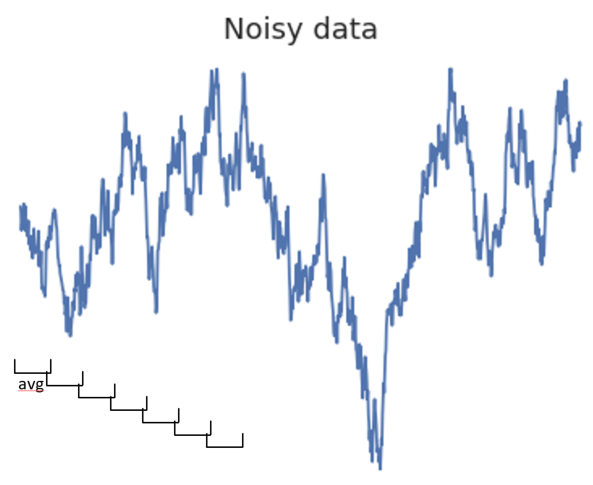
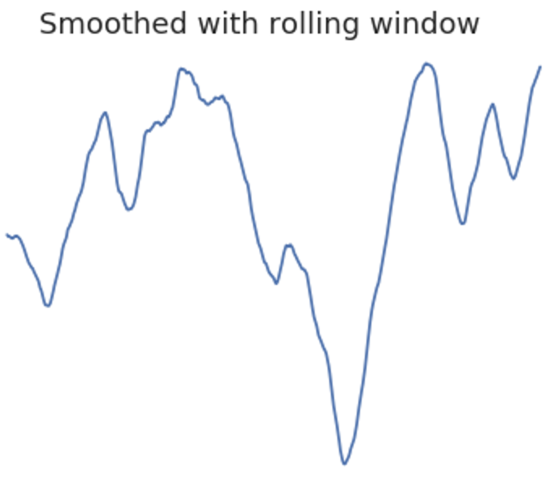
  • Instead of averaging over all time, we can do a local average
  • This is called smoothing your timeseries
  • It removes short-term noise, while retaining the general pattern
Pythonで学ぶMachine Learningによる時系列データ解析

Smoothing your data

Pythonで学ぶMachine Learningによる時系列データ解析

Calculating a rolling window statistic

# Audio is a Pandas DataFrame
print(audio.shape)  
# (n_times, n_audio_files)
(5000, 20)  
# Smooth our data by taking the rolling mean in a window of 50 samples
window_size = 50
windowed = audio.rolling(window=window_size)
audio_smooth = windowed.mean()
Pythonで学ぶMachine Learningによる時系列データ解析

Calculating the auditory envelope

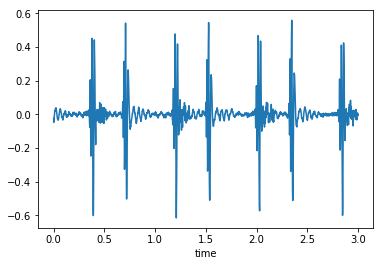
  • First rectify your audio, then smooth it

      audio_rectified = audio.apply(np.abs)
      audio_envelope = audio_rectified.rolling(50).mean()
    
Pythonで学ぶMachine Learningによる時系列データ解析

Pythonで学ぶMachine Learningによる時系列データ解析

Pythonで学ぶMachine Learningによる時系列データ解析

Pythonで学ぶMachine Learningによる時系列データ解析

Feature engineering the envelope

# Calculate several features of the envelope, one per sound
envelope_mean = np.mean(audio_envelope, axis=0)
envelope_std = np.std(audio_envelope, axis=0)
envelope_max = np.max(audio_envelope, axis=0)

# Create our training data for a classifier
X = np.column_stack([envelope_mean, envelope_std, envelope_max])
Pythonで学ぶMachine Learningによる時系列データ解析

Preparing our features for scikit-learn

X = np.column_stack([envelope_mean, envelope_std, envelope_max])
y = labels.reshape(-1, 1)
Pythonで学ぶMachine Learningによる時系列データ解析

Cross validation for classification

  • cross_val_score automates the process of:
    • Splitting data into training / validation sets
    • Fitting the model on training data
    • Scoring it on validation data
    • Repeating this process
Pythonで学ぶMachine Learningによる時系列データ解析

Using cross_val_score

from sklearn.model_selection import cross_val_score

model = LinearSVC()
scores = cross_val_score(model, X, y, cv=3) 
print(scores)
[0.60911642 0.59975305 0.61404035]
Pythonで学ぶMachine Learningによる時系列データ解析

Auditory features: The Tempogram

  • We can summarize more complex temporal information with timeseries-specific functions
  • librosa is a great library for auditory and timeseries feature engineering
  • Here we'll calculate the tempogram, which estimates the tempo of a sound over time
  • We can calculate summary statistics of tempo in the same way that we can for the envelope
Pythonで学ぶMachine Learningによる時系列データ解析

Computing the tempogram

# Import librosa and calculate the tempo of a 1-D sound array
import librosa as lr
audio_tempo = lr.beat.tempo(y=audio, sr=sfreq, 
                            hop_length=2**6)
Pythonで学ぶMachine Learningによる時系列データ解析

Let's practice!

Pythonで学ぶMachine Learningによる時系列データ解析

Preparing Video For Download...